
Pulp Fiction, 1924 · page 152 of 196
Adventure Magazine, April 10, 1924 — page 152: what you’re looking at
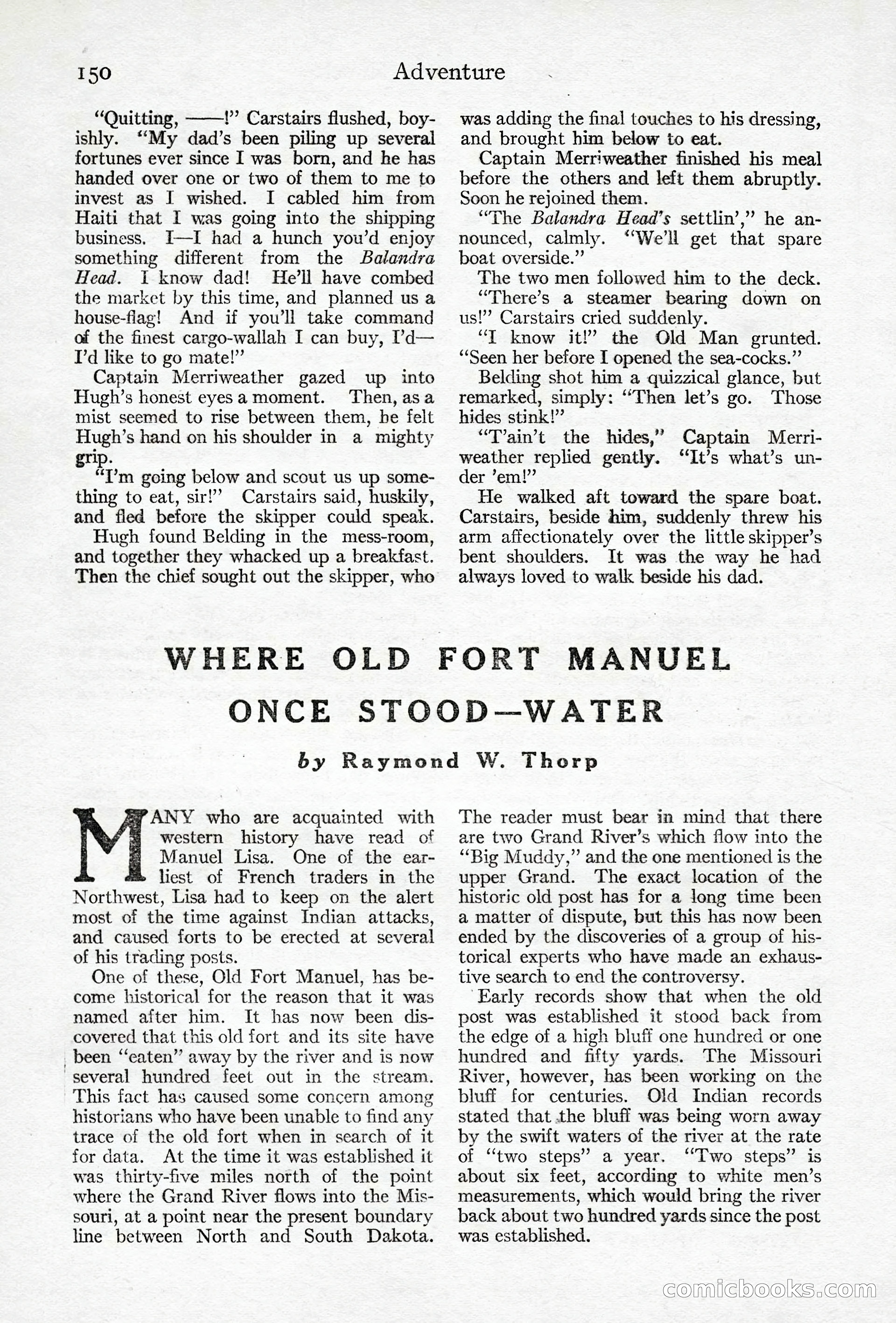
A restored page from Pulp Fiction, 1924. Page through the whole issue in the reader above.
📄 Transcribed text from this page (OCR, searchable)
Machine-transcribed from the original scan — historical spelling and the odd misread are preserved.
150 “Quitting, ——!’’ Carstairs flushed, boy- ishly. “‘My dad’s been piling up several fortunes ever since I was born, and he has handed over one or two of them to me to invest as I wished. I cabled him from Haiti that I was going into the shipping business, I—I had a hunch you’d enjoy something different from the Balandra Head. I know dad! He’ll have combed the market by this time, and planned us a house-flag! And if you’ll take command of the finest cargo-wallah I can buy, ?d— I'd like to go mate!’’ Captain Merriweather gazed up into Hugh’s honest eyesa moment. Then, asa mist seemed to rise between them, be felt Hugh’s hand on his shoulder in a mighty p. “T’m going below and scout us up some- thing to eat, sir!’ Carstairs said, huskily, and fled before the skipper could speak. Hugh found Belding in the mess-room, and together they whacked up a breakfast. Then the chief sought out the skipper, who Adventure was adding the final touches to his dressing, and brought him below to eat. Captain Merriweather finished his meal before the others and left them abruptly. Soon he rejoined them. “The Balandra Head’s settlin’,” he an- nounced, calmly. “‘We’ll get that spare boat overside.”’ The two men followed him to the deck. “There’s a steamer bearing down on !’’ Carstairs cried suddenly. “IT know it!’ the Old Man grunted. “Seen her before I opened the sea-cocks.”’ Belding shot him a quizzical glance, but remarked, simply: “Then let’s go. Those hides stink!” “T’ain’t the hides,” Captain Merri- weather replied gently. “It’s what’s un- der ’em!” He walked ait toward the spare boat. Carstairs, beside him, suddenly threw his arm affectionately over the little skipper’s bent shoulders. It was the way he had always loved to walk beside his dad. us WHERE OLD FORT MANUEL ONCE STOOD—WATER by Raymond W. Therp Ee ANY who are acquainted with *% western history have read of Manuel Lisa. One of the ear- ™ liest of French traders in the Northwest, Lisa had to keep on the alert most of the time against Indian attacks, and caused forts to be erected at several of his trading posts. One of these, Old Fort Manuel, has be- come historical for the reason that it was named after him. It has now been dis- covered that this old fort and its site have _ been “eaten” away by the river and is now several hundred feet out in the stream. This fact has caused some concern among historians who have been unable to find any trace of the old fort when in search of it for data. At the time it was established it was thirty-five miles north of the point where the Grand River flows into the Mis- souri, at a point near the present boundary line between North and South Dakota. The reader must bear in mind that there are two Grand River’s which flow into the “Big Muddy,” and the one mentioned is the upper Grand. The exact location of the historic old post has for a long time been a matter of dispute, but this has now been ended by the discoveries of a group of his- torical experts who have made an exhaus- tive search to end the controversy. Early records show that when the old post was established it stood back from the edge of a high bluff one hundred or one hundred and fifty yards. The Missouri River, however, has been working on the bluff for centuries. Old Indian records stated that the bluff was being worn away by the swift waters of the river at the rate of “‘two steps’ a year. “Two steps” is about six feet, according to white men’s measurements, which would bring the river back about two hundred yards since the post was established. GO NOOK C@