
Pulp Fiction, 1922 · page 165 of 204
Adventure Magazine Cover — page 165: what you’re looking at
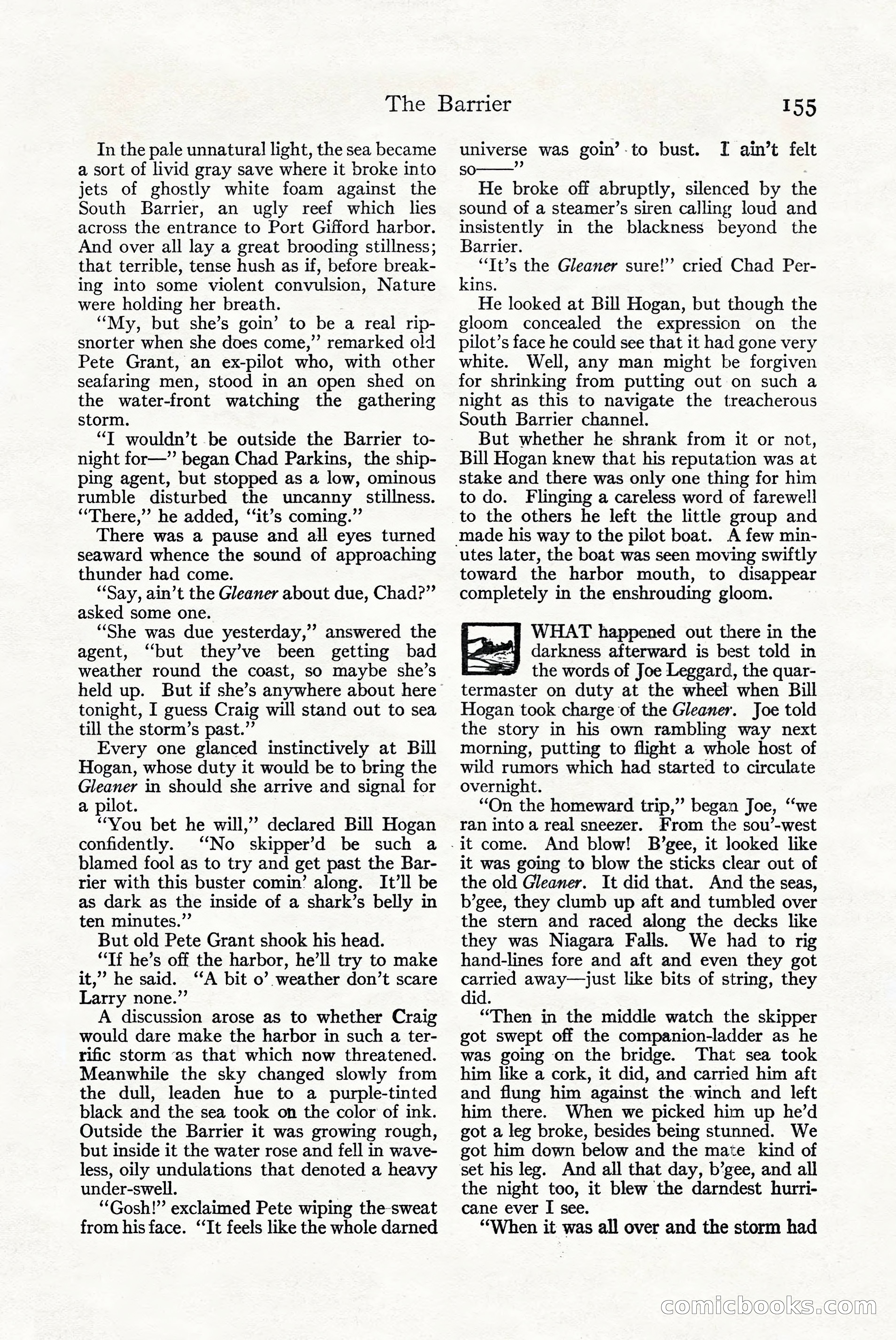
A restored page from Pulp Fiction, 1922. Page through the whole issue in the reader above.
📄 Transcribed text from this page (OCR, searchable)
Machine-transcribed from the original scan — historical spelling and the odd misread are preserved.
The Barrier In the pale unnatural light, the sea became a sort of livid gray save where it broke into jets of ghostly white foam against the South Barrier, an ugly reef which les across the entrance to Port Gifford harbor. And over all lay a great brooding stillness; that terrible, tense hush as if, before break- ing into some violent convulsion, Nature were holding her breath. “My, but she’s goin’ to be a real rip- snorter when she does come,”’ remarked old Pete Grant, an ex-pilot who, with other seafaring men, stood in an open shed on the water-front watching the gathering storm. “T wouldn’t be outside the Barrier to- - night for—”’ began Chad Parkins, the ship- ping agent, but stopped as a low, ominous rumble disturbed the uncanny stillness. “There,” he added, ‘‘it’s coming.” There was a pause and all eyes turned seaward whence the sound of approaching thunder had come. : “Say, ain’t the Gleaner about due, Chad?” asked some one. ‘“‘She was due yesterday,”’ answered the agent, “but they’ve been getting bad weather round the coast, so maybe she’s held up. But if she’s anywhere about here tonight, I guess Craig will stand out to sea till the storm’s past.” Every one glanced instinctively at Bill Hogan, whose duty it would be to bring the Gleaner in should she arrive and signal for a pilot. “You bet he will,” declared Bill Hogan confidently. ‘No skipper’d be such a blamed fool as to try and get past the Bar- rier with this buster comin’ along. It’ll be as dark as the inside of a shark’s belly in ten minutes.” : But old Pete Grant shook his head. “If he’s off the harbor, he’ll try to make it,” he said. ‘‘A bit o’ weather don’t scare Larry none.” A discussion arose as to whether Craig would dare make the harbor in such a ter- rific storm as that which now threatened. Meanwhile the sky changed slowly from the dull, leaden hue to a purple-tinted black and the sea took on the color of ink. Outside the Barrier it was growing rough, but inside it the water rose and fell in wave- less, oily undulations that denoted a heavy under-swell. | “Gosh!” exclaimed Pete wiping the sweat from his face. ‘‘It feels like the whole darned -1t come. 155 universe was goin’-to bust. I ain’t felt SO 9) He broke off abruptly, silenced by the sound of a steamer’s siren calling loud and insistently in the blackness beyond the Barrier. | “It’s the Gleaner sure!” cried Chad Per- kins. He looked at Bill Hogan, but though the gloom concealed the expression on the pilot’s face he could see that it had gone very white. Well, any man might be forgiven for shrinking from putting out on such a night as this to navigate the treacherous South Barrier channel. But whether he shrank from it or not, Bill Hogan knew that his reputation was at stake and there was only one thing for him to do. Flinging a careless word of farewell to the others he left the little group and made his way to the pilot boat. A few min- utes later, the boat was seen moving swiftly toward the harbor mouth, to disappear completely in the enshrouding gloom. WHAT happened out there in the 4 darkness afterward is best told in the words of Joe Leggard, the quar- termaster on duty at the wheel when Bill Hogan took charge of the Gleaner. Joe told the story in his own rambling way next morning, putting to flight a whole host of wild rumors which had started to circulate overnight. “On the homeward trip,” began Joe, “we ran into a real sneezer. From the sou’-west And blow! B’gee, it looked like it was going to blow the sticks clear out of the old Gleaner. It did that. And the seas, b’gee, they clumb up aft and tumbled over the stern and raced along the decks like they was Niagara Falls. We had to rig hand-lines fore and aft and even they got carried away—just like bits of string, they did “Then in the middle watch the skipper got swept off the companion-ladder as he was going on the bridge. That sea took him like a cork, it did, and carried him aft and flung him against the winch and left him there. When we picked him up he’d got a leg broke, besides being stunned. We got him down below and the mate kind of set his leg. And all that day, b’gee, and all the night too, it blew the darndest hurri- cane ever I see. “When it was all over and the storm had NOOK C©