
Pulp Fiction, 1922 · page 131 of 204
Adventure Magazine Cover — page 131: what you’re looking at
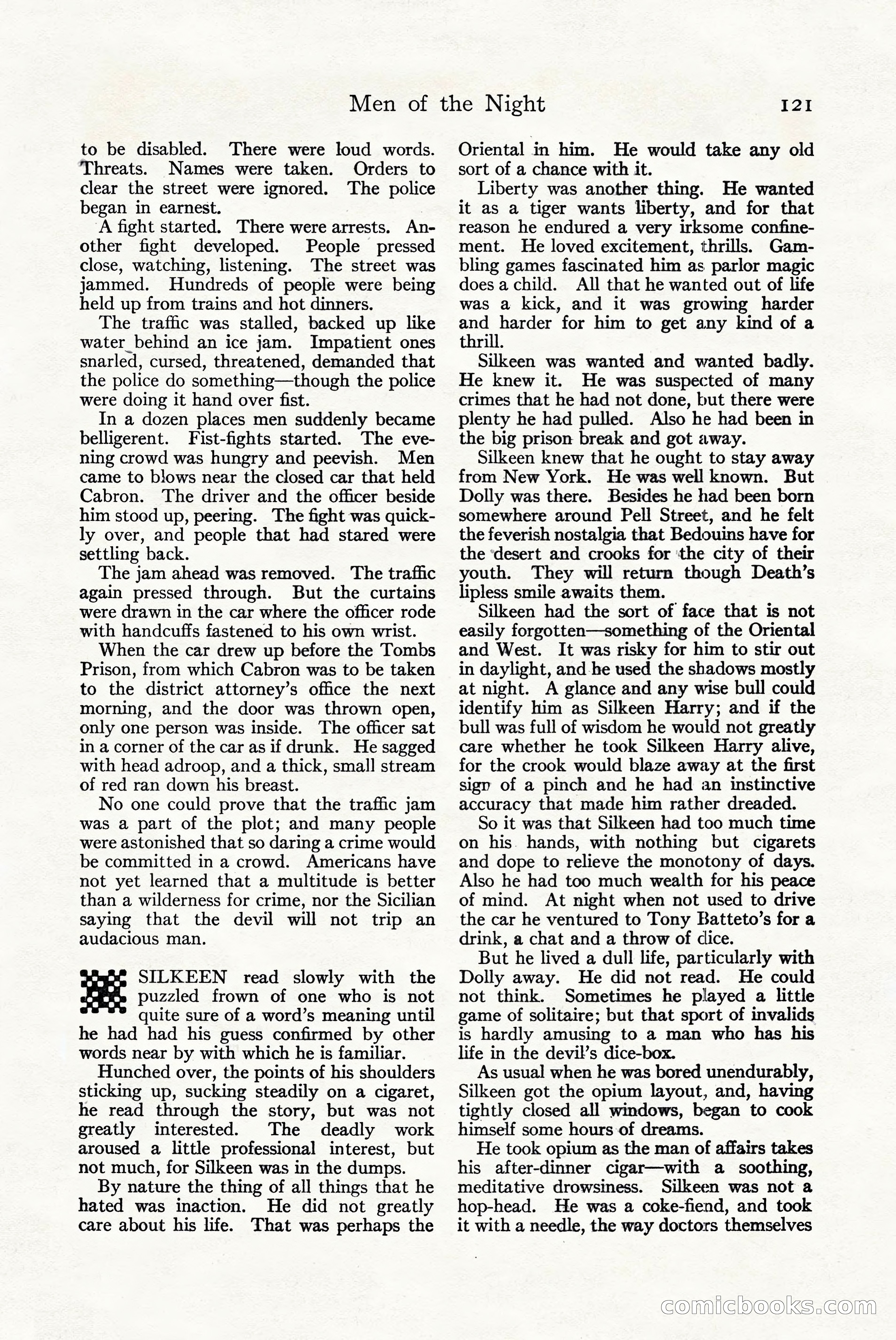
A restored page from Pulp Fiction, 1922. Page through the whole issue in the reader above.
📄 Transcribed text from this page (OCR, searchable)
Machine-transcribed from the original scan — historical spelling and the odd misread are preserved.
Men of the Night to be disabled. There were loud words. Threats. Names were taken. Orders to clear the street were ignored. The police began in earnest. ‘A fight started. There were arrests. An- other fight developed. People pressed close, watching, listening. The street was jammed. Hundreds of people were being held up from trains and hot dinners. The traffic was stalled, backed up like water_behind an ice jam. Impatient ones snarled, cursed, threatened, demanded that the police do something—though the police were doing it hand over fist. In a dozen places men suddenly became belligerent. Fist-fights started. The eve- ning crowd was hungry and peevish. Men came to blows near the closed car that held Cabron. The driver and the officer beside him stood up, peering. The fight was quick- ly over, and people that had stared were settling back. The jam ahead was removed. The traffic again pressed through. But the curtains were drawn in the car where the officer rode with handcuffs fastened to his own wrist. When the car drew up before the Tombs Prison, from which Cabron was to be taken to the district attorney’s office the next morning, and the door was thrown open, only one person was inside. The officer sat in a corner of the car as if drunk. He sagged with head adroop, and a thick, small stream of red ran down his breast. No one could prove that the traffic jam was a part of the plot; and many people were astonished that so daring a crime would be committed in a crowd. Americans have not yet learned that a multitude is better than a wilderness for crime, nor the Sicilian saying that the devil will not trip an audacious man. ce puzzled frown of one who is not quite sure of a word’s meaning until he had had his guess confirmed by other words near by with which he is familiar. Hunched over, the points of his shoulders sticking up, sucking steadily on a cigaret, he read through the story, but was not greatly interested. The deadly work aroused a little professional interest, but not much, for Silkeen was in the dumps. By nature the thing of all things that he hated was inaction. He did not greatly care about his life. That was perhaps the SILKEEN read slowly with the {21 Oriental in him. He would take any old sort of a chance with it. Liberty was another thing. He wanted it as a tiger wants liberty, and for that reason he endured a very irksome confine- ment. He loved excitement, thrills. Gam- bling games fascinated him as parlor magic does a child. All that he wanted out of life was a kick, and it was growing harder and harder for him to get any kind of a thrill. Silkkeen was wanted and wanted badly. He knew it. He was suspected of many crimes that he had not done, but there were plenty he had pulled. Also he had been in the big prison break and got away. Silkeen knew that he ought to stay away from New York. He was well known. But Dolly was there. Besides he had been born somewhere around Pell Street, and he felt the feverish nostalgia that Bedouins have for the ‘desert and crooks for ‘the city of their youth. They will return though Death’s lipless smile awaits them. Silkeen had the sort of face that is not easily forgotten—something of the Oriental and West. It was risky for him to stir out in daylight, and he used the shadows mostly at night. A glance and any wise bull could identify him as Silkeen Harry; and if the bull was full of wisdom he would not greatly care whether he took Silkeen Harry alive, for the crook would blaze away at the first sign of a pinch and he had an instinctive accuracy that made him rather dreaded. So it was that Silkeen had too much time on his. hands, with nothing but cigarets and dope to relieve the monotony of days. Also he had too much wealth for his peace of mind. At night when not used to drive the car he ventured to Tony Batteto’s for a drink, a chat and a throw of dice. But he lived a dull life, particularly with Dolly away. He did not read. He could not think. Sometimes he played a little game of solitaire; but that sport of invalids is hardly amusing to a man who has his life in the devil’s dice-box. As usual when he was bored unendurably, Silkeen got the opium layout, and, having tightly closed all windows, began to cook himself some hours of dreams. He took opium as the man of affairs takes his after-dinner cigar—with a soothing, meditative drowsiness. Silkeen was not a hop-head. He was a coke-fiend, and took it with a needle, the way doctors themselves NOOK C@