
Pulp Fiction, 1919 · page 156 of 208
Adventure Magazine Cover — page 156: what you’re looking at
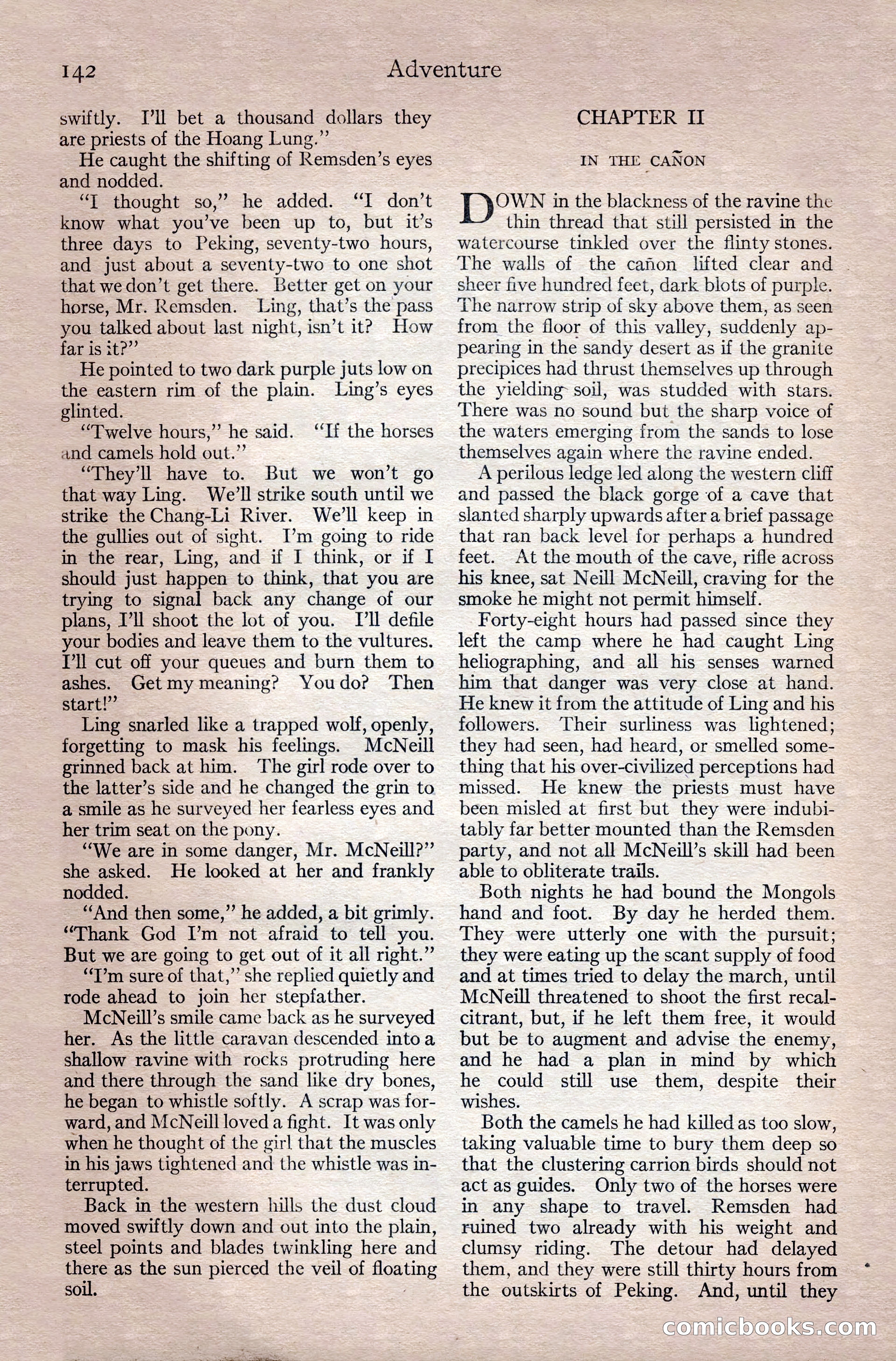
A restored page from Pulp Fiction, 1919. Page through the whole issue in the reader above.
📄 Transcribed text from this page (OCR, searchable)
Machine-transcribed from the original scan — historical spelling and the odd misread are preserved.
142 swiftly. Dl bet a thousand dollars they are priests of the Hoang Lung.” He caught the shifting of RKemsden’s eyes and nodded. “T thought so,” he added. “I don’t know what you’ve been up to, but it’s three days to Peking, seventy-two hours, and just about a seventy-two to one shot that we don’t get there. Better get on your horse, Mr. Remsden. Ling, that’s the pass you talked about last night, isn’t it? How far is :t?”” He pointed to two dark purple juts low on the eastern rim of the plain. Ling’s eyes glinted. “Twelve hours,” he said. and camels hold out.” “They ll have to. But we won’t go that way Ling. We'll strike south until we strike the Chang-Li River. We'll keep in the gullies out of sight. I’m going to ride in the rear, Ling, and if I think, or if I should just happen to think, that you are trying to signal back any change of our plans, I’ll shoot the lot of you. Ill defile your bodies and leave them to the vultures. I'll cut off your queues and burn them to ashes. Getmy meaning? Youdo? Then start!” Ling snarled like a trapped wolf, openly, forgetting to mask his feelings. McNeill grinned back at him. ‘The girl rode over to the latter’s side and he changed the grin to a smile as he surveyed her fearless eyes and her trim seat on the pony. “We are in some danger, Mr. McNeill?” she asked. He looked at her and frankly nodded. ‘“‘And then some,” he added, a bit grimly. “Thank God I’m not afraid to tell you. But we are going to get out of it all right.” “T’m sure of that,’’ she replied quietly and rode ahead to join her stepfather. McNeill’s smile came back as he surveyed her. As the little caravan descended intoa shallow ravine with rocks protruding here and there through the sand like dry bones, he began to whistle softly. A scrap was for- ward, and McNeill loved a fight. It was only when he thought of the girl that the muscles in his jaws tightened and the whistle was in- terrupted. Back in the western hills the dust cloud moved swiftly down and out into the plain, steel points and blades twinkling here and there as the sun pierced the veil of floating soil. | “Tf the horses Adventure CHAPTER II IN THE CANON OWN in the blackness of the ravine the thin thread that still persisted in the watercourse tinkled over the flinty stones. The walls of the canon lifted clear and sheer five hundred feet, dark blots of purple. The narrow strip of sky above them, as seen from the floor of this valley, suddenly ap- pearing in the sandy desert as if the granite precipices had thrust themselves up through the yielding soil, was studded with stars. There was no sound but the sharp voice of the waters emerging from the sands to lose themselves again where the ravine ended. A perilous ledge led along the western cliff and passed the black gorge of a cave that slanted sharply upwards after a brief passage that ran back level for perhaps a hundred feet. At the mouth of the cave, rifle across his knee, sat Neill McNeill, craving for the smoke he might not permit himself. Forty-eight hours had passed since they left the camp where he had caught Ling heliographing, and all his senses warned him that danger was very close at hand. He knew it from the attitude of Ling and his followers. Their surliness was lightened; they had seen, had heard, or smelled some- thing that his over-civilized perceptions had missed. He knew the priests must have been misled at first but they were indubi- tably far better mounted than the Remsden party, and not all McNeill’s skill had been able to obliterate trails. Both nights he had bound the Mongols hand and foot. By day he herded them. They were utterly one with the pursuit; they were eating up the scant supply of food and at times tried to delay the march, until McNeill threatened to shoot the first recal- citrant, but, if he left them free, it would but be to augment and advise the enemy, and he had a plan in mind by which he could still use them, despite their wishes. Both the camels he had killed as too slow, taking valuable time to bury them deep so that the clustering carrion birds should not act as guides. Only two of the horses were in any shape to travel. Remsden had ruined two already with his weight and clumsy riding. The detour had delayed them, and they were still thirty hours from the outskirts of Peking. And, until they Eomichooks: co