
Pulp Fiction, 1916 · page 195 of 228
Adventure Magazine Cover, April 1916 — page 195: what you’re looking at
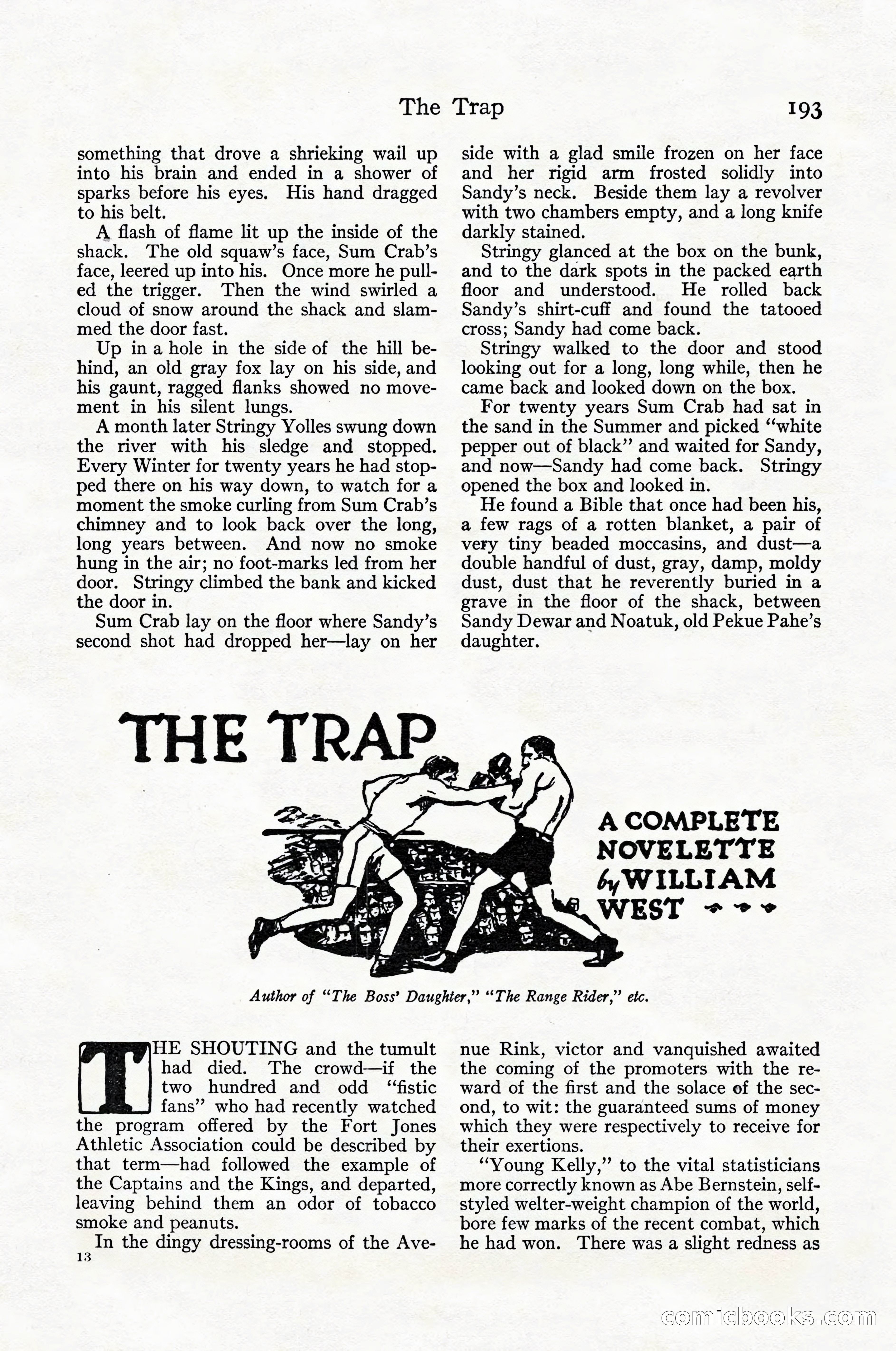
A restored page from Pulp Fiction, 1916. Page through the whole issue in the reader above.
📄 Transcribed text from this page (OCR, searchable)
Machine-transcribed from the original scan — historical spelling and the odd misread are preserved.
The Trap something that drove a shrieking wail up into his brain and ended in a shower of sparks before his eyes, His hand dragged to his belt. A flash of flame lit up the inside of the shack. The old squaw’s face, Sum Crab’s face, leered up into his. Once more he pull- ed the trigger. Then the wind swirled a cloud of snow around the shack and slam- med the door fast. Up ina hole in the side of the hill be- hind, an old gray fox lay on his side, and his gaunt, ragged flanks showed no move- ment in his silent lungs. | A month later Stringy Yolles swung down the river with his sledge and stopped. Every Winter for twenty years he had stop- ped there on his way down, to watch for a moment the smoke curling from Sum Crab’s chimney and to look back over the long, long years between. And now no smoke hung in the air; no foot-marks led from her door. Stringy climbed the bank and kicked the door in. Sum Crab lay on the floor where Sandy’s second shot had dropped her—lay on her 193 side with a glad smile frozen on her face and her rigid arm frosted solidly into Sandy’s neck. Beside them lay a revolver with two chambers empty, and a long knife darkly stained. Stringy glanced at the box on the bunk, and to the dark spots in the packed earth floor and understood. He rolled back Sandy’s shirt-cuff and found the tatooed cross; Sandy had come back. Stringy walked to the door and stood looking out for a long, long while, then he came back and looked down on the box. For twenty years Sum Crab had sat in the sand in the Summer and picked ‘“‘white pepper out of black” and waited for Sandy, and now—Sandy had come back. Stringy opened the box and looked in. He found a Bible that once had been his, a few rags of a rotten blanket, a pair of very tiny beaded moccasins, and dust—a double handful of dust, gray, damp, moldy dust, dust that he reverently buried in a grave in the floor of the shack, between Sandy Dewar and Noatuk, old Pekue Pahe’s daughter. A COMPLETE NOVELETTE by WILLIAM WEST «7+ Author of “The Boss’ Daughier,” ‘‘The Range Rider,”’ etc. HE SHOUTING and the tumult had died. The crowd—if the two hundred and odd “‘fistic m J fans’ who had recently watched the program offered by the Fort Jones Athletic Association could be described by that term—had followed the example of the Captains and the Kings, and departed, leaving behind them an odor of tobacco smoke and peanuts. 4 in the dingy dressing-rooms of the Ave- 1 nue Rink, victor and vanquished awaited the coming of the promoters with the re- ward of the first and the solace of the sec- ond, to wit: the guaranteed sums of money which they were respectively to receive for their exertions. “Young Kelly,” to the vital statisticians more correctly known as Abe Bernstein, self- styled welter-weight champion of the world, bore few marks of the recent combat, which he had won. There was a slight redness as CoMmichoooks CO