
Pulp Fiction, 1911 · page 57 of 196
Adventure Magazine Cover, October 1911 — page 57: what you’re looking at
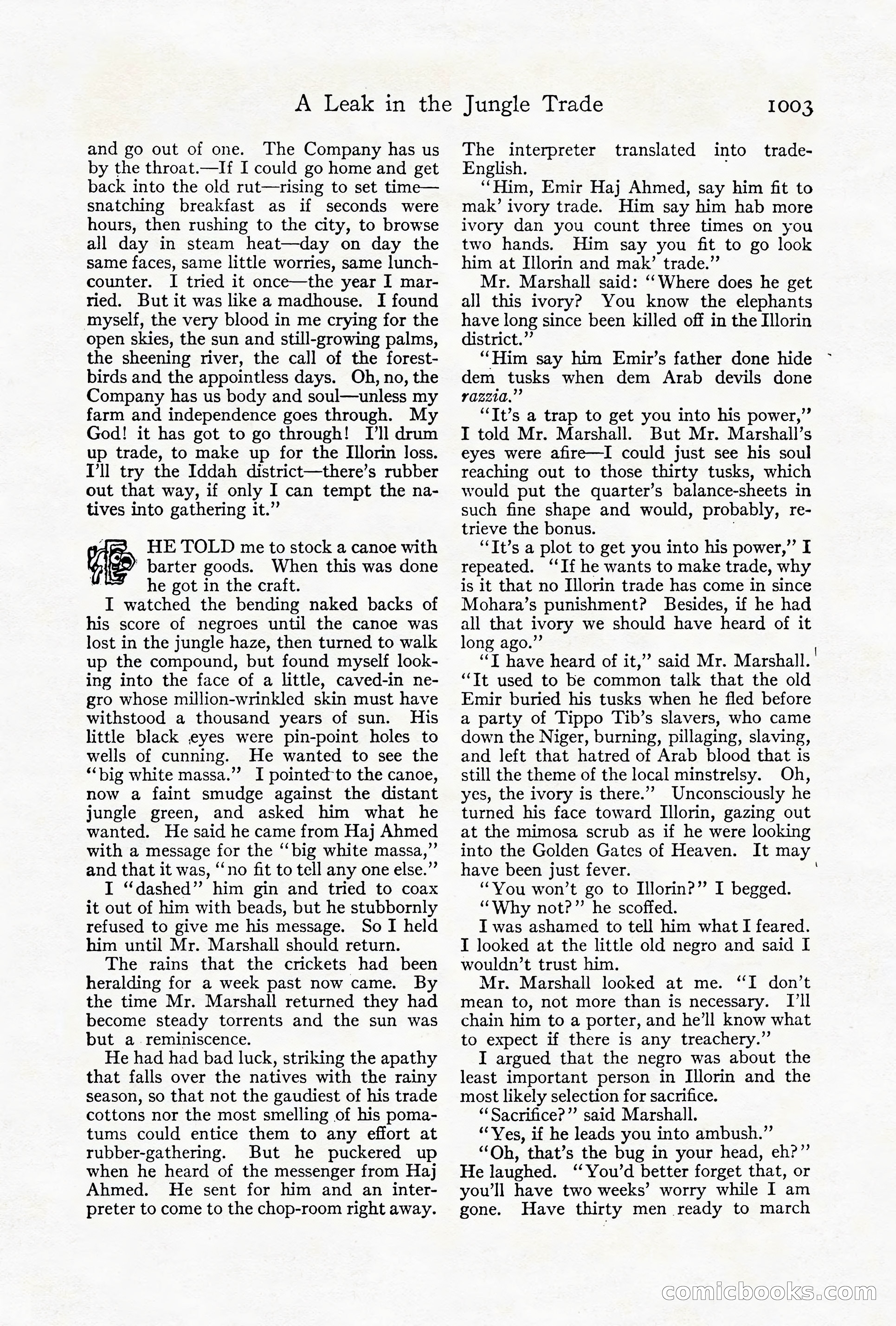
A restored page from Pulp Fiction, 1911. Page through the whole issue in the reader above.
📄 Transcribed text from this page (OCR, searchable)
Machine-transcribed from the original scan — historical spelling and the odd misread are preserved.
A Leak in the Jungle Trade and go out of one. The Company has us by the throat.—If I could go home and get back into the old rut—rising to set time— snatching breakfast as if seconds were hours, then rushing to the city, to browse all day in steam heat—day on day the same faces, same little worries, same lunch- counter. I tried it once—the year I mar- ried. But it was like a madhouse. I found myself, the very blood in me crying for the open skies, the sun and still-growing palms, the sheening river, the call of the forest- birds and the appointless days. Oh, no, the Company has us body and soul—unless my farm and independence goes through. My God! it has got to go through! I'll drum up trade, to make up for the Ilorin loss. [ll try the Iddah district—there’s rubber out that way, if only I can tempt the na- tives into gathering it.” ' barter goods. When this was done 4 he got in the craft. I watched the bending naked backs of his score of negroes until the canoe was lost in the jungle haze, then turned to walk up the compound, but found myself look- ing into the face of a little, caved-in ne- gro whose million-wrinkled skin must have withstood a thousand years of sun. His little black yes were pin-point holes to wells of cunning. He wanted to see the ‘big white massa.”’ I pointed to the canoe, now a faint smudge against the distant jungle green, and asked him what he wanted. He said he came from Haj Ahmed with a message for the “‘big white massa,” and that it was, “no fit to tell any one else.” I “dashed” him gin and tried to coax it out of him with beads, but he stubbornly refused to give me his message. So I held him until Mr. Marshall should return. The rains that the crickets had been heralding for a week past now came. By the time Mr. Marshall returned they had become steady torrents and the sun was but a reminiscence. He had had bad luck, striking the apathy that falls over the natives with the rainy season, so that not the gaudiest of his trade cottons nor the most smelling of his poma- tums could entice them to any effort at rubber-gathering. But he puckered up when he heard of the messenger from Haj Ahmed. He sent for him and an inter- preter to come to the chop-room right away. Ale HE TOLD me to stock a canoe with 1003 The interpreter translated into trade- English. ‘Him, Emir Haj Ahmed, say him fit to mak’ ivory trade. Him say him hab more ivory dan you count three times on you two hands. Him say you fit to go look him at Ilorin and mak’ trade.” Mr. Marshall said: “‘Where does he get all this ivory? You know the elephants have long since been killed off in the Illorin district.” ‘“‘Him say him Emir’s father done hide ~ dem tusks when dem Arab devils done razzia,”’ “It’s a trap to get you into his power,” I told Mr. Marshall. But Mr. Marshall’s eyes were afire—I could just see his soul reaching out to those thirty tusks, which would put the quarter’s balance-sheets in such fine shape and would, probably, re- trieve the bonus. “It’s a plot to get you into his power,” I repeated. ‘If he wants to make trade, why is it that no Illorin trade has come in since Mohara’s punishment? Besides, if he had all that ivory we should have heard of it long ago.” ‘“‘T have heard of it,’”’ said Mr. Marshall. | “Tt used to be common talk that the old Emir buried his tusks when he fled before a party of Tippo Tib’s slavers, who came down the Niger, burning, pillaging, slaving, and left that hatred of Arab blood that is still the theme of the local minstrelsy. Oh, yes, the ivory is there.”” Unconsciously he turned his face toward Illorin, gazing out at the mimosa scrub as if he were looking into the Golden Gates of Heaven. It may have been just fever. “You won’t go to Ilorin?” I begged. “Why not?” he scoffed. I was ashamed to tell him what I feared. I looked at the little old negro and said I wouldn’t trust him. Mr. Marshall looked at me. “I don’t mean to, not more than is necessary. I'll chain him to a porter, and he’ll know what to expect if there is any treachery.”’ I argued that the negro was about the least important person in Ilorin and the most likely selection for sacrifice. “Sacrifice?”’ said Marshall. “Ves, if he leads you into ambush.” “Oh, that’s the bug in your head, eh?”’ He laughed. ‘‘You’d better forget that, or you'll have two weeks’ worry while I am gone. Have thirty men ready to march COmiclbook (©