
Pulp Fiction, 1911 · page 99 of 196
Adventure Magazine Cover — page 99: what you’re looking at
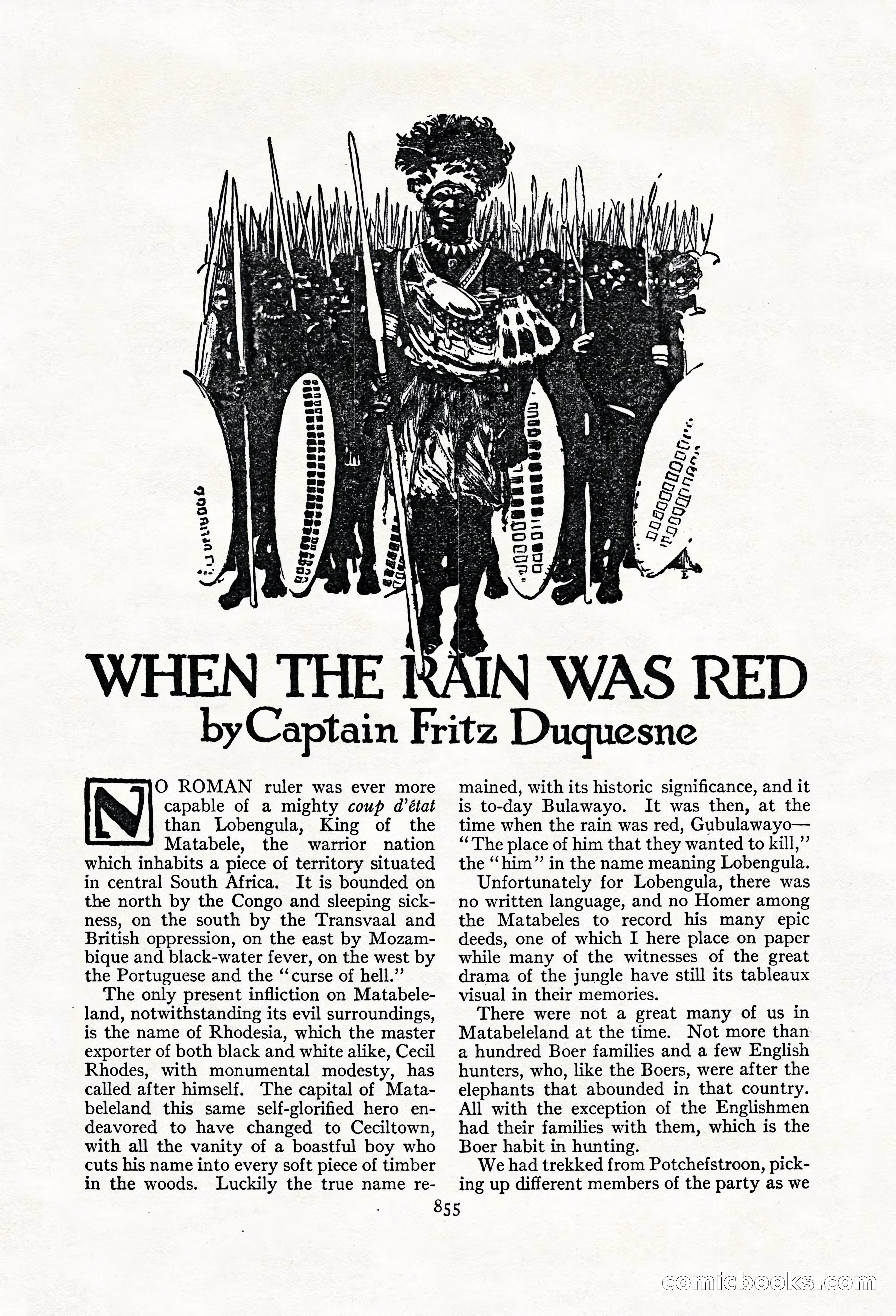
A restored page from Pulp Fiction, 1911. Page through the whole issue in the reader above.
📄 Transcribed text from this page (OCR, searchable)
Machine-transcribed from the original scan — historical spelling and the odd misread are preserved.
vy UELtD pub e 2 , _— goediiggadse: WHEN THE RAIN WAS RED by Captain Fritz Duquesne than Lobengula, King of the Matabele, the warrior nation which inhabits a piece of territory situated in central South Africa. It is bounded on the north by the Congo and sleeping sick- ness, on the south by the Transvaal and British oppression, on the east by Mozam- bique and black-water fever, on the west by the Portuguese and the ‘‘curse of hell.” The only present infliction on Matabele- - land, notwithstanding its evil surroundings, is the name of Rhodesia, which the master exporter of both black and white alike, Cecil Rhodes, with monumental modesty, has called after himself. The capital of Mata- beleland this same self-glorified hero en- deavored to have changed to Ceciltown, with all the vanity of a boastful boy who cuts his name into every soft piece of timber in the woods. Luckily the true name re- O ROMAN ruler was ever more WY capable of a mighty coup d état mained, with its historic significance, and it is to-day Bulawayo. It was then, at the time when the rain was red, Gubulawayo— “The place of him that they wanted to kill,”’ the ‘‘him”’ in the name meaning Lobengula. Unfortunately for Lobengula, there was no written language, and no Homer among the Matabeles to record his many epic deeds, one of which I here place on paper while many of the witnesses of the great drama of the jungle have still its tableaux visual in their memories. There were not a great many of us in Matabeleland at the time. Not more than a hundred Boer families and a few English hunters, who, like the Boers, were after the elephants that abounded in that country. All with the exception of the Englishmen had their families with them, which is the Boer habit in hunting. We had trekked from Potchefstroon, pick- ing up different members of the party as we 855 C© Ebooks C©