
Pulp Fiction, 1911 · page 173 of 196
Adventure Magazine Cover — page 173: what you’re looking at
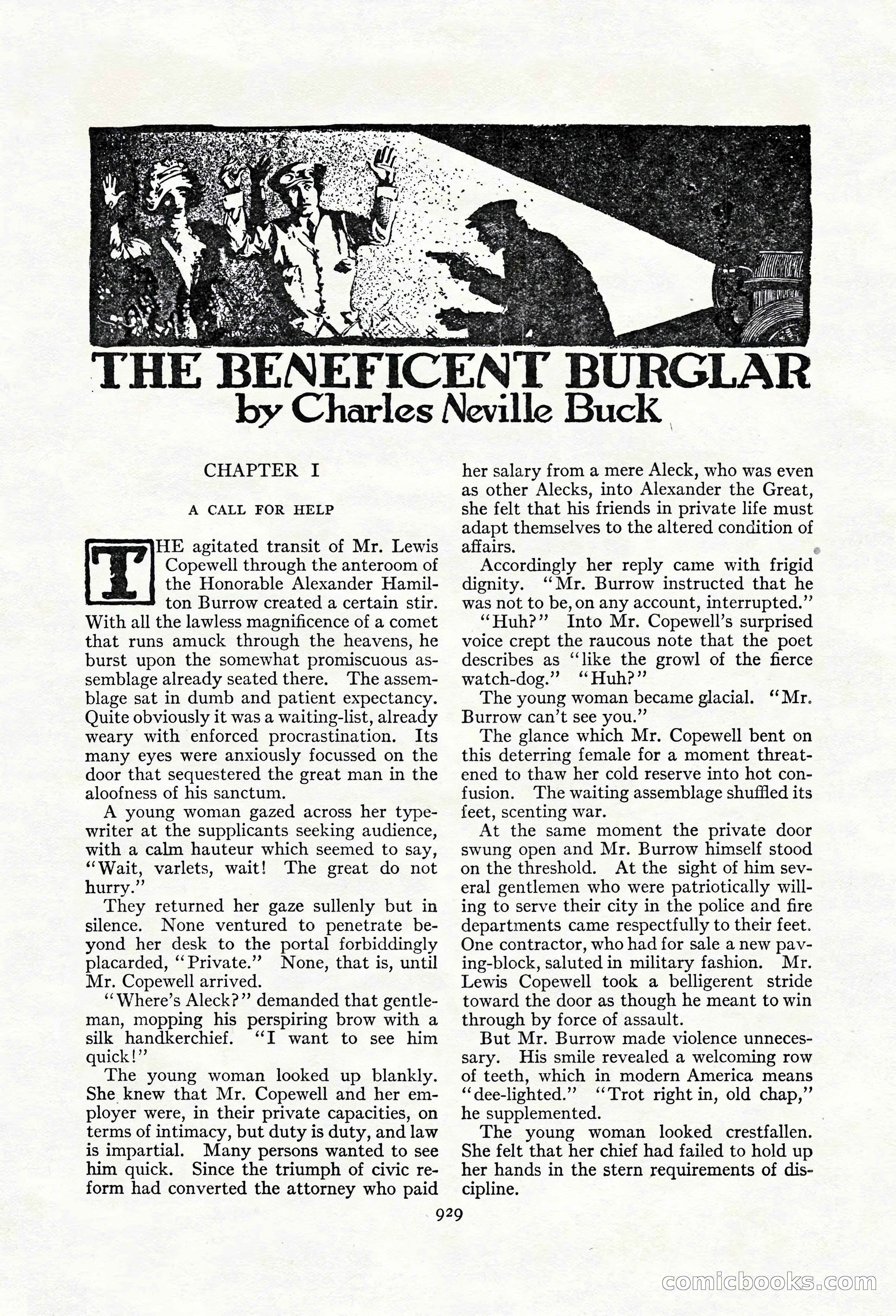
A restored page from Pulp Fiction, 1911. Page through the whole issue in the reader above.
📄 Transcribed text from this page (OCR, searchable)
Machine-transcribed from the original scan — historical spelling and the odd misread are preserved.
THI "BEN EFICEN T BURGLAR by Charles Neville Buck CHAPTER I A CALL FOR HELP HE agitated transit of Mr. Lewis Copewell through the anteroom of the Honorable Alexander Hamil- ton Burrow created a certain stir. With all the lawless magnificence of a comet that runs amuck through the heavens, he burst upon the somewhat promiscuous as- semblage already seated there. The assem- blage sat in dumb and patient expectancy. Quite obviously it was a waiting-list, already weary with enforced procrastination. Its many eyes were anxiously focussed on the door that sequestered the great man in the aloofness of his sanctum. A young woman gazed across her type- writer at the supplicants seeking audience, with a calm hauteur which seemed to say, “Wait, varlets, wait! The great do not hurry.” They returned her gaze sullenly but in silence. None ventured to penetrate be- yond her desk to the portal forbiddingly placarded, ‘‘Private.”’ None, that is, until Mr. Copewell arrived. ‘““Where’s Aleck?”’ demanded that gentle- man, mopping his perspiring brow with a silk handkerchief. ‘“‘I want to see him quick!” The young woman looked up blankly. She knew that Mr. Copewell and her em- ployer were, in their private capacities, on terms of intimacy, but duty is duty, and law is impartial. Many persons wanted to see him quick. Since the triumph of civic re- form had converted the attorney who paid her salary from a mere Aleck, who was even as other Alecks, into Alexander the Great, she felt that his friends in private life must adapt themselves to the altered condition of affairs. Accordingly her reply came with frigid dignity. ‘‘Mr. Burrow instructed that he was not to be, on any account, interrupted.” “Huh?” Into Mr. Copewell’s surprised voice crept the raucous note that the poet describes as ‘‘like the growl of the fierce watch-dog.”” “Huh?” The young woman became glacial. Burrow can’t see you.” The glance which Mr. Copewell bent on this deterring female for a moment threat- ened to thaw her cold reserve into hot con- fusion. ‘The waiting assemblage shuffled its feet, scenting war. At the same moment the private door swung open and Mr. Burrow himself stood on the threshold. At the sight of him sev- eral gentlemen who were patriotically will- ing to serve their city in the police and fire departments came respectfully to their feet. One contractor, who had for sale a new pav- ing-block, saluted in military fashion. Mr. Lewis Copewell took a belligerent stride toward the door as though he meant to win through by force of assault. But Mr. Burrow made violence unneces- sary. His smile revealed a welcoming row of teeth, which in modern America means “‘dee-lighted.”” “Trot right in, old chap,’ he supplemented. The young woman looked crestfallen. She felt that her chief had failed to hold up her hands in the stern requirements of dis- cipline. “Mr 929 COMIGHOO 5}