
Pulp Fiction, 1911 · page 127 of 196
Adventure Magazine Cover — page 127: what you’re looking at
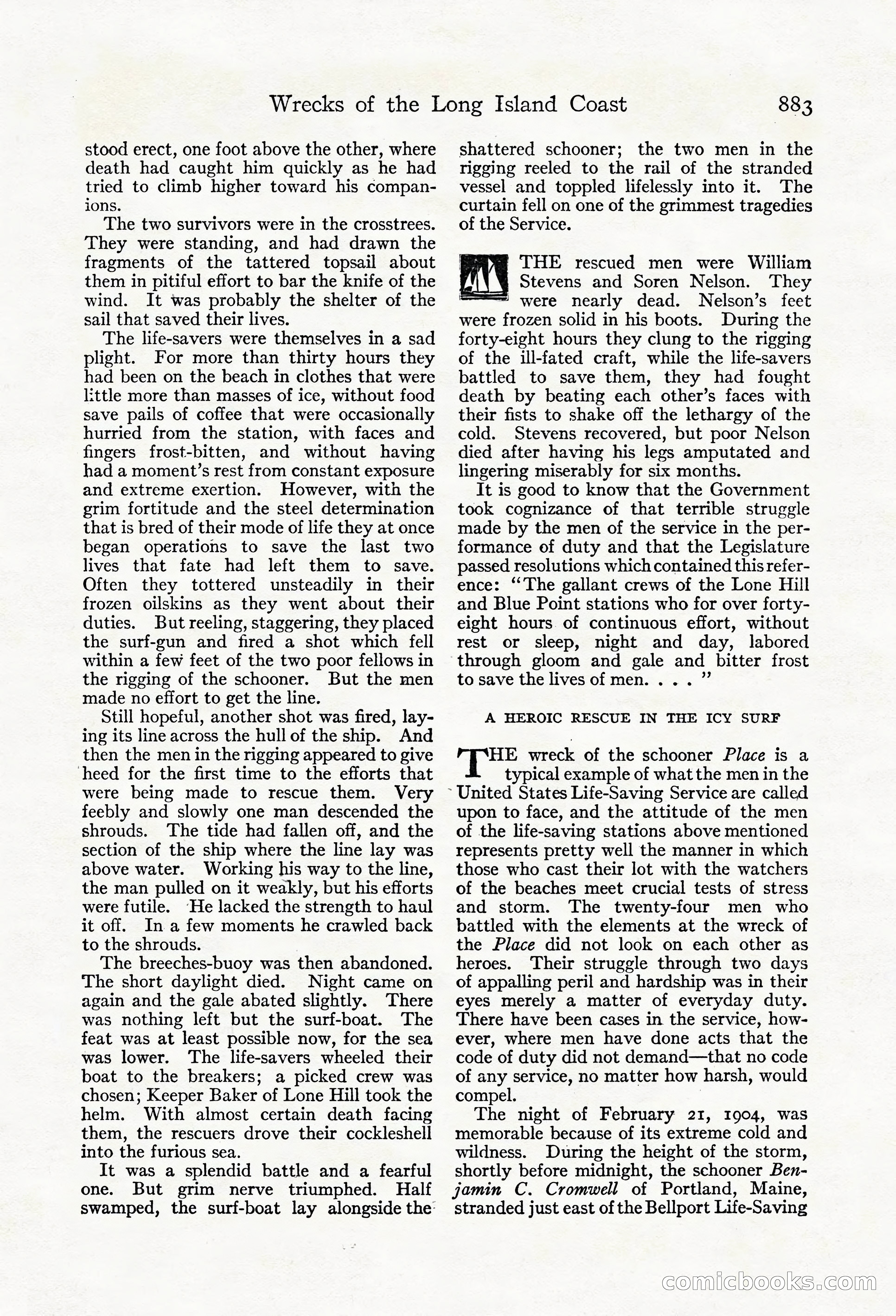
A restored page from Pulp Fiction, 1911. Page through the whole issue in the reader above.
📄 Transcribed text from this page (OCR, searchable)
Machine-transcribed from the original scan — historical spelling and the odd misread are preserved.
Wrecks of the Long Island Coast stood erect, one foot above the other, where death had caught him quickly as he had tried to climb higher toward his compan- ions. The two survivors were in the crosstrees. They were standing, and had drawn the fragments of the tattered topsail about them in pitiful effort to bar the knife of the wind. It was probably the shelter of the sail that saved their lives. The life-savers were themselves in a sad plight. For more than thirty hours they had been on the beach in clothes that were little more than masses of ice, without food save pails of coffee that were occasionally hurried from the station, with faces and fingers frost-bitten, and without having had a moment’s rest from constant exposure and extreme exertion. However, with the grim fortitude and the steel determination that is bred of their mode of life they at once began operations to save the last two lives that fate had left them to save. Often they tottered unsteadily in their frozen oilskins as they went about their duties. But reeling, staggering, they placed the surf-gun and fired a shot which fell within a few feet of the two poor fellows in the rigging of the schooner. But the men made no effort to get the line. Still hopeful, another shot was fired, lay- ing its line across the hull of the ship. And then the men in the rigging appeared to give heed for the first time to the efforts that were being made to rescue them. Very feebly and slowly one man descended the shrouds. The tide had fallen off, and the section of the ship where the line lay was above water. Working his way to the line, the man pulled on it weakly, but his efforts were futile. “He lacked the strength to haul it off. In afew moments he crawled back to the shrouds. The breeches-buoy was then abandoned. The short daylight died. Night came on again and the gale abated slightly. There was nothing left but the surf-boat. The feat was at least possible now, for the sea was lower. The life-savers wheeled their boat to the breakers; a picked crew was chosen; Keeper Baker of Lone Hill took the helm. With almost certain death facing them, the rescuers drove their cockleshell into the furious sea. It was a splendid battle and a fearful one. But grim nerve triumphed. Half swamped, the surf-boat lay alongside the: 883 shattered schooner; the two men in the rigging reeled to the rail of the stranded vessel and toppled lifelessly into it. The curtain fell on one of the grimmest tragedies of the Service. Be =xIHE rescued men were William nN Stevens and Soren Nelson. They ——=—= were nearly dead. Nelson’s feet were frozen solid in his boots. During the forty-eight hours they clung to the rigging of the ill-fated craft, while the life-savers battled to save them, they had fought death by beating each other’s faces with their fists to shake off the lethargy of the cold. Stevens recovered, but poor Nelson died after having his legs amputated and lingering miserably for six months. It is good to know that the Government took cognizance of that terrible struggle made by the men of the service in the per- formance of duty and that the Legislature passed resolutions which contained this refer- ence: ‘The gallant crews of the Lone Hill and Blue Point stations who for over forty- eight hours of continuous effort, without rest or sleep, night and day, labored ‘through gloom and gale and | bitter frost to save the lives of men. . . A HEROIC RESCUE IN THE ICY SURF HE wreck of the schooner Place is a typical example of what the men in the ~ United States Life-Saving Service are called upon to face, and the attitude of the men of the life-saving stations above mentioned represents pretty well the manner in which those who cast their lot with the watchers of the beaches meet crucial tests of stress and storm. The twenty-four men who battled with the elements at the wreck of the Place did not look on each other as heroes. Their struggle through two days of appalling peril and hardship was in their eyes merely a matter of everyday duty. There have been cases in the service, how- ever, where men have done acts that the code of duty did not demand—that no code of any service, no matter how harsh, would compel. The night of February 21, 1904, was memorable because of its extreme cold and wildness. During the height of the storm, shortly before midnight, the schooner Ben- jamin C. Cromwell of Portland, Maine, stranded just east of the Bellport Life-Saving COmiclbook ©