
Pulp Fiction, 1911 · page 45 of 196
Adventure Magazine Cover — page 45: what you’re looking at
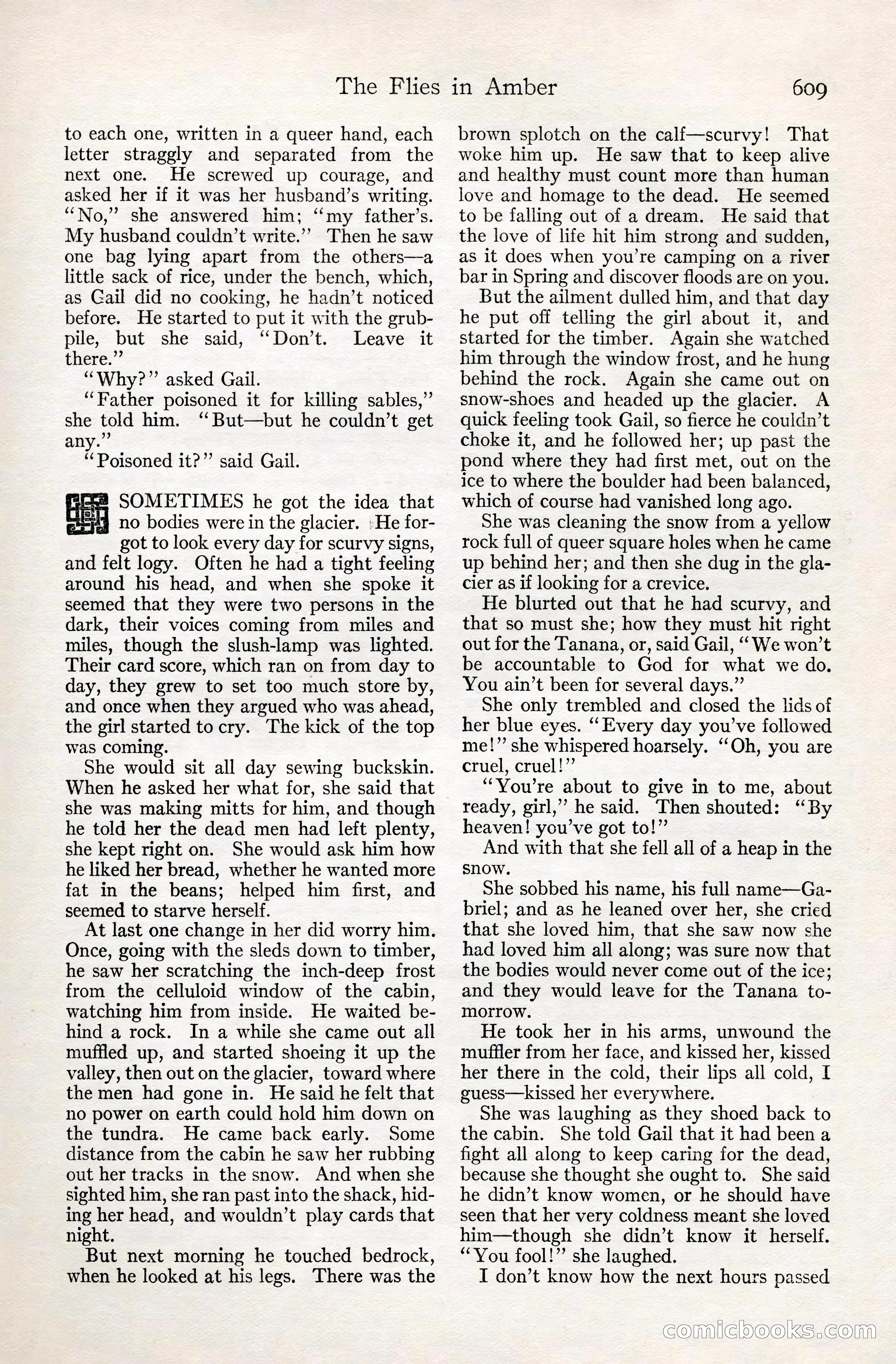
A restored page from Pulp Fiction, 1911. Page through the whole issue in the reader above.
📄 Transcribed text from this page (OCR, searchable)
Machine-transcribed from the original scan — historical spelling and the odd misread are preserved.
The Flies in Amber to each one, written in a queer hand, each letter straggly and separated from the next one. He screwed up courage, and asked her if it was her husband’s writing. “No,” she answered him; “‘my father’s. My husband couldn’t write.’”’ Then he saw one bag lying apart from the others—a little sack of rice, under the bench, which, as Gail did no cooking, he hadn’t noticed before. He started to put it with the grub- pile, but she said, “Don’t. Leave it there.” “Why?” asked Gail. “Father poisoned it for killing sables,”’ she told him. ‘‘But—but he couldn’t get any.” ‘“‘Poisoned it?” said Gail. SOMETIMES he got the idea that eea no bodies were in the glacier. ) He for- got to look every day for scurvy signs, and felt logy. Often he had a tight feeling around his head, and when she spoke it seemed that they were two persons in the dark, their voices coming from miles and miles, though the slush-lamp was lighted. Their card score, which ran on from day to day, they grew to set too much store by, and once when they argued who was ahead, the girl started to cry. The kick of the top was coming. She would sit all day sewing buckskin. When he asked her what for, she said that she was making mitts for him, and though he told her the dead men had left plenty, she kept right on. She would ask him how he liked her bread, whether he wanted more fat in the beans; helped him first, and seemed to starve herself. At last one change in her did worry him. Once, going with the sleds down to timber, he saw her scratching the inch-deep frost from the celluloid window of the cabin, watching him from inside. He waited be- hind a rock. In a while she came out all muffled up, and started shoeing it up the valley, then out on the glacier, toward where the men had gone in. He said he felt that no power on earth could hold him down on the tundra. He came back early. Some distance from the cabin he saw her rubbing out her tracks in the snow. And when she sighted him, she ran past into the shack, hid- ing her head, and wouldn’t play cards that night. But next morning he touched bedrock, when he looked at his legs. There was the 609 brown splotch on the calf—scurvy! That woke him up. He saw that to keep alive and healthy must count more than human love and homage to the dead. He seemed to be falling out of a dream. He said that the love of life hit him strong and sudden, as it does when you’re camping on a river bar in Spring and discover floods are on you. But the ailment dulled him, and that day he put off telling the girl about it, and started for the timber. Again she watched him through the window frost, and he hung behind the rock. Again she came out on snow-shoes and headed up the glacier. A quick feeling took Gail, so fierce he couldn’t choke it, and he followed her; up past the pond where they had first met, out on the ice to where the boulder had been balanced, which of course had vanished long ago. She was cleaning the snow from a yellow rock full of queer square holes when he came up behind her; and then she dug in the gla- cier as if looking for a crevice. He blurted out that he had scurvy, and that so must she; how they must hit right out for the Tanana, or, said Gail, “We won’t be accountable to God for what we do. You ain’t been for several days.”’ She only trembled and closed the lids of her blue eyes. “Every day you’ve followed me!”’ she whispered hoarsely. ‘‘Oh, you are cruel, cruel!”’ ‘You're about to give in to me, about ready, girl,” he said. Then shouted: “By heaven! you’ve got to!” And with that she fell all of a heap in the snow. She sobbed his name, his full name—Ga- briel; and as he leaned over her, she cried that she loved him, that she saw now she had loved him all along; was sure now that the bodies would never come out of the ice; and they would leave for the Tanana to- morrow. He took her in his arms, unwound the muffler from her face, and kissed her, kissed her there in the cold, their lips all cold, I guess—kissed her everywhere. She was laughing as they shoed back to the cabin. She told Gail that it had been a fight all along to keep caring for the dead, because she thought she ought to. She said he didn’t know women, or he should have seen that her very coldness meant she loved him—though she didn’t know it herself. ‘You fool!” she laughed. I don’t know how the next hours passed COnMICLOOCkKS. EGO