
Pulp Fiction, 1911 · page 102 of 196
Adventure Magazine Cover — page 102: what you’re looking at
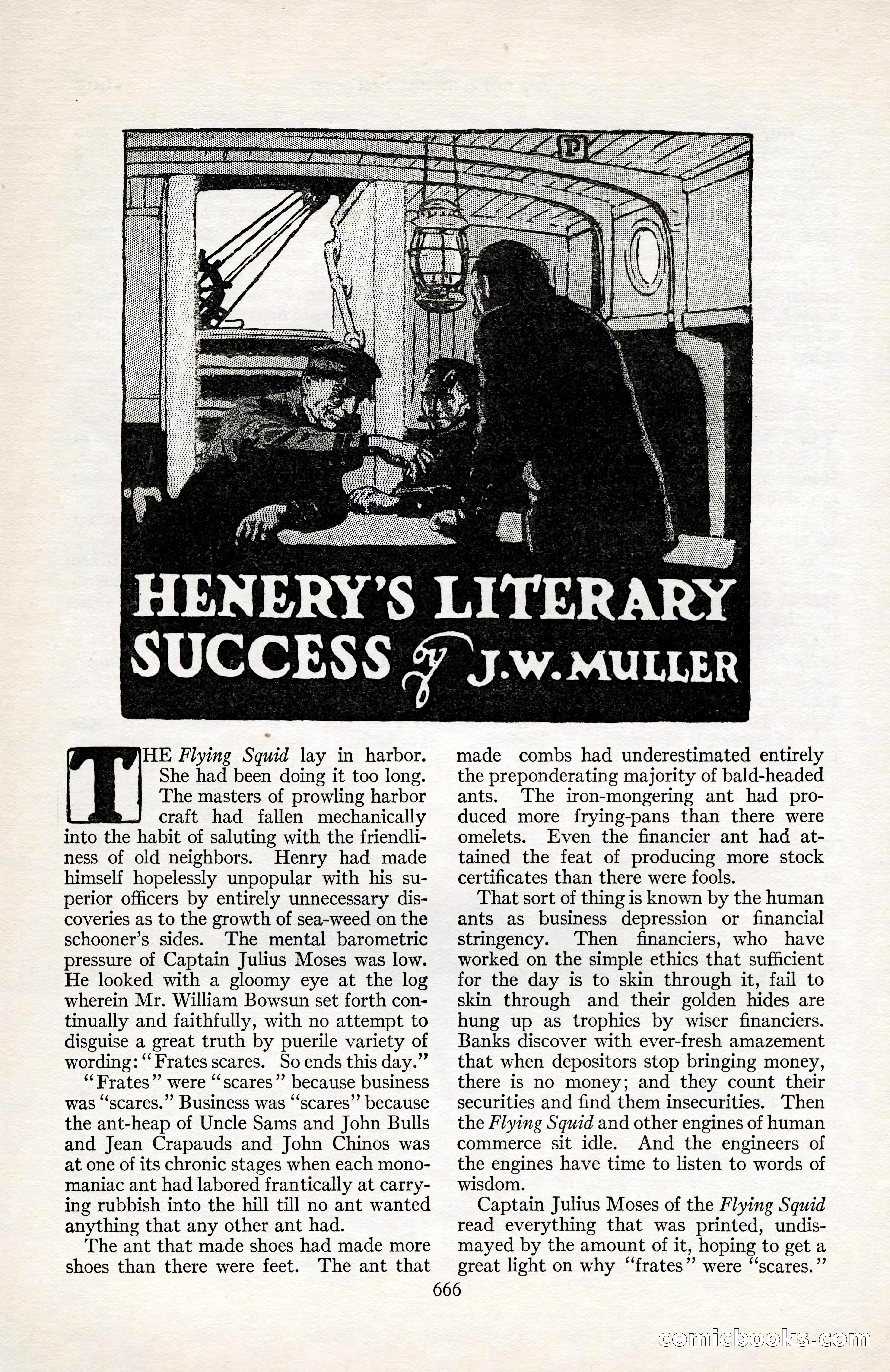
A restored page from Pulp Fiction, 1911. Page through the whole issue in the reader above.
📄 Transcribed text from this page (OCR, searchable)
Machine-transcribed from the original scan — historical spelling and the odd misread are preserved.
HENERY’S LITERARY SUCCESS HE Flying Squid lay in harbor. She had been doing it too long. The masters of prowling harbor craft had fallen mechanically into the habit of saluting with the friendli- ness of old neighbors. Henry had made himself hopelessly unpopular with his su- perior officers by entirely unnecessary dis- coveries as to the growth of sea-weed on the schooner’s sides. The mental barometric pressure of Captain Julius Moses was low. He looked with a gloomy eye at the log wherein Mr. William Bowsun set forth con- tinually and faithfully, with no attempt to disguise a great truth by puerile variety of wording: “‘ Frates scares. So ends this day.” “‘Frates” were “‘scares”’ because business was “scares.” Business was “‘scares’’ because the ant-heap of Uncle Sams and John Bulls and Jean Crapauds and John Chinos was at one of its chronic stages when each mono- maniac ant had labored frantically at carry- ing rubbish into the hill till no ant wanted anything that any other ant had. The ant that made shoes had made more shoes than there were feet. The ant that J: Ww. MULLER made combs had underestimated entirely the preponderating majority of bald-headed ants. The iron-mongering ant had pro- duced more frying-pans than there were omelets. Even the financier ant had at- tained the feat of producing more stock certificates than there were fools. That sort of thing is known by the human ants as business depression or financial stringency. Then financiers, who have worked on the simple ethics that sufficient for the day is to skin through it, fail to skin through and their golden hides are hung up as trophies by wiser financiers. Banks discover with ever-fresh amazement that when depositors stop bringing money, there is no money; and they count their securities and find them insecurities. Then the Flying Squid and other engines of human commerce sit idle. And the engineers of the engines have time to listen to words of wisdom. Captain Julius Moses of the Flying Squid read everything that was printed, undis- mayed by the amount of it, hoping to get a great light on why “‘frates”’ were ‘‘scares.”’ 666 COmMICOOCKKS. EGO