
Pulp Fiction, 1922 · page 178 of 200
Adventure Magazine Cover — page 178: what you’re looking at
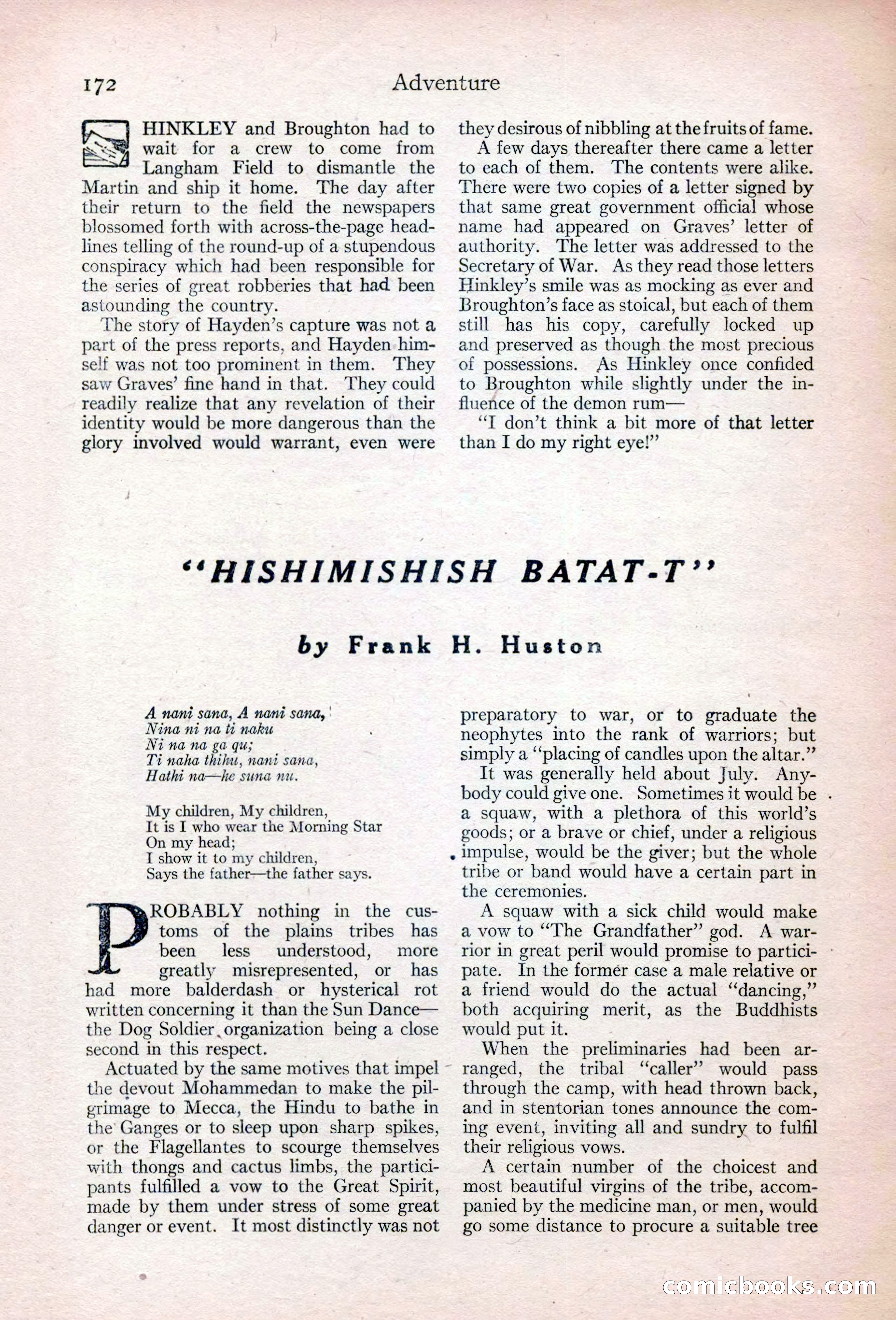
A restored page from Pulp Fiction, 1922. Page through the whole issue in the reader above.
📄 Transcribed text from this page (OCR, searchable)
Machine-transcribed from the original scan — historical spelling and the odd misread are preserved.
172 HINKLEY and Broughton had to wait for a crew to come from Langham Field to dismantle the Martin and ship it home. The day after their return to the field the newspapers blossomed forth with across-the-page head- lines telling of the round-up of a stupendous conspiracy which had been responsible for the series of great robberies that had been astounding the country. The story of Hayden’s capture was not a part of the press reports, and Hayden him- self was not too prominent in them. They saw Graves’ fine hand in that. They could readily realize that any revelation of their identity would be more dangerous than the glory involved would warrant, even were as S. SS Adventure they desirous of nibbling at the fruits of fame. A few days thereafter there came a letter to each of them. The contents were alike. There were two copies of a letter signed by that same great government official whose name had appeared on Graves’ letter of authority. The letter was addressed to the Secretary of War. As they read those letters Hinkley’s smile was as mocking as ever and Broughton’s face as stoical, but each of them still has his copy, carefully locked up and preserved as though the most precious of possessions. As Hinkley once confided to Broughton while slightly under the in- fluence of the demon rum— “T don’t think a bit more of that letter than I do my right eye!”’ ““AISHIMISHISH BATAT-T’’ by Frank H. Huston A nani sana, A nani sana, ' Nina ni na ti naku Ni na na ga qu; Ti naha thik, nani sana, Hathi na—he suna nu. My children, My children, It is I who wear the Morning Star On my head; I show it to my children, Says the father—the father says. ROBABLY nothing in the cus- toms of the plains tribes has been less understood, more greatly misrepresented, or has had more balderdash or hysterical rot written concerning it than the Sun Dance— the Dog Soldier. organization being a close second in this respect. Actuated by the same motives that impel - the devout Mohammedan to make the pil- grimage to Mecca, the Hindu to bathe in the Ganges or to sleep upon sharp spikes, or the Flagellantes to scourge themselves with thongs and cactus limbs, the partici- pants fulfilled a vow to the Great Spirit, made by them under stress of some great danger or event. It most distinctly was not preparatory to war, or to graduate the neophytes into the rank of warriors; but simply a “placing of candles upon the altar.” It was generally held about July. Any- body could give one. Sometimes it would be . a squaw, with a plethora of this world’s goods; or a brave or chief, under a religious impulse, would be the giver; but the whole tribe or band would have a certain part in the ceremonies. A squaw with a sick child would make a vow to “The Grandfather” god. A war- rior in great peril would promise to partici- - pate. In the former case a male relative or a friend would do the actual “dancing,” both acquiring merit, as the Buddhists would put it. When the preliminaries had been ar- ranged, the tribal ‘caller’ would pass through the camp, with head thrown back, and in stentorian tones announce the com- ing event, inviting all and sundry to fulfil their religious vows. A certain number of the choicest and most beautiful virgins of the tribe, accom- panied by the medicine man, or men, would go some distance to procure a suitable tree Go 0)(@\) ANG S (E@