
Pulp Fiction, 1922 · page 137 of 200
Adventure Magazine Cover — page 137: what you’re looking at
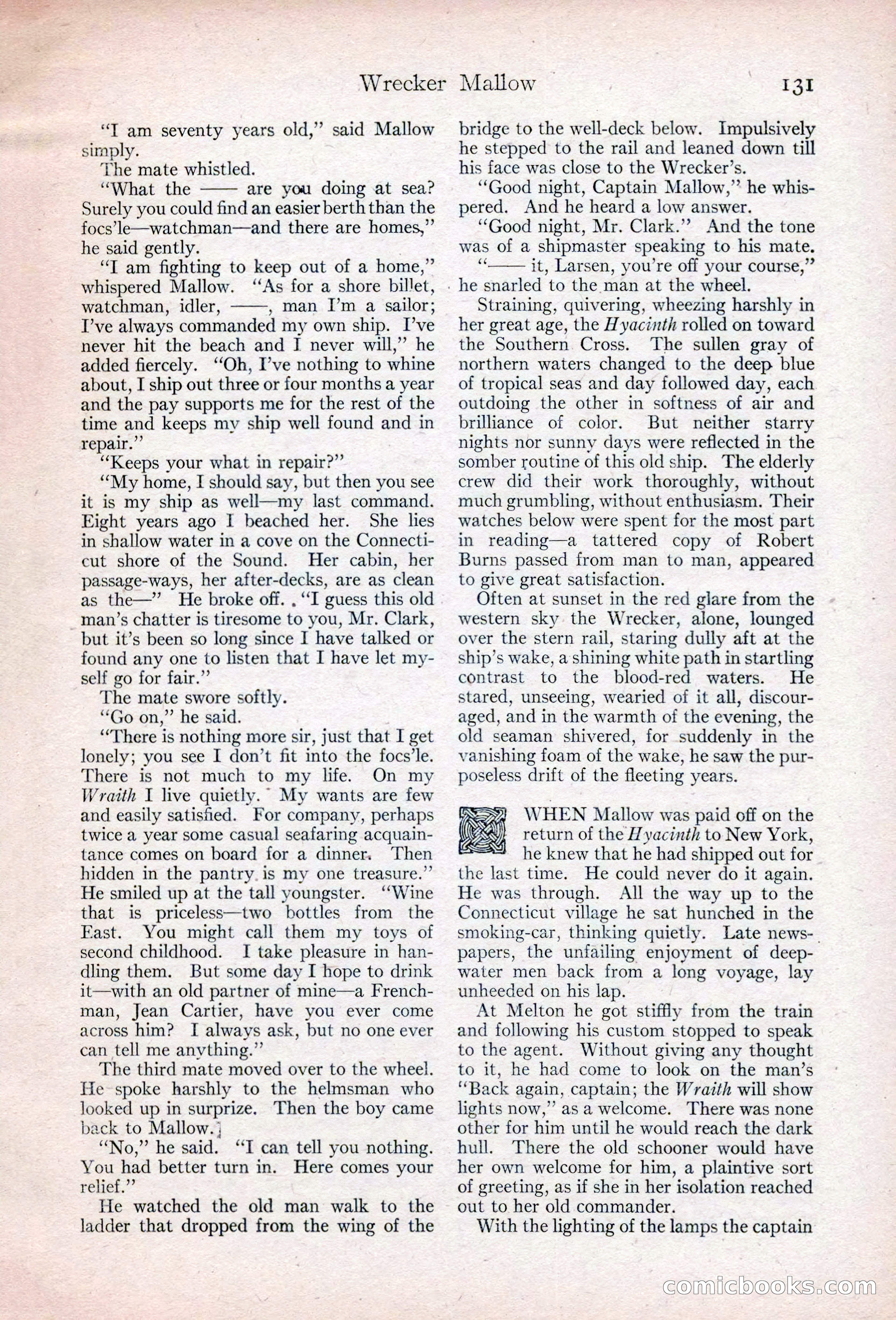
A restored page from Pulp Fiction, 1922. Page through the whole issue in the reader above.
📄 Transcribed text from this page (OCR, searchable)
Machine-transcribed from the original scan — historical spelling and the odd misread are preserved.
Wrecker Mallow “T am seventy years old,” said Mallow simply. The mate whistled. “What the are you doing at sea? Surely you could find an easier berth than the focs’le—watchman—and there are homes,” he said gently. “T am fighting to keep out of a home,” whispered Mallow. ‘‘As for a shore billet, watchman, idler, ——, man I’m a sailor; I’ve always commanded my own ship. I’ve never hit the beach and I never will,” he added fiercely. ‘Oh, I’ve nothing to whine about, I ship out three or four months a year and the pay supports me for the rest of the time and keeps mv ship well found and in repair.” “Keeps your what in repair?” ““My home, I should say, but then you see it is my ship as well—my last command. Eight years ago I beached her. She lies in shallow water in a cove on the Connecti- cut shore of the Sound. Her cabin, her passage-ways, her after-decks, are as clean as the—” He broke off. , “I guess this old man’s chatter is tiresome to you, Mr. Clark, but it’s been so long since I have talked or found any one to listen that I have let my- self go for fair.”’ The mate swore softly. “Go on,” he said. ‘There is nothing more sir, just that I get lonely; you see I don’t fit into the focs’le. There is not much to my life. On my Wraith I live quietly.” My wants are few and easily satished. For company, perhaps twice a year some casual seafaring acquain- tance comes on board for a dinner. Then hidden in the pantry. is my one treasure.”’ He smiled up at the tall youngster. ‘Wine that is priceless—two bottles from the East. You might call them my toys of second childhood. I take pleasure in han- dling them. But some day I hope to drink it—with an old partner of mine—a French- man, Jean Cartier, have you ever come across him? I always ask, but no one ever can tell me anything.” The third mate moved over to the wheel. He spoke harshly to the helmsman who looked up in surprize. Then the boy came back to Mallow. j “No,” he said. “I can tell you nothing. You had better turn in. Here comes your relief.” He watched the old man walk to the ladder that dropped from the wing of the 131 bridge to the well-deck below. Impulsively he stepped to the rail and leaned down till his face was close to the Wrecker’s. “Good night, Captain Mallow,” he whis- pered. And he heard a low answer. “Good night, Mr. Clark.”” And the tone was of a shipmaster speaking to his mate. . it, Larsen, you’re off your course,” . he snarled to the man at the wheel. Straining, quivering, wheezing harshly in her great age, the Hyacinth rolled on toward the Southern Cross. The sullen gray of northern waters changed to the deep blue of tropical seas and day followed day, each outdoing the other in softness of air and brilliance of color. But neither starry nights nor sunny days were reflected in the somber routine of this old ship. The elderly crew did their work thoroughly, without much grumbling, without enthusiasm. Their watches below were spent for the most part in reading—a tattered copy of Robert Burns passed from man to man, appeared to give great satisfaction. Often at sunset in the red glare from the western sky the Wrecker, alone, lounged over the stern rail, staring dully aft at the ship’s wake, a shining white path in startling contrast to the blood-red waters. He stared, unseeing, wearied of it all, discour- aged, and in the warmth of the evening, the old seaman shivered, for suddenly in the vanishing foam of the wake, he saw the pur- poseless drift of the fleeting years. ii WHEN Mallow was paid off on the (S WSS Sy) return of the Hyacinth to New York, he knew that he had shipped out for the last time. He could never do it again. He was through. All the way up to the Connecticut village he sat hunched in the smoking-car, thinking quietly. papers, the unfailing enjoyment of deep- water men back from a long voyage, lay unheeded on his lap. At Melton he got stiffly from the train and following his custom stopped to speak to the agent. Without giving any thought to it, he had come to look on the man’s “Back again, captain; the Wraith will show lights now,’ asa welcome. There was none other for him until he would reach the dark hull. There the old schooner would have her own welcome for him, a plaintive sort of greeting, as if she in her isolation reached out to her old commander. With the lighting of the lamps the captain COMmicloooks Late news- (C@