
Pulp Fiction, 1922 · page 105 of 200
Adventure Magazine Cover — page 105: what you’re looking at
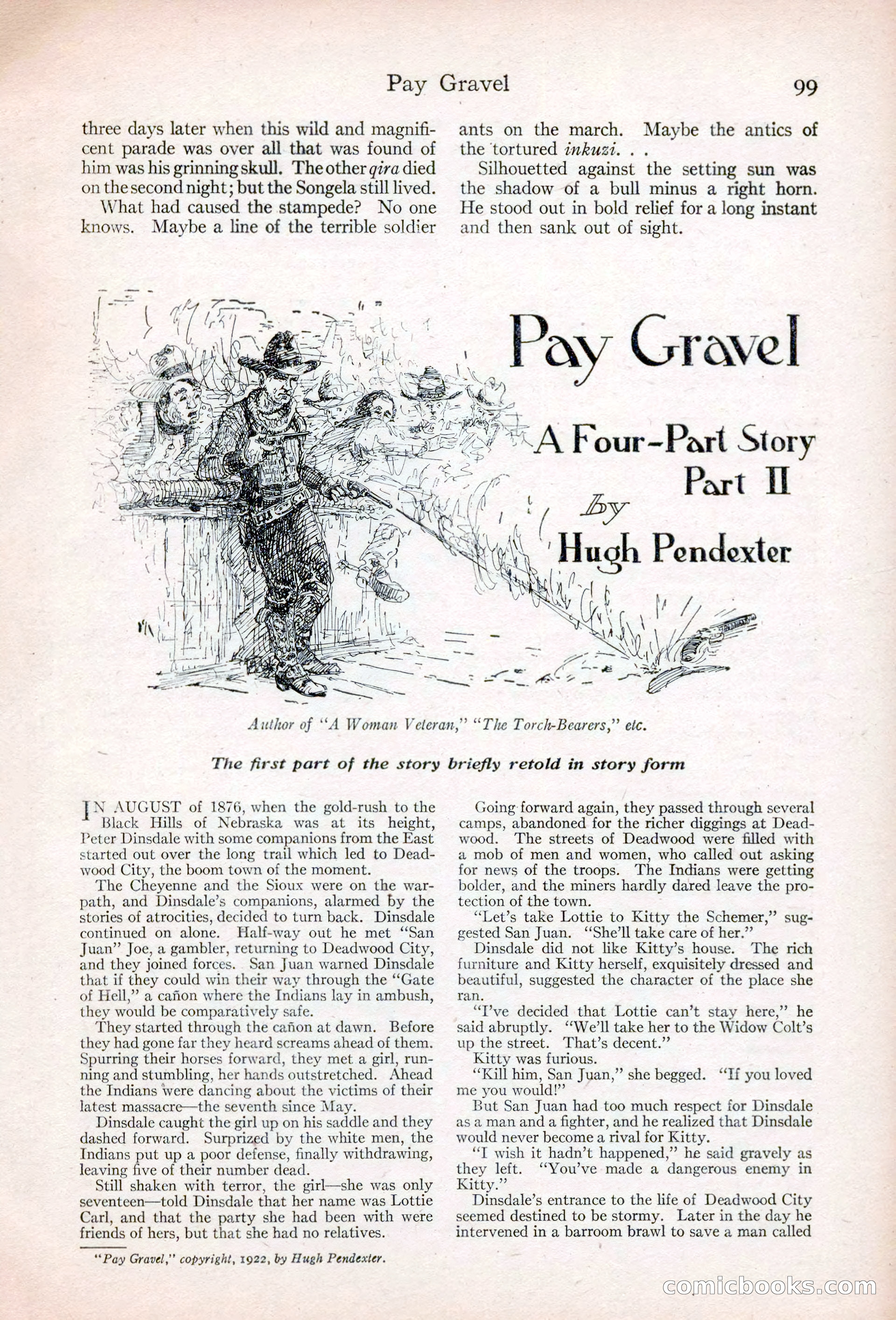
A restored page from Pulp Fiction, 1922. Page through the whole issue in the reader above.
📄 Transcribed text from this page (OCR, searchable)
Machine-transcribed from the original scan — historical spelling and the odd misread are preserved.
Pay Gravel three days later when this wild and magnifi- cent parade was over all that was found of him was his grinning skull. The other gira died on thesecond night; but the Songela still lived. What had caused the stampede? No one knows. Maybe a line of the terrible soldier tary WS ey SASS aN x SS R) a Wa we SB SS eS ea wz S OS. a L& SS \ \ @ a es X \ . VA 99 ants on the march. Maybe the antics of the tortured inkuzi. . . Silhouetted against the setting sun was the shadow of a bull minus a right horn. He stood out in bold relief for a long instant and then sank out of sight. AS f a — 4 ; EA Four-Part Story a by Part Il Hugh Pendexter ’ f WY s (( \ << Author of “A Woman Veteran,” “The Torch-Bearers,” etc. The first part of the story briefly retold in story form EN AUGUST of 1876, when the gold-rush to the Black Hills of Nebraska was at its height, Peter Dinsdale with some companions from the East started out over the long trail which led to Dead- wood City, the boom town of the moment. The Cheyenne and the Sioux were on the war- path, and Dinsdale’s companions, alarmed by the stories of atrocities, decided to turn back. Dinsdale continued on alone. Half-way out he met “San Juan” Joe, a gambler, returning to Deadwood City, and they joined forces. San Juan warned Dinsdale that if they could win their way through the “Gate of Hell,” a cafion where the Indians lay in ambush, they would be comparatively safe. They started through the cafion at dawn. Before they had gone far they heard screams ahead of them. Spurring their horses forward, they met a girl, run- ning and stumbling, her hands outstretched. Ahead the Indians were dancing about the victims of their latest massacre—the seventh since May. Dinsdale caught the girl up on his saddle and they dashed forward. Surprized by the white men, the Indians put up a poor defense, finally withdrawing, leaving five of their number dead. Still shaken with terror, the girl—she was only seventeen—told Dinsdale that her name was Lottie Carl, and that the party she had been with were friends of hers, but that she had no relatives. ‘Pay Gravel,’ copyright, 1922, by Hugh Pendexter. Going forward again, they passed through several camps, abandoned for the richer diggings at Dead- wood. The streets of Deadwood were filled with a mob of men and women, who called out asking for news of the troops. The Indians were getting bolder, and the miners hardly dared leave the pro- tection of the town. “Let’s take Lottie to Kitty the Schemer,” sug- gested San Juan. “She’ll take care of her.” Dinsdale did not like Kitty’s house. The rich furniture and Kitty herself, exquisitely dressed and beautiful, suggested the character of the place she ran. “T’ve decided that Lottie can’t stay here,’ he said abruptly. ‘‘We’ll take her to the Widow Colt’s up the street. That’s decent.” Kitty was furious. “Kill him, San Juan,” she begged. “If you loved me you would!” But San Juan had too much respect for Dinsdale as a man and a fighter, and he realized that Dinsdale would never become a rival for Kitty. “T wish it hadn’t happened,” he said gravely as they left. ‘“‘You’ve made a dangerous enemy in Kitty.” Dinsdale’s entrance to the life of Deadwood City seemed destined to be stormy. Later in the day he intervened in a barroom brawl to save a man called COmicloooks (C@