
Pulp Fiction, 1922 · page 144 of 202
Adventure Magazine Cover — page 144: what you’re looking at
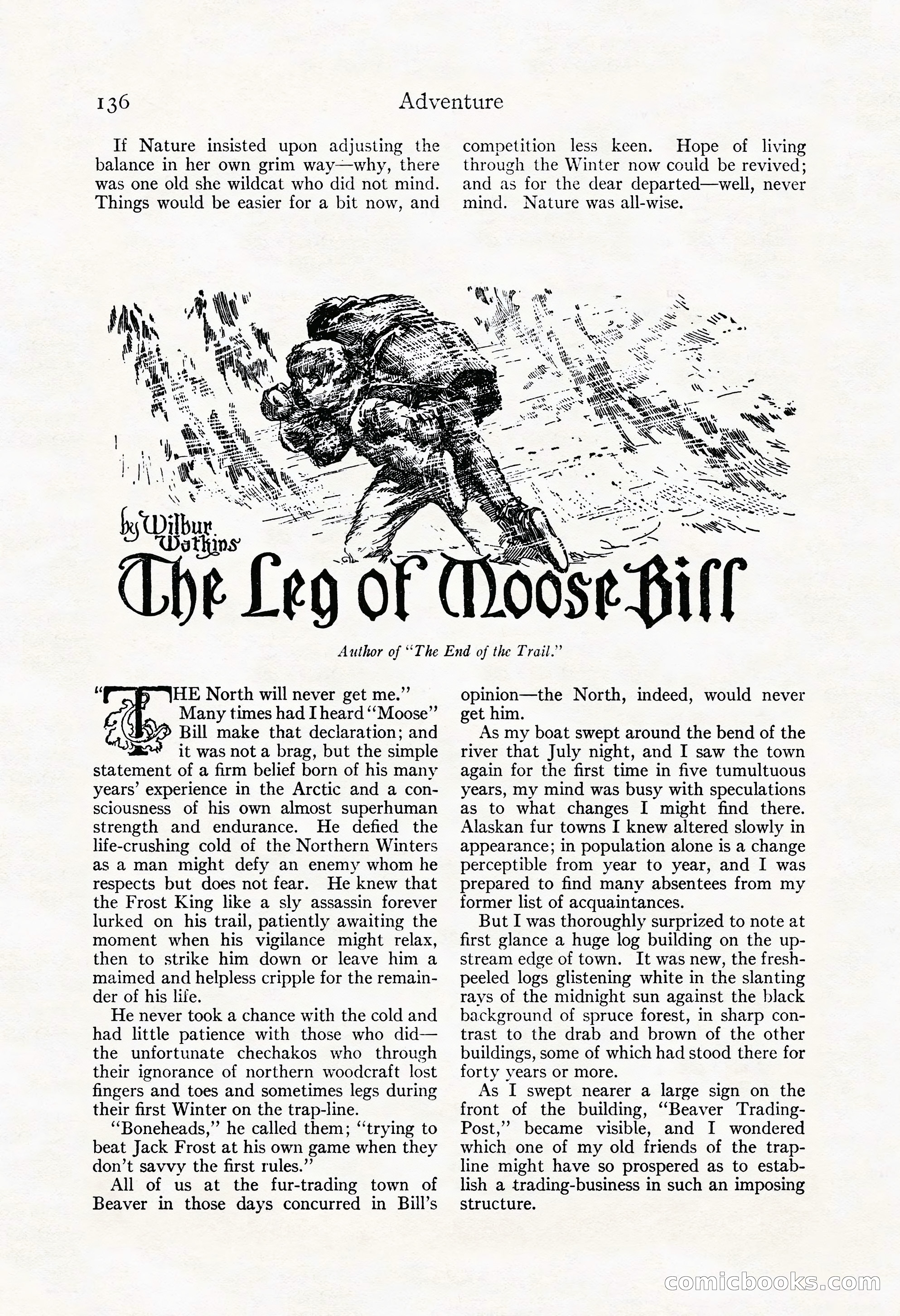
A restored page from Pulp Fiction, 1922. Page through the whole issue in the reader above.
📄 Transcribed text from this page (OCR, searchable)
Machine-transcribed from the original scan — historical spelling and the odd misread are preserved.
136 If Nature insisted upon adjusting the balance in her own grim way—why, there was one old she wildcat who did not mind. Things would be easier for a bit now, and Adventure competition less keen. Hope of living through the Winter now could be revived; and as for the dear departed—well, never mind. Nature was all-wise. i ¥ ye « NX, Ns « ‘ sy = . Aw . 255, < cr \, aa f = NOG ee SS ue \ ta et . - Wen SS - wa we A tae mt. Stee SNS Zs aS Ws, Het, =~ = “ea NX | hy \ : NO NWRS RP es ey Ze = S, SS SS e ‘Wath ns’ K Author of “The End of the Trail.” y HE North will never get me.”’ opinion—the North, indeed, would never Many times had I heard ‘‘Moose”’ cas Bill make that declaration; and it was not a brag, but the simple statement of a firm belief born of his many years’ experience in the Arctic and a con- sciousness of his own almost superhuman strength and endurance. He defied the life-crushing cold of the Northern Winters as a man might defy an enemy whom he respects but does not fear. He knew that the Frost King like a sly assassin forever lurked on his trail, patiently awaiting the moment when his vigilance might relax, then to strike him down or leave him a maimed and helpless cripple for the remain- der of his life. He never took a chance with the cold and had little patience with those who did— the unfortunate chechakos who through their ignorance of northern woodcraft lost fingers and toes and sometimes legs during their first Winter on the trap-line. ‘“‘Boneheads,”’ he called them; ‘‘trying to beat Jack Frost at his own game when they don’t savvy the first rules.” All of us at the fur-trading town of Beaver in those days concurred in Bill’s get him. As my boat swept around the bend of the river that July night, and I saw the town again for the first time in five tumultuous years, my mind was busy with speculations as to what changes I might find there. Alaskan fur towns I knew altered slowly in appearance; in population alone is a change perceptible from year to year, and I was prepared to find many absentees from my former list of acquaintances. But I was thoroughly surprized to note at first glance a huge log building on the up- stream edge of town. It was new, the fresh- peeled logs glistening white in the slanting rays of the midnight sun against the black background of spruce forest, in sharp con- trast to the drab and brown of the other buildings, some of which had stood there for forty years or more. As I swept nearer a large sign on the front of the building, ‘‘Beaver Trading- Post,” became visible, and I wondered which one of my old friends of the trap- line might have so prospered as to estab- lish a trading-business in such an imposing structure. Go NOOLK 3} Ee S co 3}