
Pulp Fiction, 1921 · page 60 of 204
Adventure Magazine Cover — page 60: what you’re looking at
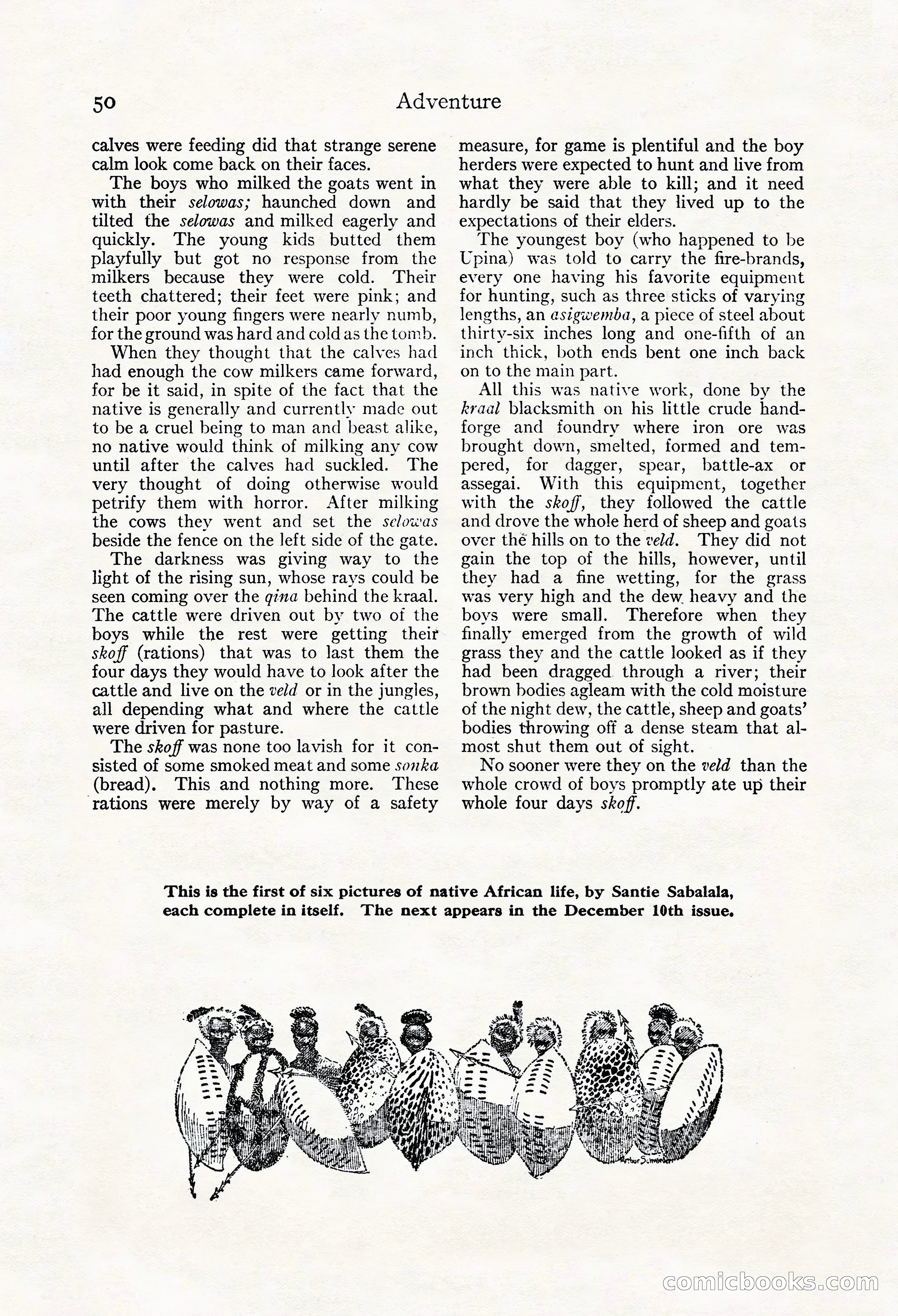
A restored page from Pulp Fiction, 1921. Page through the whole issue in the reader above.
📄 Transcribed text from this page (OCR, searchable)
Machine-transcribed from the original scan — historical spelling and the odd misread are preserved.
50 calves were feeding did that strange serene calm look come back on their faces. The boys who milked the goats went in with their selowas; haunched down and tilted the selowas and milked eagerly and quickly. The young kids butted them playfully but got no response from the milkers because they were cold. Their teeth chattered; their feet were pink; and their poor young fingers were nearly numb, for the ground was hard and cold as the tomb. When they thought that the calves had had enough the cow milkers came forward, for be it said, in spite of the fact that the native is generally and currently made out to be a cruel being to man and beast alike, no native would think of milking any cow until after the calves had suckled. The very thought of doing otherwise would petrify them with horror. After milking the cows they went and set the selowas beside the fence on the left side of the gate. The darkness was giving way to the light of the rising sun, whose rays could be seen coming over the gzma behind the kraal. The cattle were driven out by two of the boys while the rest were getting their skoff (rations) that was to last them the four days they would have to look after the cattle and live on the veld or in the jungles, all depending what and where the cattle were driven for pasture. The skoff was none too lavish for it con- sisted of some smoked meat and some sonka (bread). This and nothing more. These ‘rations were merely by way of a safety Adventure measure, for game is plentiful and the boy herders were expected to hunt and live from what they were able to kill; and it need hardly be said that they lived up to the expectations of their elders. The youngest boy (who happened to be Upina) was told to carry the fire-brands, every one having his favorite equipment for hunting, such as three sticks of varying lengths, an esigwemba, a piece of steel about thirty-six inches long and one-fifth of an inch thick, both ends bent one inch back on to the main part. All this was native work, done by the kraal blacksmith on his little crude hand- forge and foundry where iron ore was brought down, smelted, formed and tem- pered, for dagger, spear, battle-ax or assegai. With this equipment, together with the skoff, they followed the cattle and drove the whole herd of sheep and goats over the hills on to the veld. They did not gain the top of the hills, however, until they had a fine wetting, for the grass was very high and the dew heavy and the boys were small. Therefore when they finally emerged from the growth of wild grass they and the cattle looked as if they had been dragged. through a river; their brown bodies agleam with the cold moisture of the night dew, the cattle, sheep and goats’ bodies throwing off a dense steam that al- most shut them out of sight. No sooner were they on the veld than the whole crowd of boys promptly ate up their whole four days skoff. This is the first of six pictures of native African life, by Santie Sabalala, each complete in itself. The next appears in the December 10th issue. Go JOO S CO in