
Pulp Fiction, 1921 · page 40 of 204
Adventure Magazine Cover, October 10, 1921 — page 40: what you’re looking at
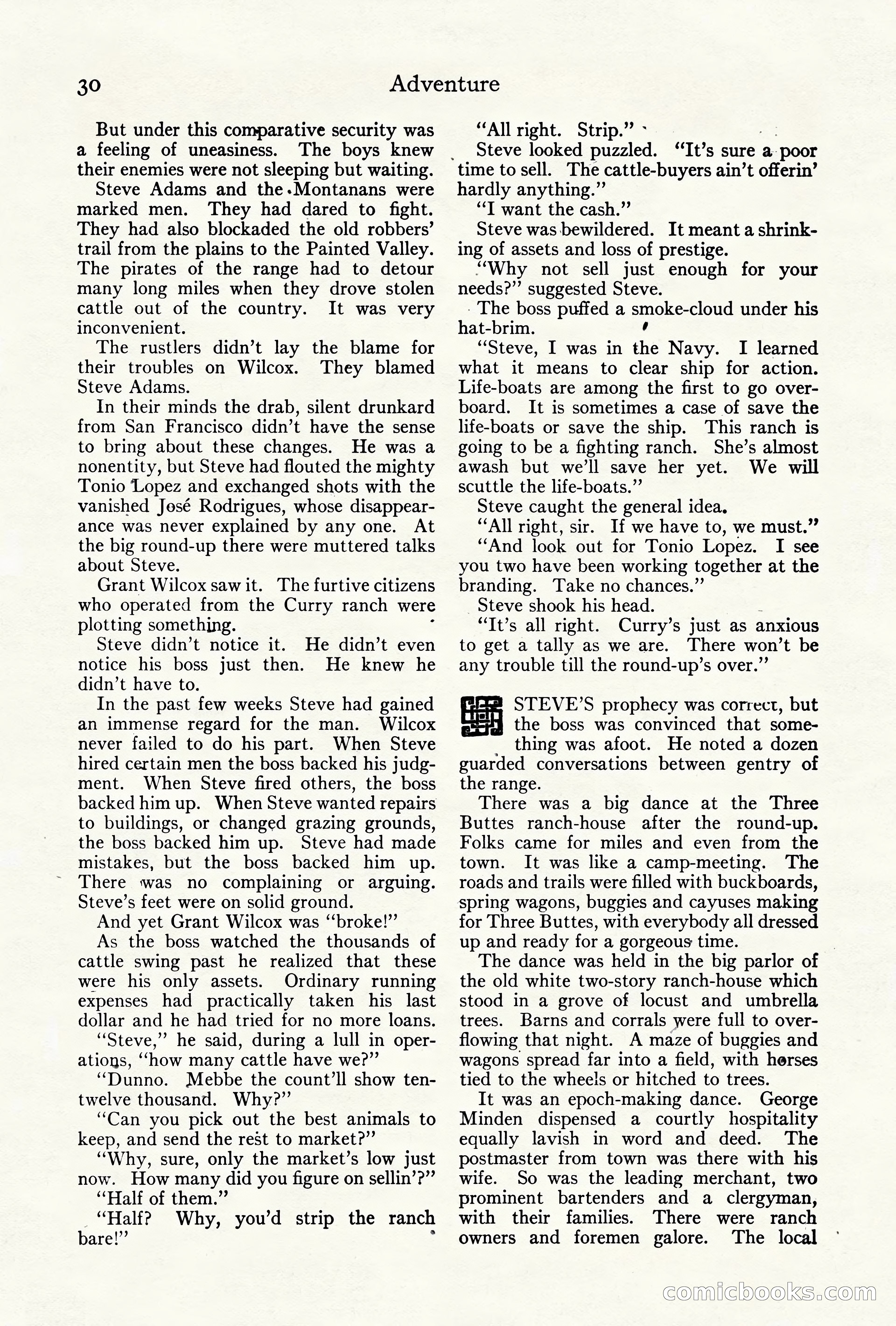
A restored page from Pulp Fiction, 1921. Page through the whole issue in the reader above.
📄 Transcribed text from this page (OCR, searchable)
Machine-transcribed from the original scan — historical spelling and the odd misread are preserved.
30 But under this comparative security was a feeling of uneasiness. The boys knew their enemies were not sleeping but waiting. Steve Adams and the.-Montanans were marked men. They had dared to fight. They had also blockaded the old robbers’ trail from the plains to the Painted Valley. The pirates of the range had to detour many long miles when they drove stolen cattle out of the country. It was very inconvenient. The rustlers didn’t lay the blame for their troubles on Wilcox. They blamed Steve Adams. In their minds the drab, silent drunkard from San Francisco didn’t have the sense to bring about these changes. He was a nonentity, but Steve had flouted the mighty Tonio Lopez and exchanged shots with the vanished José Rodrigues, whose disappear- ance was never explained by any one. At the big round-up there were muttered talks about Steve. Grant Wilcox saw it. The furtive citizens who operated from the Curry ranch were plotting something. Steve didn’t notice it. notice his boss just then. didn’t have to. In the past few weeks Steve had gained an immense regard for the man. Wilcox never failed to do his part. When Steve hired certain men the boss backed his judg- ment. When Steve fired others, the boss He didn’t even He knew he backed him up. When Steve wanted repairs to buildings, or changed grazing grounds, the boss backed him up. Steve had made mistakes, but the boss backed him up. There was no complaining or arguing. Steve’s feet were on solid ground. And yet Grant Wilcox was ‘‘broke!”’ As the boss watched the thousands of cattle swing past he realized that these were his only assets. Ordinary running expenses had practically taken his last dollar and he had tried for no more loans. “Steve,” he said, during a lull in oper- ations, “chow many cattle have we?”’ “Dunno. Mebbe the count’ll show ten- twelve thousand. Why?” “Can you pick out the best animals to keep, and send the rest to market?” ‘Why, sure, only the market’s low just now. How many did you figure on sellin’?”’ “Half of them.” _ “Half? Why, you’d strip the ranch bare!”’ : Adventure “All right. Strip.” : os Steve looked puzzled. “It’s sure a poor time to sell. The cattle-buyers ain’t offerin’ hardly anything.” “T want the cash.” Steve was bewildered. It meant a shrink- ing of assets and loss of prestige. “Why not sell just enough for your needs?” suggested Steve. - The boss puffed a Se) eee under his hat-brim. “Steve, I was in fe Navy. I learned what it means to clear ship for action. Life-boats are among the first to go over- board. It is sometimes a case of save the life-boats or save the ship. This ranch is going to be a fighting ranch. She’s almost awash but we’ll save her yet. We will scuttle the life-boats.”’ Steve caught the general idea. “All right, sir. If we have to, we must.” ‘‘And look out for Tonio Lopez. I see you two have been working together at the branding. Take no chances.”’ _ Steve shook his head. - “It’s all right. Curry’s just as anxious to get a tally as we are. There won’t be any trouble till the round-up’s over.” STEVE’S prophecy was correct, but the boss was convinced that some- thing was afoot. He noted a dozen guarded conversations between gentry of the range. There was a big dance at the Three Buttes ranch-house after the round-up. Folks came for miles and even from the town. It was like a camp-meeting. The roads and trails were filled with buckboards, spring wagons, buggies and cayuses making for Three Buttes, with everybody all dressed up and ready for a gorgeous time. The dance was held in the big parlor of © the old white two-story ranch-house which stood in a grove of locust and umbrella trees. Barns and corrals were full to over- flowing that night. A maze of buggies and wagons spread far into a field, with herses tied to the wheels or hitched to trees. It was an epoch-making dance. George Minden dispensed a courtly hospitality equally lavish in word and deed. The postmaster from town was there with his wife. So was the leading merchant, two prominent bartenders and a clergyman, with their families. There were ranch owners and foremen galore. The local COmiclbooks Cc C@