
Pulp Fiction, 1921 · page 36 of 204
Adventure Magazine Cover, October 10, 1921 — page 36: what you’re looking at
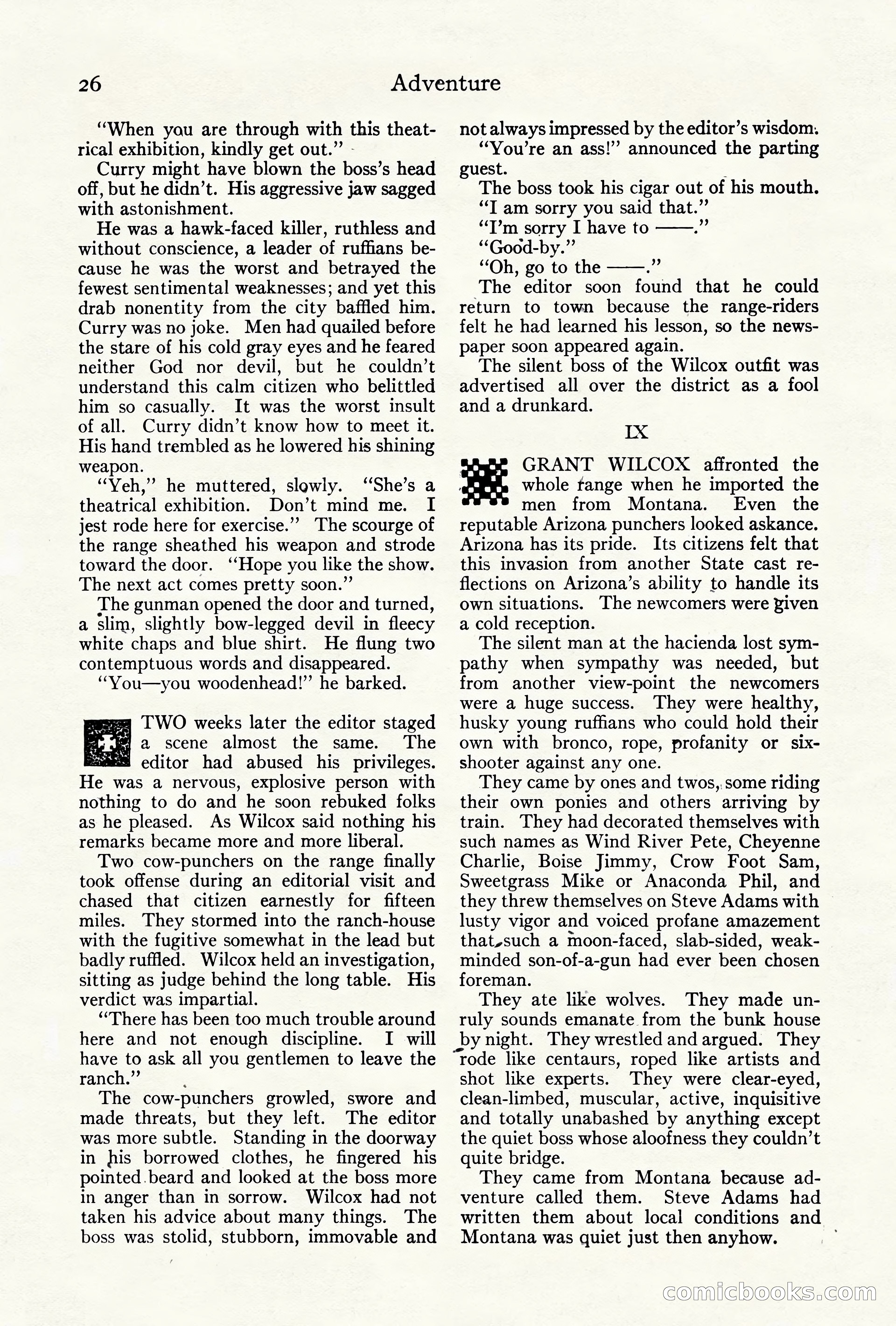
A restored page from Pulp Fiction, 1921. Page through the whole issue in the reader above.
📄 Transcribed text from this page (OCR, searchable)
Machine-transcribed from the original scan — historical spelling and the odd misread are preserved.
26 “When you are through with this theat- rical exhibition, kindly get out.” - Curry might have blown the boss’s head off, but he didn’t. His aggressive jaw sagged with astonishment. He was a hawk-faced killer, ruthless and without conscience, a leader of ruffans be- cause he was the worst and betrayed the fewest sentimental weaknesses; and yet this drab nonentity from the city baffled him. Curry was no joke. Men had quailed before the stare of his cold gray eyes and he feared neither God nor devil, but he couldn’t understand this calm citizen who belittled him so casually. It was the worst insult of all. Curry didn’t know how to meet it. His hand trembled as he lowered his shining weapon. “Veh,” he muttered, slowly. ‘“‘She’s a theatrical exhibition. Don’t mind me. I jest rode here for exercise.”” The scourge of the range sheathed his weapon and strode toward the door. “Hope you like the show. The next act comes pretty soon.’ The gunman opened the door and turned, a slim, slightly bow-legged devil in fleecy white chaps and blue shirt. He flung two contemptuous words and disappeared. ““You—you woodenhead!”’ he barked. we | TWO weeks later the editor staged ¢ sei 2 scene almost the same. The Ee | editor had abused his privileges. He was a nervous, explosive person with nothing to do and he soon rebuked folks as he pleased. As Wilcox said nothing his remarks became more and more liberal. Two cow-punchers on the range finally took offense during an editorial visit and chased that citizen earnestly for fifteen miles. They stormed into the ranch-house with the fugitive somewhat in the lead but badly ruffled. Wilcox held an investigation, sitting as judge behind the long table. His verdict was impartial. “There has been too much trouble around here and not enough discipline. I will have to ask all you gentlemen to leave the ranch.” The cow- -punchers growled, swore and made threats, but they left. The editor was more subtle. Standing in the doorway in his borrowed clothes, he fingered his pointed. beard and looked at the boss more in anger than in sorrow. Wilcox had not taken his advice about many things. The boss was stolid, stubborn, immovable and Adventure not always impressed by the editor’s wisdom. “VYou’re an ass!” announced the parting guest. The boss took his cigar out of his mouth. “T am sorry you said that.” “I’m sorry I have to ——. “‘Good-by.”’ “‘Oh, go to the The editor soon found that he could return to town because the range-riders felt he had learned his lesson, so the news- paper soon appeared again. The silent boss of the Wilcox outfit was advertised all over the district as a fool and a drunkard. 9) IX GRANT WILCOX affronted the whole fange when he imported the men from Montana. Even the reputable Arizona punchers looked askance. Arizona has its pride. Its citizens felt that this invasion from another State cast re- flections on Arizona’s ability to handle its own situations. The newcomers were piven a cold reception. The silent man at the hacienda lost sym- pathy when sympathy was needed, but from another view-point the newcomers were a huge success. They were healthy, husky young ruffians who could hold their own with bronco, rope, profanity or six- shooter against any one. They came by ones and twos,.some riding their own ponies and others arriving by train. They had decorated themselves with such names as Wind River Pete, Cheyenne Charlie, Boise Jimmy, Crow Foot Sam, Sweetgrass Mike or Anaconda Phil, and a they threw themselves on Steve Adams with — lusty vigor and voiced profane amazement that.such a moon-faced, slab-sided, weak- minded son-of-a-gun had ever been chosen foreman. They ate like wolves. They made un- ruly sounds emanate from the bunk house by night. They wrestled and argued. They “rode like centaurs, roped like artists and shot like experts. They were clear-eyed, clean-limbed, muscular, active, inquisitive and totally unabashed by anything except the quiet boss whose aloofness they couldn’t quite bridge. They came from Montana because ad- venture called them. Steve Adams had written them about local conditions and Montana was quiet just then anyhow. cConicloool Cc C@