
Pulp Fiction, 1921 · page 31 of 200
Adventure Magazine Cover, August 18, 1921 — page 31: what you’re looking at
A restored page from Pulp Fiction, 1921. Page through the whole issue in the reader above.
📄 Transcribed text from this page (OCR, searchable)
Machine-transcribed from the original scan — historical spelling and the odd misread are preserved.
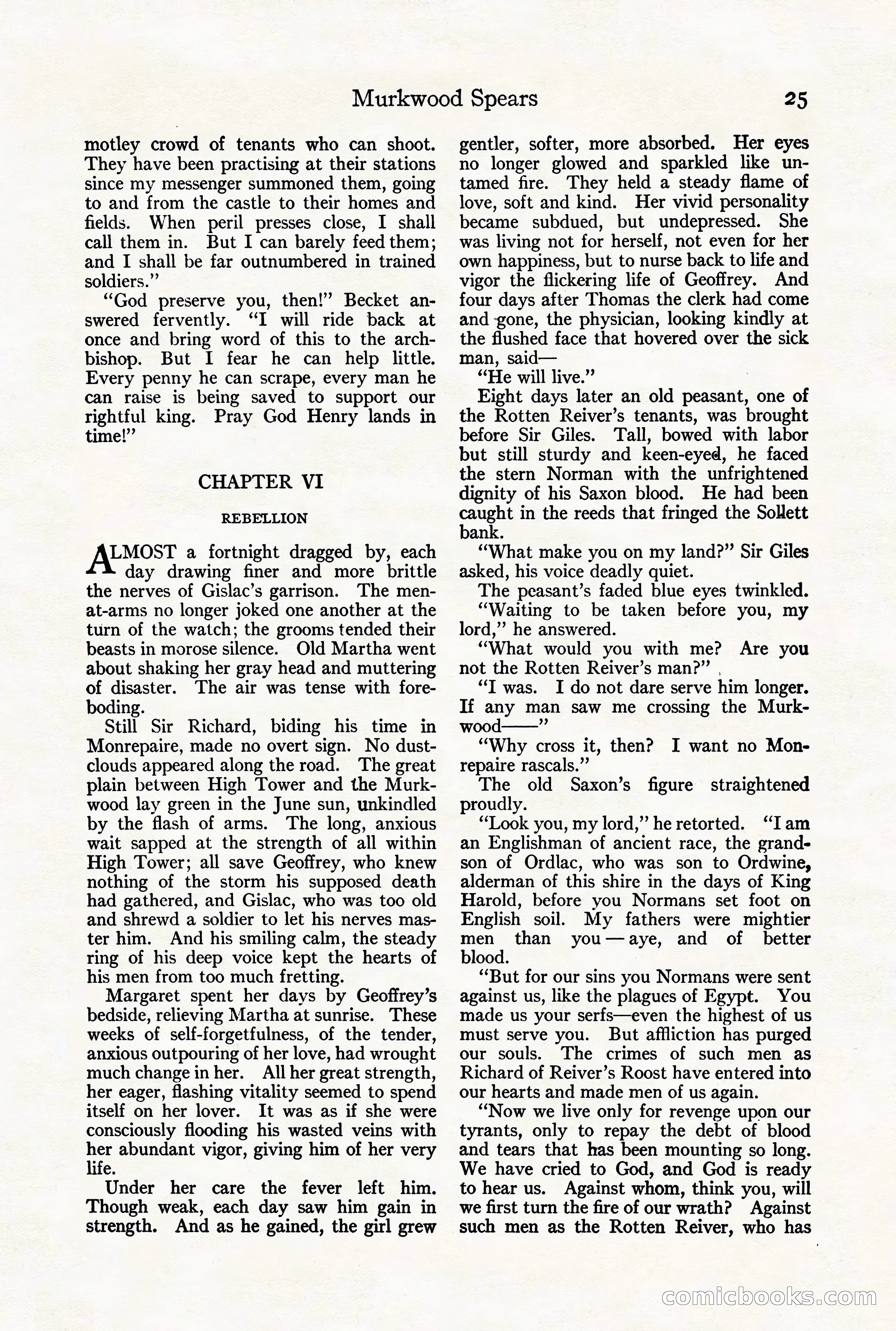
Murkwood Spears motley crowd of tenants who can shoot. They have been practising at their stations since my messenger summoned them, going to and from the castle to their homes and fields. When peril presses close, I shall call them in. But I can barely feed them; and I shall be far outnumbered in trained soldiers.”’ “God preserve you, then!’ Becket an- swered fervently. “I will ride back at once and bring word of this to the arch- bishop. But I fear he can help little. Every penny he can scrape, every man he can raise is being saved to support our rightful king. Pray God Henry lands in time!’ CHAPTER VI REBELLION plese a fortnight dragged by, each day drawing finer and more brittle the nerves of Gislac’s garrison. The men- at-arms no longer joked one another at the turn of the watch; the grooms tended their beasts in morose silence. Old Martha went about shaking her gray head and muttering of disaster. The air was tense with fore- boding. Still Sir Richard, biding his time in Monrepaire, made no overt sign. No dust- clouds appeared along the road. The great plain between High Tower and the Murk- wood lay green in the June sun, unkindled by the flash of arms. The long, anxious wait sapped at the strength of all within High Tower; all save Geoffrey, who knew nothing of the storm his supposed death had gathered, and Gislac, who was too old and shrewd a soldier to let his nerves mas- ter him. And his smiling calm, the steady ring of his deep voice kept the hearts of his men from too much fretting. Margaret spent her days by Geoffrey’s bedside, relieving Martha at sunrise. These weeks of self-forgetfulness, of the tender, anxious outpouring of her love, had wrought much change inher. All her great strength, her eager, flashing vitality seemed to spend itself on her lover. It was as if she were consciously flooding his wasted veins with her abundant vigor, giving him of her very life. Under her care the fever left him. Though weak, each day saw him gain in strength. And as he gained, the girl grew 29 gentler, softer, more absorbed. Her eyes no longer glowed and sparkled like un- tamed fire. They held a steady flame of love, soft and kind. Her vivid personality became subdued, but undepressed. She was living not for herself, not even for her own happiness, but to nurse back to life and vigor the flickering life of Geoffrey. And four days after Thomas the clerk had come and -gone, the physician, looking kindly at the flushed face that hovered over the sick man, said— “He will live.” Eight days later an old cement one of the Rotten Reiver’s tenants, was brought before Sir Giles. Tall, bowed with labor but still sturdy and keen-eyed, he faced the stern Norman with the unfrightened dignity of his Saxon blood. He had been caught in the reeds that fringed the Sollett bank. “What make you on my land?” Sir Giles asked, his voice deadly quiet. The peasant’s faded blue eyes twinkled. “Waiting to be taken before you, my lord,” he answered. “What would you with me? not the Rotten Reiver’s man?” , “I was. I do not dare serve him longer. If any man saw me crossing the Murk- wood——_”’ “Why cross it, then? I want no Mon- repaire rascals.”’ The old Saxon’s figure straightened proudly. “Look you, my lord,” he retorted. “Iam an Englishman of ancient race, the grand- son of Ordlac, who was son to Ordwine, alderman of this shire in the days of King Harold, before you Normans set foot on English soil. My fathers were mightier men than you—aye, and of better blood. “But for our sins you Normans were sent against us, like the plagues of Egypt. You made us your serfs—even the highest of us must serve you. But affliction has purged our souls. The crimes of such men as Richard of Reiver’s Roost have entered into our hearts and made men of us again. “‘Now we live only for revenge upon our tyrants, only to repay the debt of blood and tears that has been mounting so long. We have cried to God, and God is ready to hear us. Against whom, think you, will we first turn the fire of our wrath? Against Are you such men as the Rotten Reiver, who has CoOMmicloo S C©