
Pulp Fiction, 1921 · page 58 of 200
Adventure Magazine Cover, February 3, 1921 — page 58: what you’re looking at
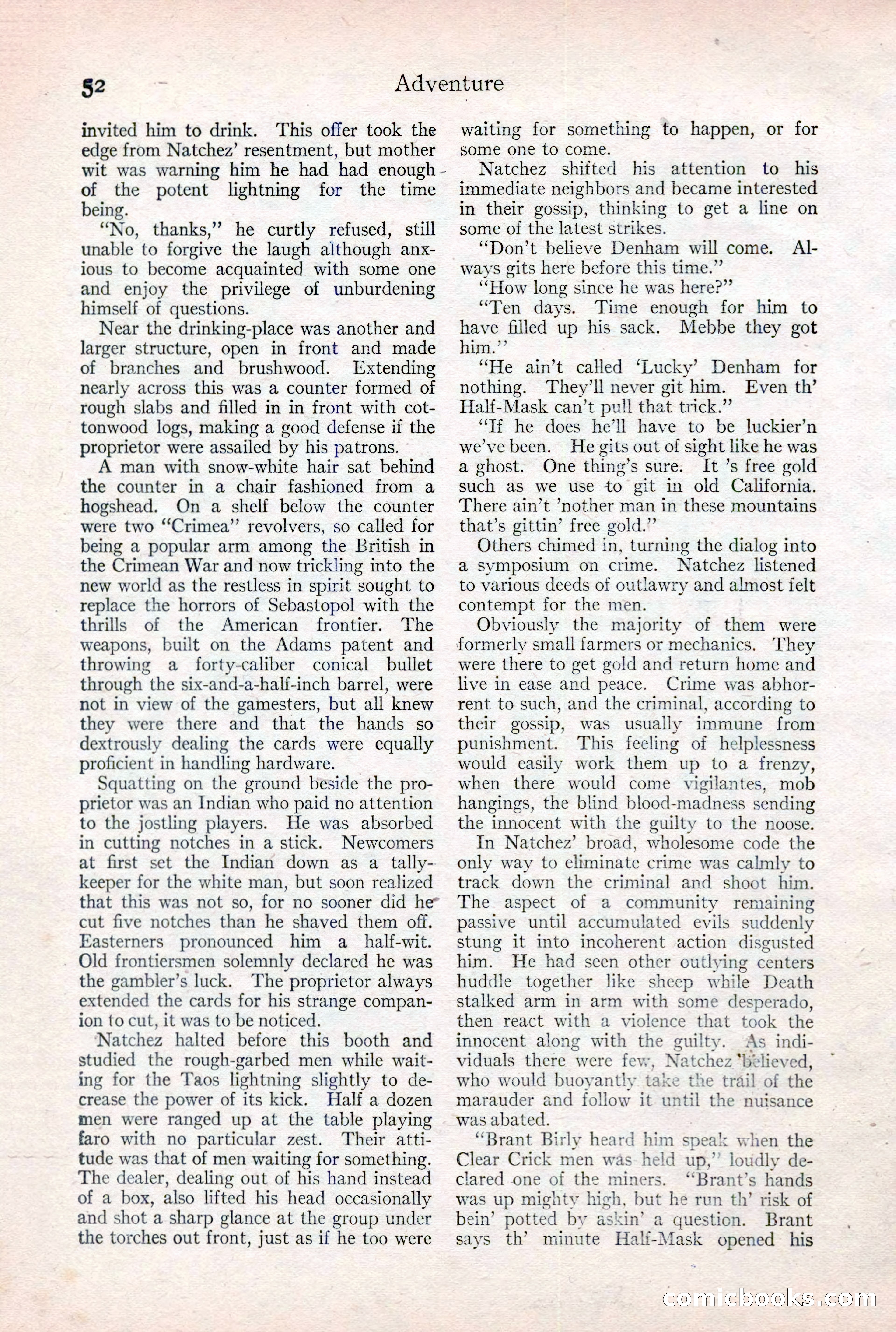
A restored page from Pulp Fiction, 1921. Page through the whole issue in the reader above.
📄 Transcribed text from this page (OCR, searchable)
Machine-transcribed from the original scan — historical spelling and the odd misread are preserved.
§2 invited him to drink. This offer took the edge from Natchez’ resentment, but mother wit was warning him he had had enough- of the potent lightning for the time being. “No, thanks,” he curtly refused, still unable to forgive the laugh although anx- ious to become acquainted with some one and enjoy the privilege of unburdening himself of questions. Near the drinking-place was another and larger structure, open in front and made of branches and brushwood. Extending nearly across this was a counter formed of rough slabs and filled in in front with cot- tonwood logs, making a good defense if the proprietor were assailed by his patrons. A man with snow-white hair sat behind the counter in a chair fashioned from a hogshead. On a shelf below the counter were two “Crimea” revolvers, so called for being a popular arm among the British in the Crimean War and now trickling into the new world as the restless in spirit sought to replace the horrors of Sebastopol with the thrills of the American frontier. The weapons, built on the Adams patent and throwing a forty-caliber conical bullet through the six-and-a-half-inch barrel, were not in view of the gamesters, but all knew they were there and that the hands so dextrously dealing the cards were equally proficient in handling hardware. Squatting on the ground beside the pro- prietor was an Indian who paid no attention to the jostling players. He was absorbed in cutting notches in a stick. Newcomers at first set the Indian down as a tally- keeper for the white man, but soon realized that this was not so, for no sooner did he cut five notches than he shaved them off. Easterners pronounced him a_half-wit. Old frontiersmen solemnly declared he was the gambler’s luck. The proprietor always extended the cards for his strange compan- ion to cut, it was to be noticed. Natchez halted before this booth and studied the rough-garbed men while wait- ing for the Taos lightning slightly to de- crease the power of its kick. Half a dozen men were ranged up at the table playing faro with no particular zest. Their atti- tude was that of men waiting for something. The dealer, dealing out of his hand instead of a box, also lifted his head occasionally and shot a sharp glance at the group under the torches out front, just as if he too were Adventure waiting for something to happen, or for some one to come. Natchez shifted his attention to his immediate neighbors and became interested in their gossip, thinking to get a line on some of the latest strikes. “Don’t believe Denham will come. Al- ways gits here before this time.” ‘“How long since he was here?” “Ten days. Time enough for him to have filled up his sack. Mebbe they got him.’’ “He ain’t called ‘Lucky’ Denham for nothing. They’ll never git him. Even th’ Half-Mask can’t pull that trick.” “Tf he does he’ll have to be luckier’n weve been. He gits out of sight like he was a ghost. One thing’s sure. It’s free gold such as we use to git in old California. There ain’t ’nother man in these mountains that’s gittin’ free gold.” Others chimed in, turning the dialog into a symposium on crime. Natchez listened to various deeds of outlawry and almost felt contempt for the men. Obviously the majority of them were formerly small farmers or mechanics. They were there to get gold and return home and live in ease and peace. Crime was abhor- rent to such, and the criminal, according to their gossip, was usually immune from punishment. This feeling of helplessness would easily work them up to a frenzy, when there would come vigilantes, mob hangings, the blind blood-madness sending the innocent with the guilty to the noose. In Natchez’ broad, wholesome code the only way to eliminate crime was calmly to track down the criminal and shoot him. The aspect of a community remaining passive until accumulated evils suddenly stung it into incoherent action disgusted him. He had seen other outlying centers huddle together lke sheep while Death stalked arm in arm with some desperado, then react with a violence that took the innocent along with the guilty. As indi- viduals there were few, Natchez ‘believed, who would buoyantly take the trail of the marauder and follow it until the nutsance was abated. “Brant Birly heard him speak when the Clear Crick men was-held up,” loudly de- clared one of the miners. “‘Brant’s hands was up mighty high, but he run th’ risk of bein’ potted by askin’ a question. Brant says th’ minute Half-Mask opened his comicoooks (C@