
Pulp Fiction, 1920 · page 61 of 172
Adventure, December 3, 1920 — page 61: what you’re looking at
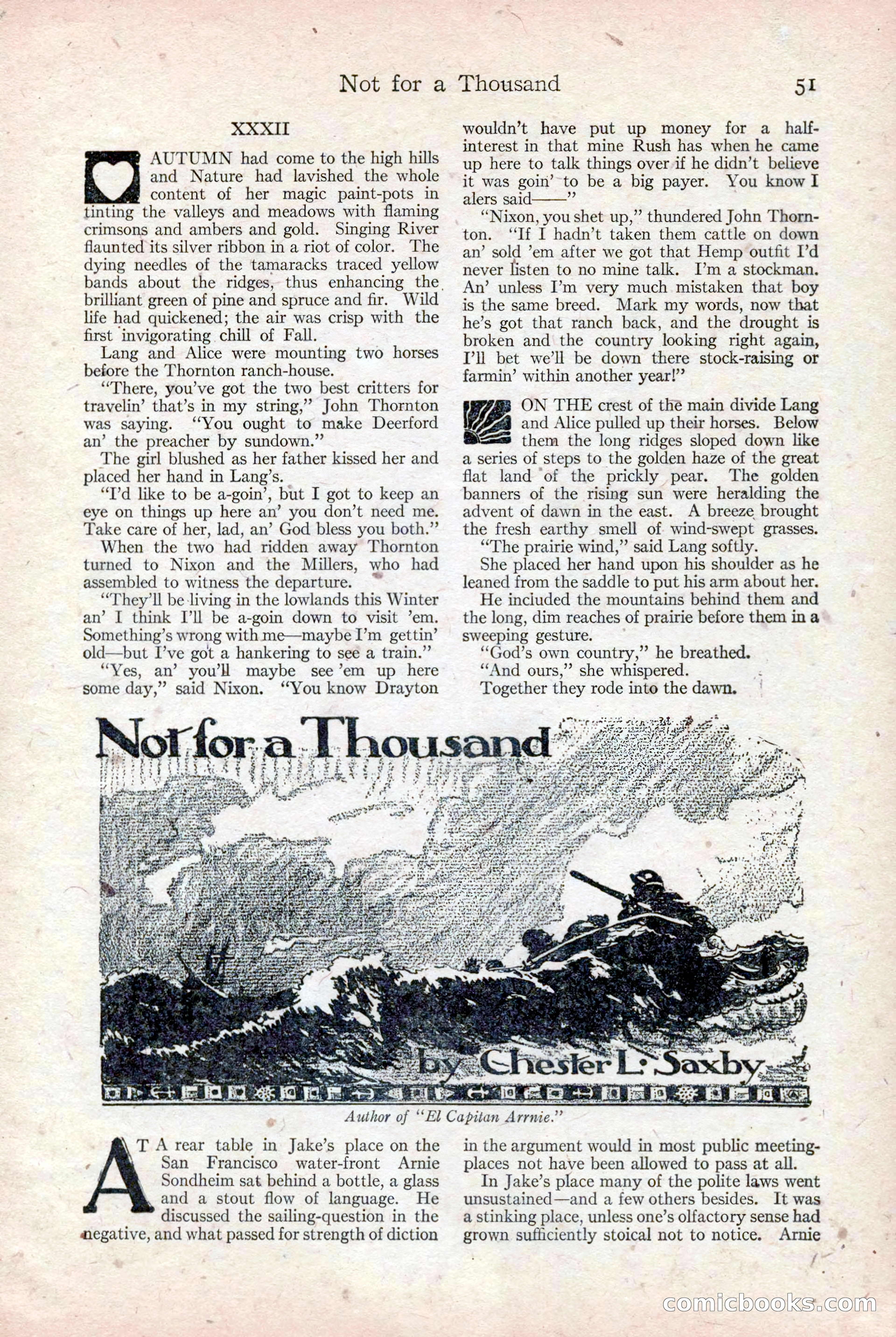
A restored page from Pulp Fiction, 1920. Page through the whole issue in the reader above.
📄 Transcribed text from this page (OCR, searchable)
Machine-transcribed from the original scan — historical spelling and the odd misread are preserved.
Not for a Thousand XXXIT AUTUMN had come to the high hills and Nature had lavished the whole content of her magic paint-pots in tinting the valleys and meadows with flaming crimsons and ambers and gold. Singing River flaunted its silver ribbon in a riot of color. The dying needles of the tamaracks traced yellow bands about the ridges, thus enhancing the. brilliant green of pine and spruce and fir. Wild life had quickened; the air was crisp with the first invigorating chill of Fall. Lang and Alice were mounting two horses before the Thornton ranch-house. “There, you’ve got the two best critters for travelin’ that’s in my string,” John Thornton was saying. “You ought to make Deerford an’ the preacher by sundown.” The girl blushed as her father kissed her and placed her hand in Lang’ S. “T’d like to be a-goin’, but I got to keep an eye on things up here an’ you don’t need me. Take care of her, lad, an’ God bless you both.” When the two had ridden away Thornton turned to Nixon and the Millers, who had assembled to witness the departure. “They ll be living in the lowlands this Winter an’ I think I’ll be a-goin down to visit ’em. Something’s wrong with me—maybe I’m gettin’ ol ve got a hankering to see a train.” an’ you'll maybe see’em up here ” said Nixon. “You know Drayton “Ves, some day, ag aye +r 4+ 0 nab ae 63 ES 51 wouldn’t have put up money for a _half- interest in that mine Rush has when he came up here to talk things over if he didn’t believe it was goin’ to be a big payer. You know I alers said f3 “Nixon, you shet up,”’ thundered John Thorn- ton. “If I hadn’t taken them cattle on down an’ sold ’em after we got that Hemp outfit I’d never listen to no mine talk. I’m a stockman. An’ unless I’m very much mistaken that boy is the same breed. Mark my words, now that he’s got that ranch back, and the drought is broken and the country looking right again, T’ll bet we'll be down there stock-raising or farmin’ within another year!” ON THE crest of thé main divide Lang pea and Alice pulled up their horses. Below <=a3 them the long ridges sloped down like a series of steps to the golden haze of the great flat land of the prickly pear. The golden banners of the rising sun were heralding the advent of dawn in the east. A breeze brought the fresh earthy smell of wind-swept grasses. “‘The prairie wind,” said Lang softly. She placed her hand upon his shoulder as he leaned from the saddle to put his arm about her. He included the mountains behind them and the long, dim reaches of prairie before them in a sweeping gesture. “God’s own country,” he breathed. “And ours,” she whispered. Together they rode into the dawn. 7 el ee ie oe pnt ~ “Audhor of 75) Ce pitan Arrnie.” T A rear table in Jake’s place on the San Francisco water-front Arnie Sondheim sat behind a bottle, a glass and a stout flow of language. He discussed the sailing-question in the negative, and what passed for strength of diction in the argument would in most public meeting- places not have been allowed to pass at all. In Jake’s place many of the polite laws went unsustained—and a few others besides. It was a stinking place, unless one’s olfactory sense had grown sufliciently stoical not to notice. Arnie / COnmmicloookKxs (C@