
Pulp Fiction, 1920 · page 88 of 172
Adventure Magazine Cover — page 88: what you’re looking at
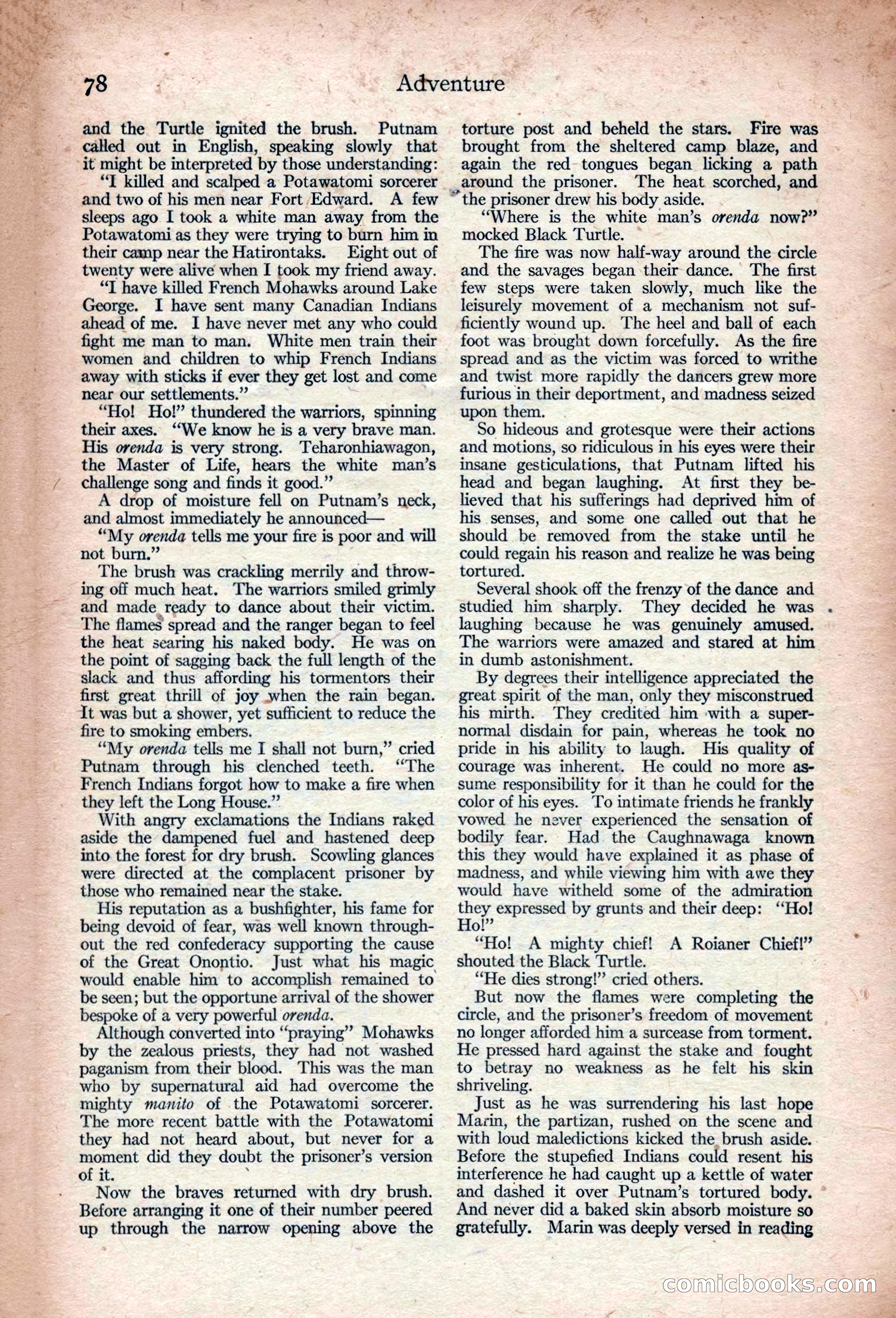
A restored page from Pulp Fiction, 1920. Page through the whole issue in the reader above.
📄 Transcribed text from this page (OCR, searchable)
Machine-transcribed from the original scan — historical spelling and the odd misread are preserved.
and the Turtle ignited the brush. Putnam : -. called out in English, speaking slowly that ‘it might be interpreted by those understanding: “I killed and scalped a Potawatomi sorcerer ~ the prisoner drew his body aside. and two of his men near Fort. Edward. A few sleeps ago I took a white man away from the Potawatomi as they were trying to burn him in their camp near the Hatirontaks. Eight out of twenty were alive when I took my friend away. “T have killed French Mohawks around Lake George. I have sent many Canadian Indians ahead of me. I have never met any who could fight me man to man. White men train their women and children to whip French Indians away with sticks if ever they get lost and come near our settlements.” “Ho! Ho!” thundered the warriors, spinning their axes. ‘We know he is a very brave man. His orenda is very strong. Teharonhiawagon, the Master of Life, hears the white man’s challenge song and finds it good.” A drop of moisture fell on Putnam’s neck, and almost immediately he announced— “My orenda tells me your fire is poor and will not burn.” The brush was crackling merrily and throw- ing off much heat. The warriors smiled grimly and made ready to dance about their victim. The flames spread and the ranger began to feel the heat searing his naked body. He was on the point of sagging back the full length of the slack and thus affording his tormentors their first great thrill of joy when the rain began. It was but a shower, yet sufficient to reduce the fire to smoking embers. “My orenda tells me I shall not burn,” cried Putnam through his clenched teeth. ‘The French Indians forgot how to make a fire when they left the Long House.” With angry exclamations the Indians raked aside the dampened fuel and hastened deep into the forest for dry brush. Scowling glances were directed at the complacent prisoner by those who remained near the stake. His reputation as a bushfighter, his fame for being devoid of fear, was well known through- out the red confederacy supporting the cause of the Great Onontio. Just what his magic would enable him to accomplish remained to be seen; but the opportune arrival of the shower bespoke of a very powerful orenda. Although converted into “praying” Mohawks by the zealous priests, they had not washed paganism from their blood. This was the man who by supernatural aid had overcome the mighty manito of the Potawatomi sorcerer. The more recent battle with the Potawatomi they had not heard about, but never for a moment did they doubt the prisoner’s version of it. Now the braves returned with dry brush. Before arranging it one of their number peered up through the narrow opening above the Adventure. torture ‘post and beheld the stars. around the prisoner. ‘The heat scorched, and “Where is the white man’s orenda now?” mocked Black Turtle. — The fire was now half-way around the circle and the savages began their dance. The first few steps were taken slowly, much like the leisurely movement of a mechanism not suf- ficiently wound up. The heel and ball of each foot was brought down forcefully. As the fire spread and as the victim was forced to writhe and twist more rapidly the dancers grew more furious in their deportment, and madness seized upon them. So hideous and grotesque were their actions and motions, so ridiculous in his eyes were their insane ges ticulations, that Putnam lifted his head and began laughing. At first they be- lieved that his sufferings had deprived him of his senses, and some one called out that he should be removed from the stake until he could regain his reason and realize he was being tortured. Several shook off the frenzy of the dance and Fire was brought from the sheltered camp blaze, and again the red tongues began licking a path studied him sharply. They decided he was . laughing because he was genuinely amused. The warriors were amazed and stared at him in dumb astonishment. By degrees their intelligence appreciated the great spirit of the man, only they misconstrued his mirth. They credited him with a super- normal disdain for pain, whereas he took no pride in his ability to laugh. His quality of courage was inherent. He could no more as- sume responsibility for it than he could for the color of his eyes. To intimate friends he frankly vowed he never experienced the sensation of bodily fear. Had the Caughnawaga known this they would have explained it as phase of madness, and while viewing him with awe they would have witheld some of the admiration Lae expressed by grunts and their deep: ‘Ho! o! “Ho! A mighty chief! A Roianer Chief!’? shouted the Black Turtle. “He dies strong!” cried others. But now the flames were completing the circle, and the prisoner’s freedom of movement no longer afforded him a surcease from torment. He pressed hard against the stake and fought to betray no weakness as he felt his skin shriveling. Just as he was surrendering his last hope Marvin, the partizan, rushed on the scene and with loud maledictions kicked the brush aside. Before the stupefied Indians could resent his interference he had caught up a kettle of water and dashed it over Putnam’s tortured body. ~ And never did a baked skin absorb moisture so gratefully. Marin was deeply versed in reading COMMICLOOOKS (E@)