
Pulp Fiction, 1917 · page 135 of 228
Adventure, February 1917 — page 135: what you’re looking at
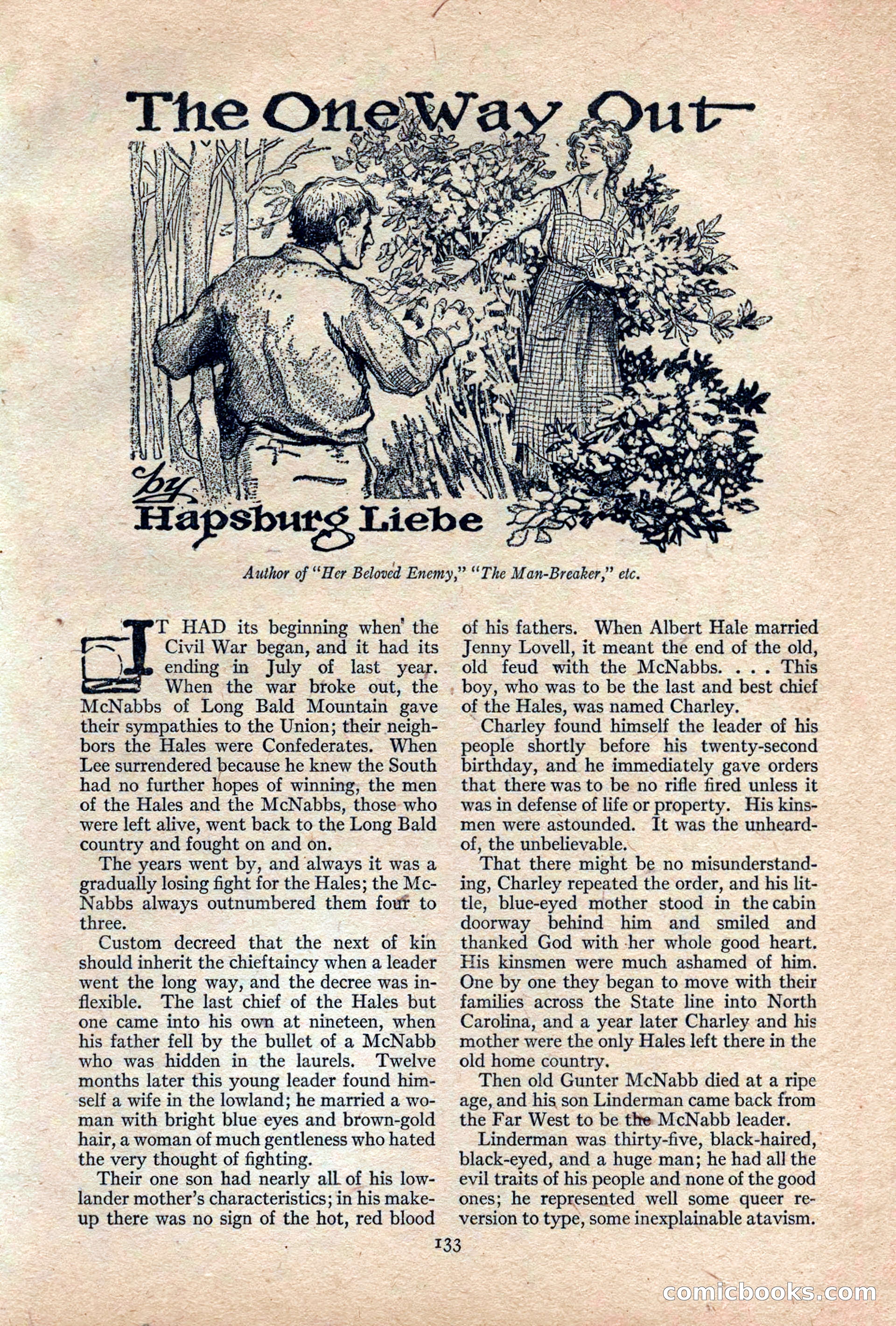
A restored page from Pulp Fiction, 1917. Page through the whole issue in the reader above.
📄 Transcribed text from this page (OCR, searchable)
Machine-transcribed from the original scan — historical spelling and the odd misread are preserved.
oY REN AT is) 9 ; ‘ 4 oD «i a ¥ “n° ieb 4 g 2 2 Pay &; ' a ‘ar . a . al 5 ~ = rs f is “ . u y Ae z ; Ze \ \ ‘ + ¥ ; ¢ y/ J. t t /,; 2 A, - ot} 4 ifs] = * ¢ f co ‘ j 5 4 “e Yj % DS u . AG A-< } v + e i I) ‘a cr, 1 ry Lresasy - J ox 22 Sas Pett) pS « =~ v ae wa ‘ _ Cat = % < Author of “Her Beloved Enemy,” “The M an-Breaker,” etc. T HAD its beginning when’ the Civil War began, and it had its ending in July of last year. When the war broke out, the McNabbs of Long Bald Mountain gave their sympathies to the Union; their neigh- bors the Hales were Confederates. When Lee surrendered because he knew the South had no further hopes of winning, the men of the Hales and the McNabbs, those who were left alive, went back to the Long Bald country and fought on and on. The years went by, and always it was a gradually losing fight for the Hales; the Mc- Nabbs always outnumbered them fouf to three. Custom decreed that the next of kin should inherit the chieftaincy when a leader went the long way, and the decree was in- flexible. The last chief of the Hales but one came into his own at nineteen, when his father fell by the bullet of a McNabb who was hidden in the laurels. Twelve months later this young leader found him- self a wife in the lowland; he married a wo- man with bright blue eyes and brown-gold hair, a woman of much gentleness who hated the very thought of fighting. Their one son had nearly all of his low- lander mother’s characteristics; in his make- up there was no sign of the hot, red blood of his fathers. When Albert Hale married Jenny Lovell, it meant the end of the old, old feud with the McNabbs. ... This . boy, who was to be the last and best chief of the Hales, was named Charley. Charley found himself the leader of his people shortly before his twenty-second birthday, and he immediately gave orders that there was to be no rifle fired unless it was in defense of life or property. His kins- men were astounded. It was the unheard- of, the unbelievable.. That there might be no misunderstand- ing, Charley repeated the order, and his lit- tle, blue-eyed mother stood in the cabin doorway behind him and smiled and thanked God with -her whole good heart. His kinsmen were much ashamed of him. One by one they began to move with their families across the State line into North Carolina, and a year later Charley and his mother were the only Hales left there in the old home country. Then old Gunter McNabb died at a ripe age, and his son Linderman came back from the Far West to be the McNabb leader. Linderman was thirty-five, black-haired, black-eyed, and a huge man; he had all the evil traits of his people and none of the good ones; he represented well some queer re- version to type, some inexplainable atavism. 133 a ™, “SS —&) AMICLDOC) (EO)