
Pulp Fiction, 1915 · page 184 of 228
Adventure, November 1915 — page 184: what you’re looking at
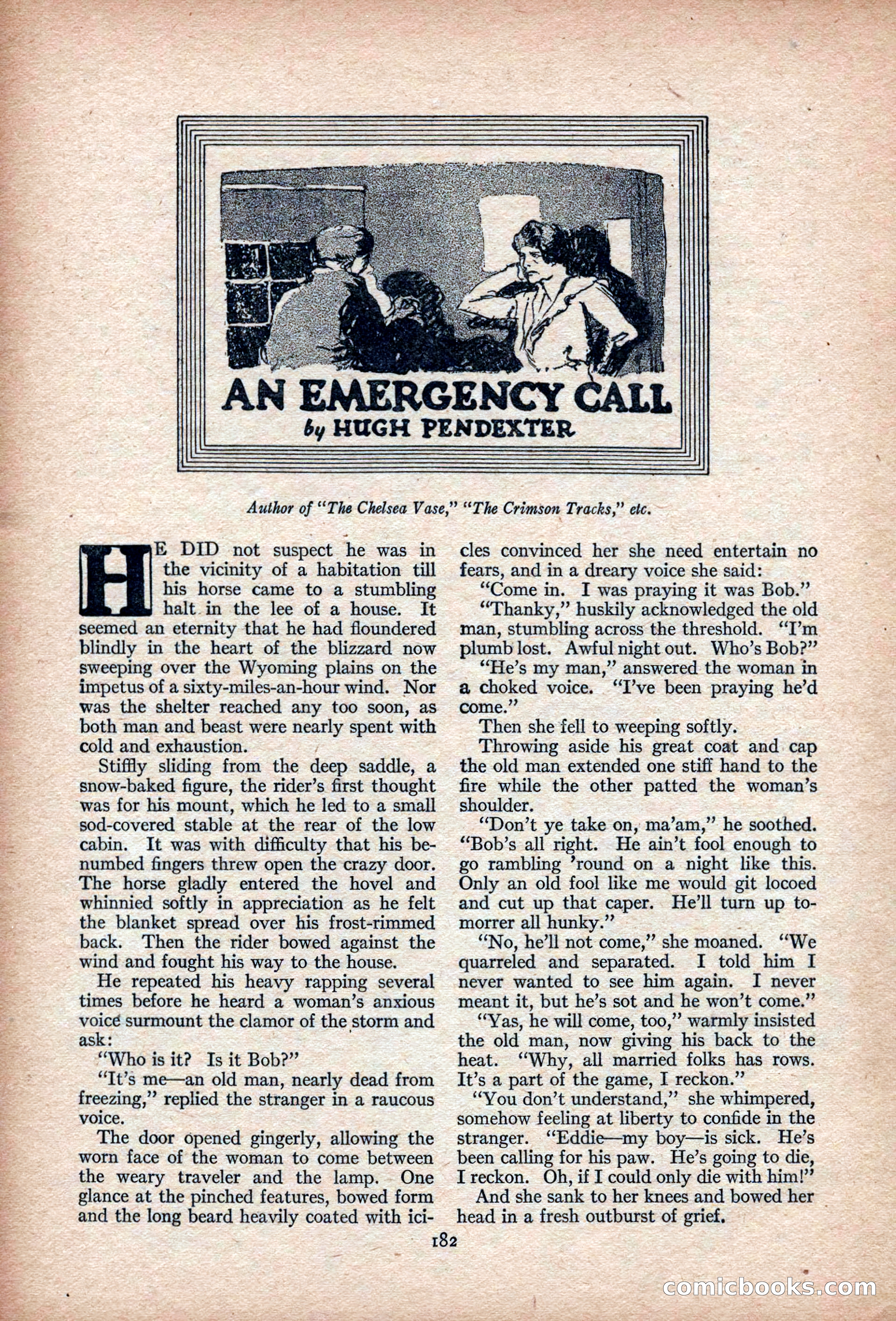
A restored page from Pulp Fiction, 1915. Page through the whole issue in the reader above.
📄 Transcribed text from this page (OCR, searchable)
Machine-transcribed from the original scan — historical spelling and the odd misread are preserved.
an , - i TE YR ONE A Tpit eee yt cn) ara’ Bal ty COE A ate eM sO SS ST ERT Ee Ty Cul iid APN, . LA see fu Tracie Nor yah ay : 6 ah \ - ay late ee OE - rt wey } et Wma eG tos x 4 AN EMERGENCY ¢ by HUGH PENDEXTER Author of “The Chelsea Vase,” “The Crimson Tracks,” etc. E DID not suspect he was in the vicinity of a habitation till his horse came to a stumbling halt.in the lee of a house. It seemed an eternity that he had floundered blindly in the heart of the blizzard now sweeping over the Wyoming plains on the impetus of a sixty-miles-an-hour wind. Nor was the shelter reached any too soon, as both man and beast were nearly spent with cold and exhaustion. Stiffy sliding from the deep saddle, a snow-baked figure, the rider’s first enought ‘was for his mount, which he led to a small sod-covered stable at the rear of the low cabin. It was with difficulty that his be- numbed fingers threw open the crazy door. The horse gladly entered the hovel and whinnied softly in appreciation as he felt the blanket spread over his frost-rimmed back. Then the rider bowed against the wind and fought his way to the house. He repeated his heavy rapping several times before he heard a woman’s anxious eas surmount the clamor of the storm and as “Who is it? Is it Bob?” “Tt’s me—an old man, nearly dead from freezing,” replied the stranger in a raucous voice. The door opened gingerly, allowing the worn face of the woman to come between the weary traveler and the lamp. One glance at the pinched features, bowed form and the long beard heavily coated with ici- cles convinced her she need entertain no fears, and in a dreary voice she said: “Come in. I was praying it was Bob.” “Thanky,” huskily acknowledged the old man, stumbling across the threshold. “I’m plumb lost. Awful night out. Who’s Bob?” “He’s my man,” answered the woman in a choked voice. “I’ve been praying he’d come.” Then she fell to weeping softly. Throwing aside his great coat and cap the old man extended one stiff hand to the fire while the other patted the woman’s shoulder. “Don’t ye take on, ma’am,” he soothed. “‘Bob’s all right. He ain’t fool enough to go rambling ’round on a night like this. Only an old fool like me would git locoed and cut up that caper. He’ll turn up to- motrer all hunky. “No, he’ll ie come,” she moaned. “We quarreled and separated. I told him I never wanted to see him again. I never meant it, but he’s sot and he won’t come.” “Vas, he will come, too,” warmly insisted the old man, now giving his back to the heat. ‘‘Why, all married folks has rows. It’s a part of the game, I reckon.” “You don’t understand,” she whimpered, somehow feeling at liberty to confide in the stranger. ‘‘Eddie—my boy—is sick. He’s _been calling for his paw. He’s going to die, IT reckon. Oh, if I could only die with him!” And she sank to her knees and bowed her — head in a fresh outburst of grief. 182 GComichoo (E@)