
Pulp Fiction, 1928 · page 141 of 200
Adventure, July 1, 1928 — page 141: what you’re looking at
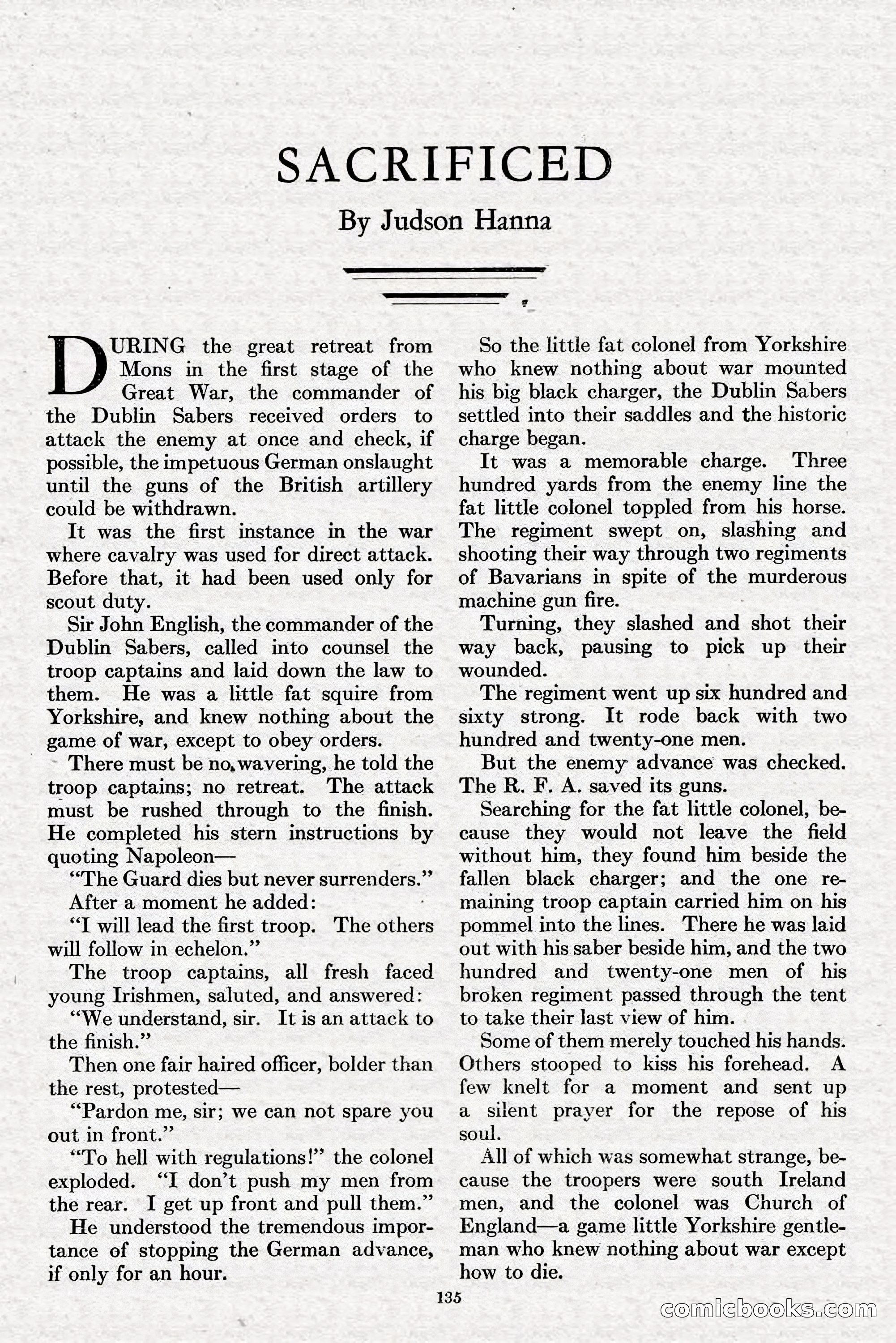
A restored page from Pulp Fiction, 1928. Page through the whole issue in the reader above.
📄 Transcribed text from this page (OCR, searchable)
Machine-transcribed from the original scan — historical spelling and the odd misread are preserved.
SACRIFICED By Judson Hanna URING the great retreat from Mons in the first stage of the Great War, the commander of the Dublin Sabers received orders to attack the enemy at once and check, if possible, the impetuous German onslaught until the guns of the British artillery could be withdrawn. It was the first instance in the war where cavalry was used for direct attack. Before that, it had been used only for scout duty. Sir John English, the commander of the Dublin Sabers, called mto counsel the troop captains and laid down the law to them. He was a little fat squire from Yorkshire, and knew nothing about the game of war, except to obey orders. _ ~ There must be no,wavering, he told the troop captains; no retreat. The attack must be rushed through to the finish. He completed his stern instructions by quoting Napoleon— “The Guard dies but never surrenders.” After a moment he added: “T will lead the first troop. The nee will follow in echelon.”’ The troop captains, all fresh faced young Irishmen, saluted, and answered: ‘We understand, sir. It is an attack to the finish.” Then one fair haired officer, bolder than the rest, protested— “Pardon me, sir; we can not spare you out in front.” “To hell with regulations!’ the colonel exploded. “I don’t push my men from the rear. I get up front and pull them.” He understood the tremendous impor- tance of stopping the German advance, if only for an hour. 135 e So the little fat colonel from Yorkshire who knew nothing about war mounted his big black charger, the Dublin Sabers settled into their saddles and the historic charge began. It was a memorable charge. Three hundred yards from the enemy line the fat little colonel toppled from his horse. The regiment swept on, slashing and shooting their way through two regiments of Bavarians in spite of the murderous machine gun fire. Turning, they slashed and. shot their way back, pausing to pick up their wounded. The regiment went up six hundred and sixty strong. It rode back with two hundred and twenty-one men. But the enemy advance was checked. The R. F. A. saved its guns. Searching for the fat little colonel, be- cause they would not leave the field without him, they found him beside the fallen black charger; and the one re- maining troop captain carried him on his pommel into the lines. There he was laid out with his saber beside him, and the two hundred and twenty-one men of his broken regiment passed through the tent to take their last view of him. Some of them merely touched his hands. Others stooped to kiss his forehead. A few knelt for a moment and sent up a silent prayer for the repose of his soul. All of which was somewhat strange, be- cause the troopers were south Ireland men, and the colonel was Church of England—a game little Yorkshire gentle- man who knew nothing about war except how to die. comnlicloooks.com