
Pulp Fiction, 1928 · page 135 of 200
Adventure, July 1, 1928 — page 135: what you’re looking at
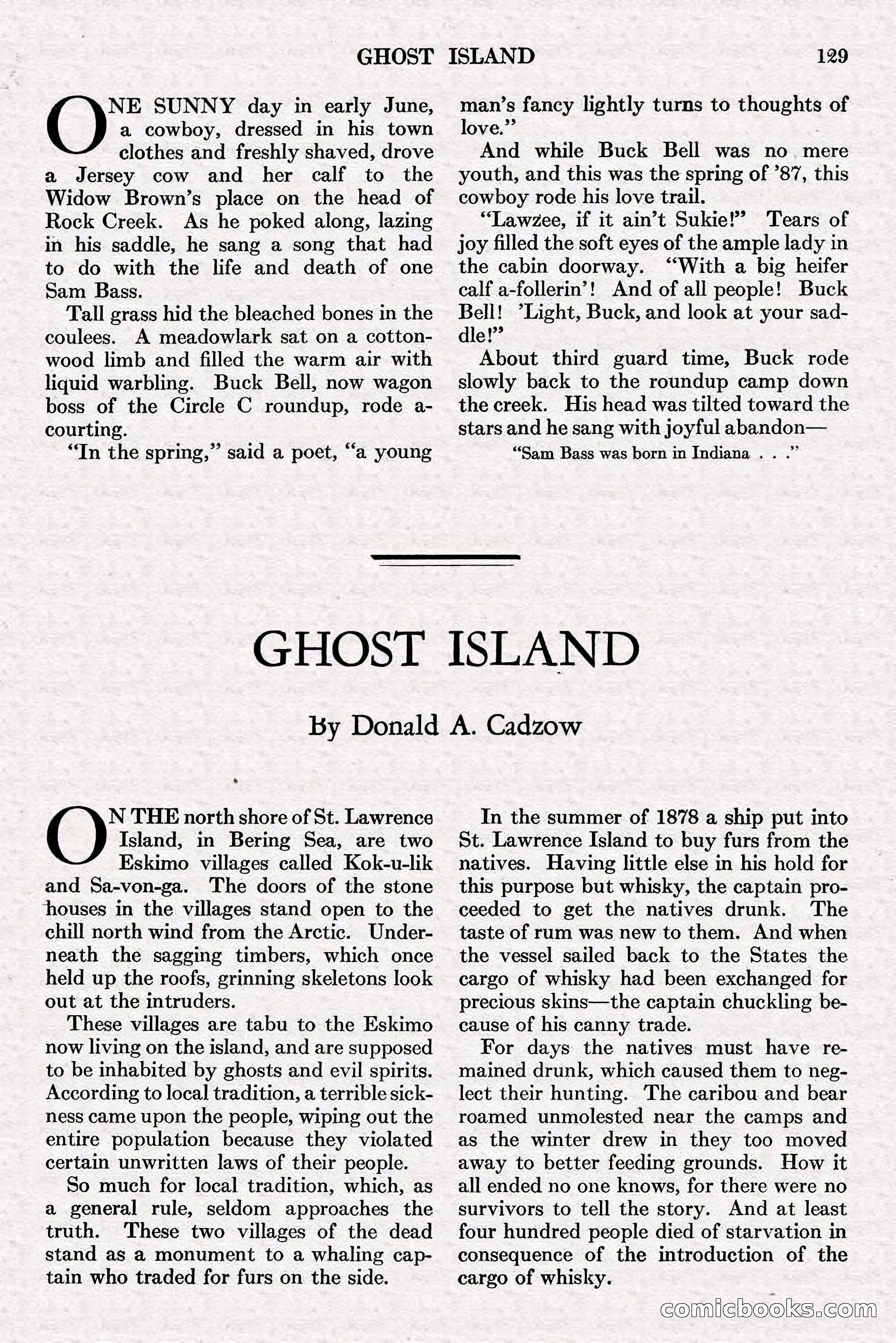
A restored page from Pulp Fiction, 1928. Page through the whole issue in the reader above.
📄 Transcribed text from this page (OCR, searchable)
Machine-transcribed from the original scan — historical spelling and the odd misread are preserved.
GHOST ISLAND NE SUNNY day in early June, a cowboy, dressed in his town clothes and freshly shaved, drove a Jersey cow and her calf to the Widow Brown’s place on the head of Rock Creek. As he poked along, lazing in his saddle, he sang a song that had to do with the life and death of one Sam Bass. Tall grass hid the bleached bones in the coulees. A meadowlark sat on a cotton- wood limb and filled the warm air with liquid warbling. Buck Bell, now wagon boss of the Circle C roundup, rode a- courting. “In the spring,” said a poet, “a young 129 man’s fancy lightly turns to thoughts of love.” And while Buck Bell was no. mere youth, and this was the spring of ’87, this cowboy rode his love trail. “Lawzee, if it ain’t Sukie!” Tears of joy filled the soft eyes of the ample lady in the cabin doorway. “With a big heifer calf a-follerin’! And of all people! Buck Bell! *Light, Buck, and look at your sad- dle!” About third guard time, Buck rode slowly back to the roundup camp down the creek. His head was tilted toward the stars and he sang with joyful abandon— ‘Sam Bass was born in Indiana . . .” GHOST ISLAND By Donald A. Cadzow Island, in Bering Sea, are two Eskimo villages called Kok-u-lik and Sa-von-ga. The doors of the stone ‘houses in the villages stand open to the chill north wind from the Arctic. Under- neath the sagging timbers, which once held up the roofs, grinning skeletons look out at the intruders. These villages are tabu to the Eskimo now living on the island, and are supposed to be inhabited by ghosts and evil spirits. According to local tradition, a terrible sick- ness came upon the people, wiping out the entire population because they violated certain unwritten laws of their people. So much for local tradition, which, as a general rule, seldom approaches the truth. These two villages of the dead stand as a monument to a whaling cap- tain who traded for furs on the side. O* THE north shore of St. Lawrence In the summer of 1878 a ship put into St. Lawrence Island to buy furs from the natives. Having little else in his hold for this purpose but whisky, the captain pro- ceeded to get the natives drunk. The taste of rum was new to them. And when the vessel sailed back to the States the cargo of whisky had been exchanged for precious skins—the captain chuckling be- cause of his canny trade. For days the natives must have re- mained drunk, which caused them to neg- lect their hunting. The caribou and bear roamed unmolested near the camps and as the winter drew in they too moved away to better feeding grounds. How it all ended no one knows, for there were no survivors to tell the story. And at least four hundred people died of starvation in consequence of the introduction of the cargo of whisky. comicbooks.com