
Pulp Fiction, 1928 · page 124 of 200
Adventure, July 1, 1928 — page 124: what you’re looking at
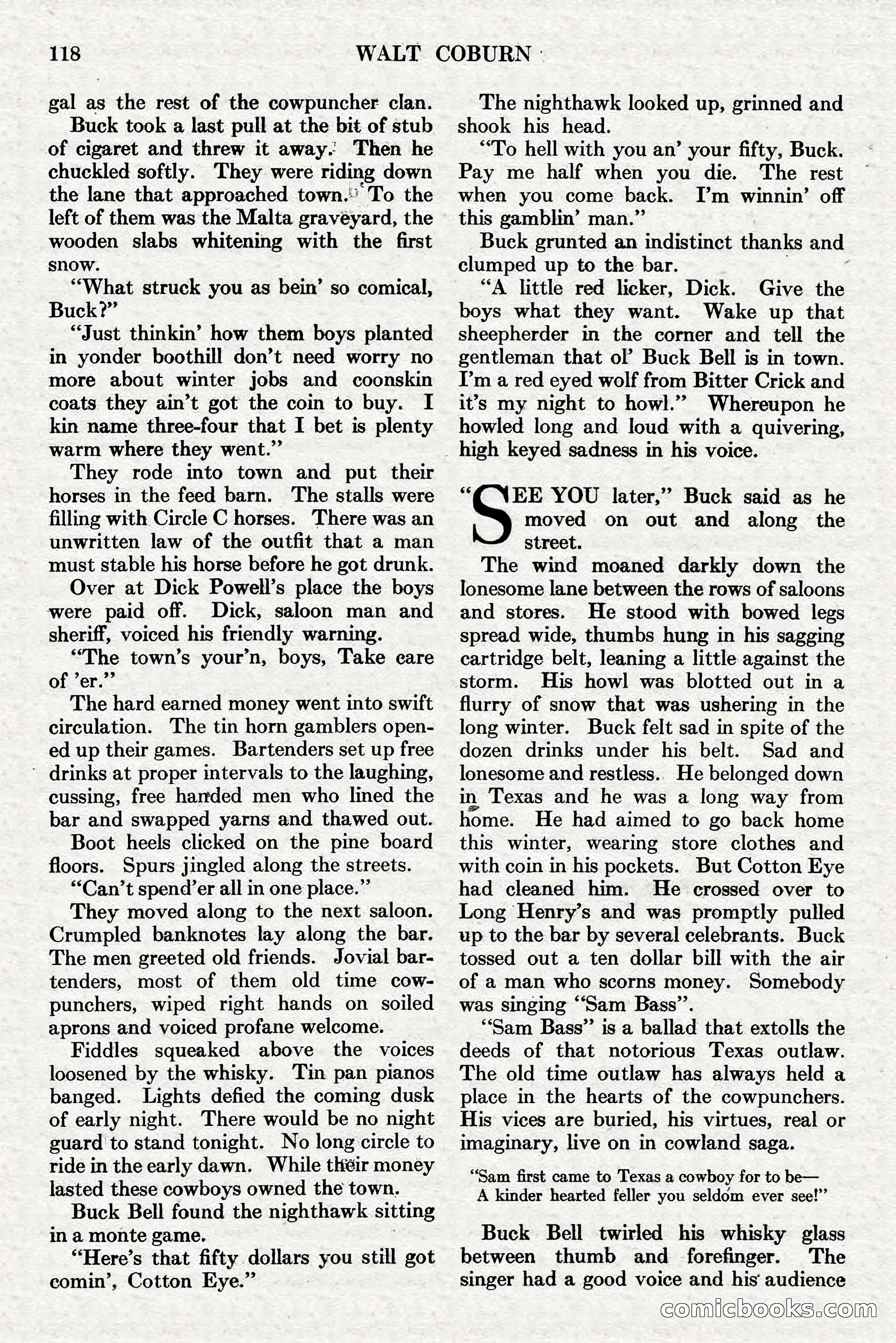
A restored page from Pulp Fiction, 1928. Page through the whole issue in the reader above.
📄 Transcribed text from this page (OCR, searchable)
Machine-transcribed from the original scan — historical spelling and the odd misread are preserved.
118 gal as the rest of the cowpuncher clan. Buck took a last pull at the bit of stub of cigaret and threw it away.’ Then he chuckled softly. They were riding down the lane that approached town.’ To the left of them was the Malta graveyard, the wooden slabs whitening with the first snow. “What struck you as bein’ so comical, Buck?” “Just thinkin’ how them boys planted in yonder boothill don’t need worry no more about winter jobs and coonskin coats they ain’t got the coin to buy. I kin name three-four that I bet is plenty warm where they went.” They rode into town and put their horses in the feed barn. The stalls were filling with Circle C horses. There was an unwritten law of the outfit that a man must stable his horse before he got drunk. Over at Dick Powell’s place the boys were paid off. Dick, saloon man and sheriff, voiced his friendly warning. “The town’s your’n, boys, Take eare of ’er.” The hard earned money went into swift circulation. The tin horn gamblers open- ed up their games. Bartenders set up free ’ drinks at proper intervals to the laughing, cussing, free harded men who lined the bar and swapped yarns and thawed out. Boot heels clicked on the pine board floors. Spurs jingled along the streets. *“Can’t spend’er all in one place.” They moved along to the next saloon. Crumpled banknotes lay along the bar. The men greeted old friends. Jovial bar- tenders, most of them old time cow- punchers, wiped right hands on soiled aprons and voiced profane welcome. Fiddles squeaked above the voices loosened by the whisky. Tin pan pianos banged. Lights defied the coming dusk of early night. There would be no night guard to stand tonight. No long circle to ride in the early dawn. While their money lasted these cowboys owned the town. Buck Bell found the nighthawk sitting in a monte game, ‘“Here’s that fifty dollars you still got comin’, Cotton Eye.” WALT COBURN - The nighthawk looked up, grinned and shook his head. “To hell with you an’ your fifty, Buck. Pay me half when you die. The rest when you come back. I’m winnin’ off this gamblin’ man.” Buck grunted an indistinct thanks and clumped up to the bar. “A little red licker, Dick. Give the boys what they want. Wake up that sheepherder in the corner and tell the gentleman that ol’ Buck Bell is in town. I’m a red eyed wolf from Bitter Crick and it’s my night to howl.” Whereupon he howled long and loud with a quivering, high keyed sadness in his voice. “( NEE YOU later,” Buck said as he moved on out and along the street. The wind moaned darkly down the lonesome lane between the rows of saloons and stores. He stood with bowed legs spread wide, thumbs hung in his sagging cartridge belt, leaning a little against the storm. His howl was blotted out in a flurry of snow that was ushering in the long winter. Buck felt sad in spite of the dozen drinks under his belt. Sad and lonesome and restless... He belonged down in Texas and he was a long way from home. He had aimed to go back home this winter, wearing store clothes and with coin in his pockets. But Cotton Eye had cleaned him. He crossed over to Long Henry’s and was promptly pulled up to the bar by several celebrants. Buck tossed out a ten dollar bill with the air of a man who scorns money. Somebody was singing ““Sam Bass’’. “Sam Bass’’ is a ballad that extolls the deeds of that notorious Texas outlaw. The old time outlaw has always held a place in the hearts of the cowpunchers. His vices are buried, his virtues, real or imaginary, live on in cowland saga. “Sam first came to Texas a cowboy for to be— A kinder hearted feller you seldom ever see!” Buck Bell twirled his whisky glass between thumb and forefinger. The singer had a good voice and his audience comnlicloooks.com