
Pulp Fiction, 1950 · page 91 of 135
A. Merritt's Fantasy Magazine, October 1950 — page 91: what you’re looking at
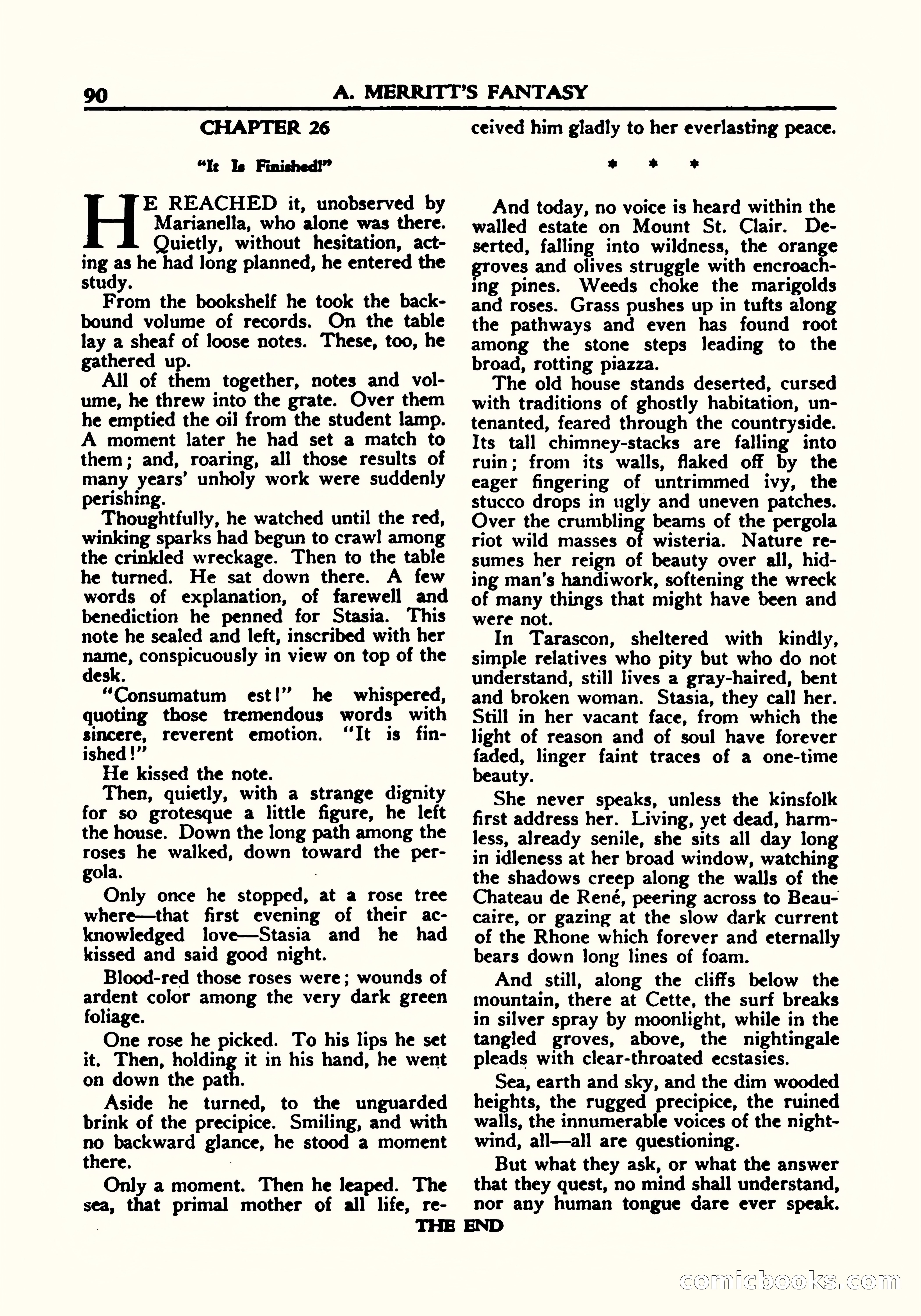
A restored page from Pulp Fiction, 1950. Page through the whole issue in the reader above.
📄 Transcribed text from this page (OCR, searchable)
Machine-transcribed from the original scan — historical spelling and the odd misread are preserved.
A. MERRITT’S FANTASY CHAPTER 26 “Ie Is Finished!” E REACHED it, unobserved by Marianella, who alone was there. Quietly, without hesitation, act- ing as he had long planned, he entered the study. From the bookshelf he took the back- bound volume of records. On the table lay a sheaf of loose notes. These, too, he gathered up. All of them together, notes and vol- ume, he threw into the grate. Over them he emptied the oil from the student lamp. A moment later he had set a match to them; and, roaring, all those results of many years’ unholy work were suddenly perishing. Thoughtfully, he watched until the red, winking sparks had begun to crawl among the crinkled wreckage. Then to the table he turned. He sat down there. A few words of explanation, of farewell and benediction he penned for Stasia. This note he sealed and left, inscribed with her name, conspicuously in view on top of the desk. “Consumatum est!” he whispered, quoting those tremendous words with sincere, reverent emotion. ‘It is fin- ished !”’ He kissed the note. Then, quietly, with a strange dignity for so grotesque a little figure, he left the house. Down the long path among the roses he walked, down toward the per- gola. : Only once he stopped, at a rose tree where—that first evening of their ac- knowledged love—Stasia and he had kissed and said good night. Blood-red those roses were; wounds of ardent color among the very dark green foliage. One rose he picked. To his lips he set it. Then, holding it in his hand, he went on down the path. Aside he turned, to the unguarded brink of the precipice. Smiling, and with no backward glance, he stood a moment there. : Only a moment. Then he leaped. The sea, that primal mother of all life, re- ceived him gladly to her everlasting peace. * * * And today, no voice is heard within the walled estate on Mount St. Clair. De- serted, falling into wildness, the orange groves and olives struggle with encroach- ing pines. Weeds choke the marigolds and roses. Grass pushes up in tufts along the pathways and even has found root among the stone steps leading to the broad, rotting piazza. The old house stands deserted, cursed with traditions of ghostly habitation, un- tenanted, feared through the countryside. Its tall chimney-stacks are falling into ruin; from its walls, flaked off by the eager fingering of untrimmed ivy, the stucco drops in ugly and uneven patches. Over the crumbling beams of the pergola riot wild masses of wisteria. Nature re- sumes her reign of beauty over all, hid- ing man’s handiwork, softening the wreck of many things that might have been and were not. In Tarascon, sheltered with kindly, simple relatives who pity but who do not understand, still lives a gray-haired, bent and broken woman. Stasia, they call her. Still in her vacant face, from which the light of reason and of soul have forever faded, linger faint traces of a one-time beauty. She never speaks, unless the kinsfolk first address her. Living, yet dead, harm- less, already senile, she sits all day long in idleness at her broad window, watching the shadows creep along the walls of the Chateau de René, peering across to Beau- caire, or gazing at the slow dark current of the Rhone which forever and eternally bears down long lines of foam. And still, along the cliffs below the mountain, there at Cette, the surf breaks in silver spray by moonlight, while in the tangled groves, above, the nightingale pleads with clear-throated ecstasies. Sea, earth and sky, and the dim wooded heights, the rugged precipice, the ruined walls, the innumerable voices of the night- wind, all—all are questioning. But what they ask, or what the answer that they quest, no mind shall understand, nor any human tongue dare ever speak. THE END nn) (C 6)(0)O) (C(O)