
Pulp Fiction, 1950 · page 116 of 132
A. Merritt's Fantasy Magazine, February 1950 — page 116: what you’re looking at
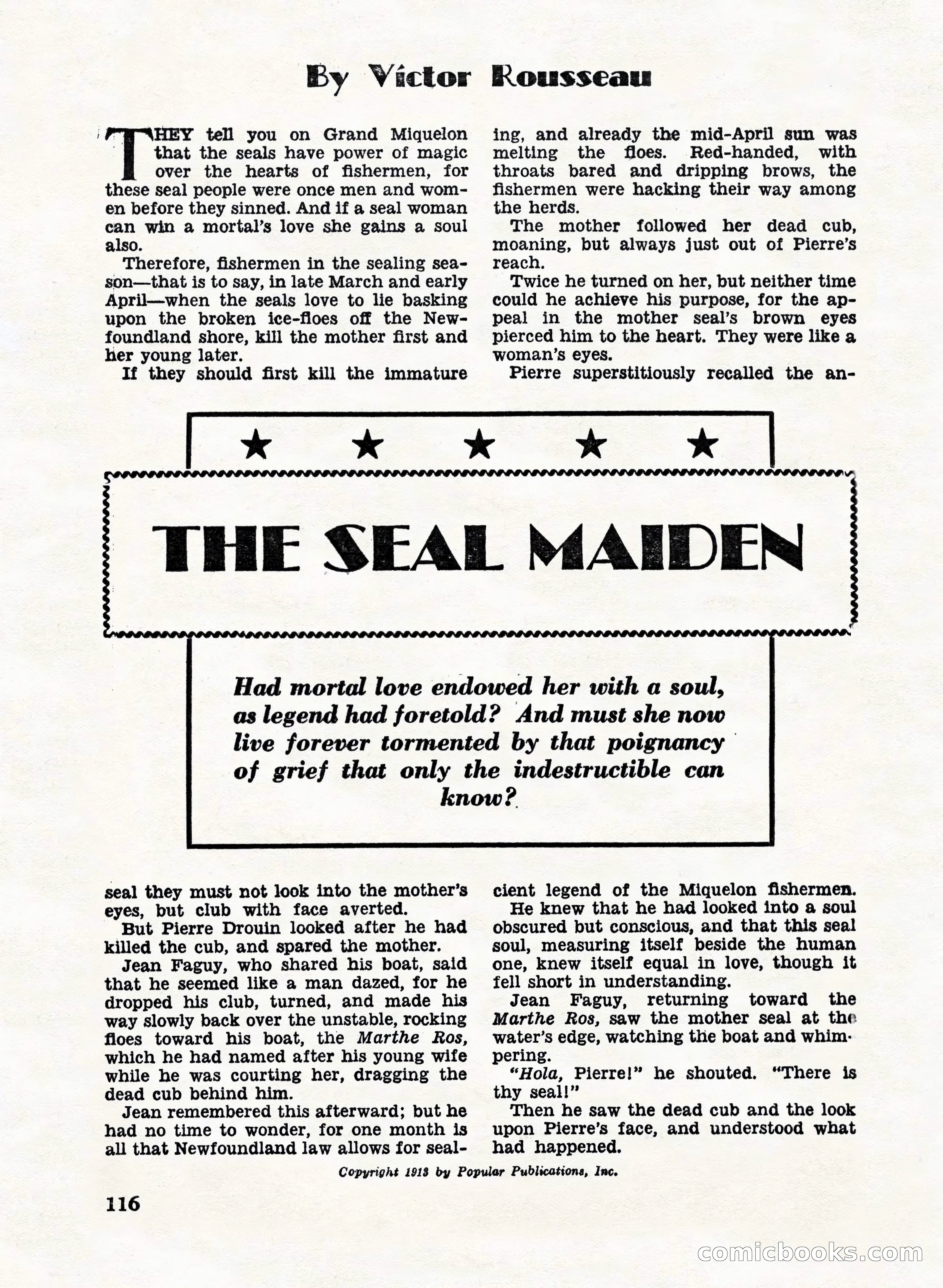
A restored page from Pulp Fiction, 1950. Page through the whole issue in the reader above.
📄 Transcribed text from this page (OCR, searchable)
Machine-transcribed from the original scan — historical spelling and the odd misread are preserved.
By Victor : that the seals have power of magic over the hearts of fishermen, for these seal people were once men and wom- en before they sinned. And if a seal woman can win a mortal’s love she gains a soul also. Therefore, fishermen in the sealing sea- son—that is to say, in late March and early April—when the seals love to lie basking upon the broken ice-floes off the New- foundland shore, kill the mother first and her young later. If they should first kill the immature Kx i tell you on Grand Miquelon seal they must not look into the mother’s eyes, but club with face averted. But Pierre Drouin looked after he had killed the cub, and spared the mother. Jean Faguy, who shared his boat, said that he seemed like a man dazed, for he dropped his club, turned, and made his way slowly back over the unstable, rocking floes toward his boat, the Marthe Ros, which he had named after his young wife while he was courting her, dragging the dead cub behind him. Jean remembered this afterward; but he had no time to wonder, for one month is all that Newfoundland law allows for seal- * THE SEAL MARDEN Had mortal love endowed her with a soul, as legend had foretold? And must she now live forever tormented by that poignancy of grief that only the indestructible can know? Rousseau ing, and already the mid-April sun was melting the floes. Red-handed, with throats bared and dripping brows, the fishermen were hacking their way among the herds. The mother followed her dead cub, moaning, but always just out of Pierre’s reach. Twice he turned on her, but neither time could he achieve his purpose, for the ap- peal in the mother seal’s brown eyes pierced him to the heart. They were like a woman’s eyes. Pierre superstitiously recalled the an- x * $ cient legend of the Miquelon fishermen. He knew that he had looked into a soul obscured but conscious, and that this seal soul, measuring itself beside the human one, knew itself equal in love, though it fell short in understanding. Jean Faguy, returning toward the Marthe Ros, saw the mother seal at the water’s edge, watching the boat and whim: pering. “Hola, Pierre!” he shouted. “There is thy seal!” Then he saw the dead cub and the look upon Pierre’s face, and understood what had happened. Copyright 1918 by Popular Publications, Inc. 116 COMmiIclbookKks (© iin