
Pulp Fiction, 1955 · page 36 of 99
2-Gun Western, November 1955 — page 36: what you’re looking at
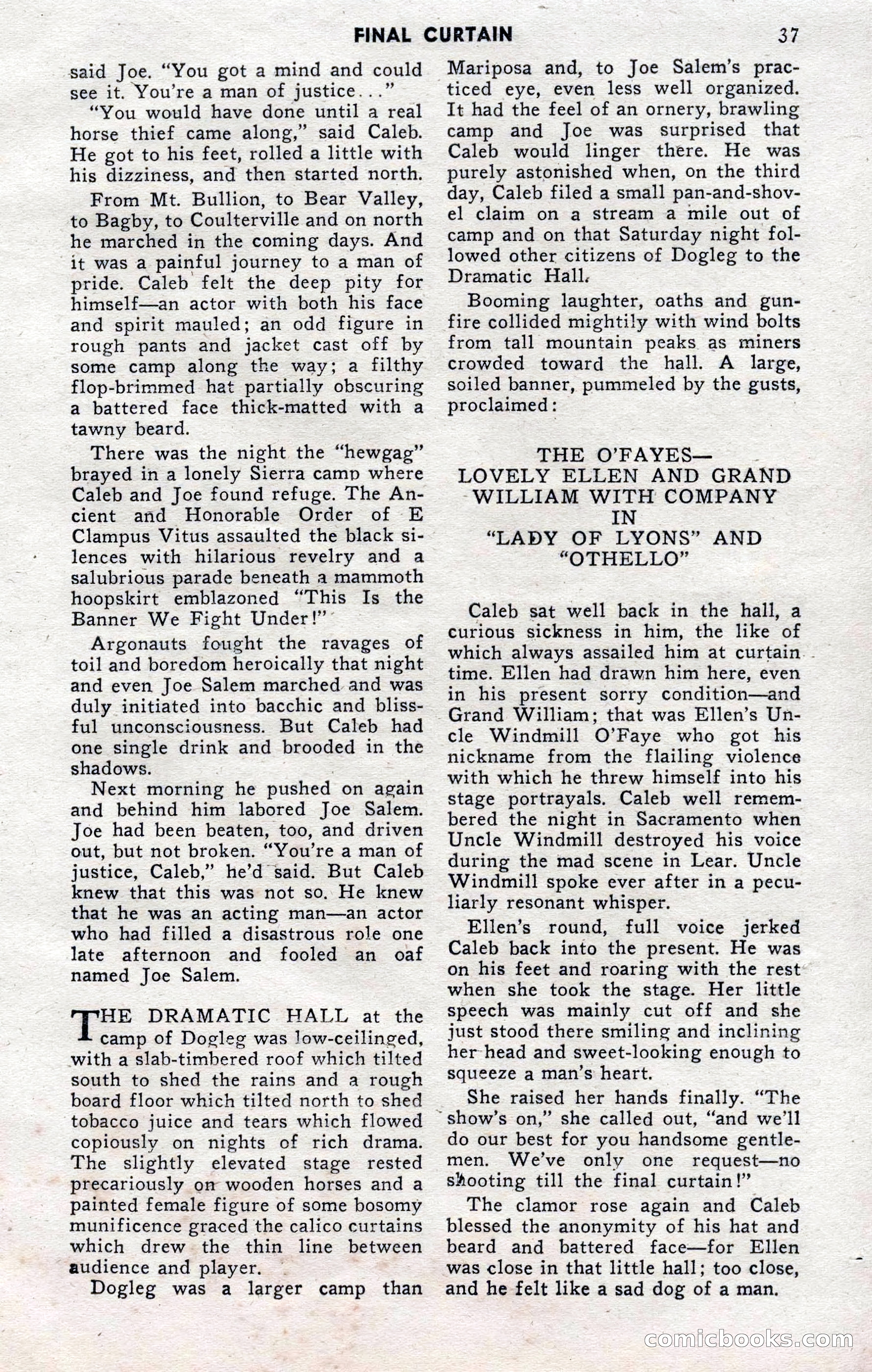
A restored page from Pulp Fiction, 1955. Page through the whole issue in the reader above.
📄 Transcribed text from this page (OCR, searchable)
Machine-transcribed from the original scan — historical spelling and the odd misread are preserved.
FINAL CURTAIN said Joe. “You got a mind and could see it. You’re a man of justice.. “You would have done until a ‘real horse thief came along,” said Caleb. He got to his feet, rolled a little with his dizziness, and then started north. From Mt. Bullion, to Bear Valley, to Bagby, to Coulterville and on north he marched in the coming days. And it was a painful journey to a man of pride. Caleb felt the deep pity for himself—an actor with both his face and spirit mauled; an odd figure in rough pants and jacket cast off by some camp along the way; a filthy flop-brimmed hat partially obscuring a battered face thick-matted with a tawny beard. There was the night the “hewgag” brayed in a lonely Sierra camp where Caleb and Joe found refuge. The An- cient and Honorable Order of E Clampus Vitus assaulted the black si- lences with hilarious revelry and a salubrious parade beneath a mammoth hoopskirt emblazoned “This Is the Banner We Fight Under!’ Argonauts fought the ravages of toil and boredom heroically that night and even Joe Salem marched and was duly initiated into bacchic and bliss- ful unconsciousness. But Caleb had one single drink and brooded in the shadows. Next morning he pushed on again and behind him labored Joe Salem. Joe had been beaten, too, and driven out, but not broken. “You’re a man of justice, Caleb,” he’d said. But Caleb knew that this was not so. He knew that he was an acting man—an actor who had filled a disastrous role one late afternoon and fooled an oaf named Joe Salem. HE DRAMATIC HALL at the camp of Dogleg was low-ceilinged, with a slab-timbered roof which tilted south to shed the rains and a rough board floor which tilted north to shed tobacco juice and tears which flowed copiously on nights of rich drama. The slightly elevated stage rested precariously om wooden horses and a painted female figure of some bosomy munificence graced the calico curtains which drew the thin line between audience and player. Dogleg was a larger camp than ~ show’s on, 37 Mariposa and, to Joe Salem’s prac- ticed eye, even less well organized. It had the feel of an ornery, brawling camp and Joe was surprised that Caleb would linger there. He was purely astonished when, on the third day, Caleb filed a small pan-and-shov- el claim on a stream a mile out of camp and on that Saturday night fol- lowed other citizens of Dogleg to the Dramatic Hall. Booming laughter, oaths and gun- fire collided mightily with wind bolts from tall mountain peaks as miners crowded toward the hall. A large, soiled banner, pummeled by the gusts, proclaimed : THE O’FAYES— LOVELY ELLEN AND GRAND ~WILLIAM WITH COMPANY IN “LADY OF LYONS” AND “OTHELLO” Caleb sat well back in the hall, a curious sickness in him, the like of which always assailed him at curtain. - time. Ellen had drawn him here, even in his present sorry condition—and Grand William; that was Ellen’s Un- cle Windmill O’Faye who got his nickname from the flailing violence with which he threw himself into his stage portrayals. Caleb well remem- bered the night in Sacramento when Uncle Windmill destroyed his voice during the mad scene in Lear. Uncle Windmill spoke ever after in a pecu- liarly resonant whisper. Ellen’s round, full voice jerked Caleb back into the present. He was on his feet and roaring with the rest when she took the stage. Her little speech was mainly cut off and she just stood there smiling and inclining her head and sweet-looking enough to squeeze a man’s heart. She raised her hands finally. “The ” she called out, “and we'll do our best for you handsome gentle- men. We've only one request—no shooting till the final curtain!” The clamor rose again and Caleb blessed the anonymity of his hat and beard and battered face—for Ellen was close in that little hall; too close, and he felt like a sad dog of a man. conmmlclooo S CO