
Pulp Fiction, 1954 · page 108 of 116
Fifteen Western Tales, March 1954 — page 108: what you’re looking at
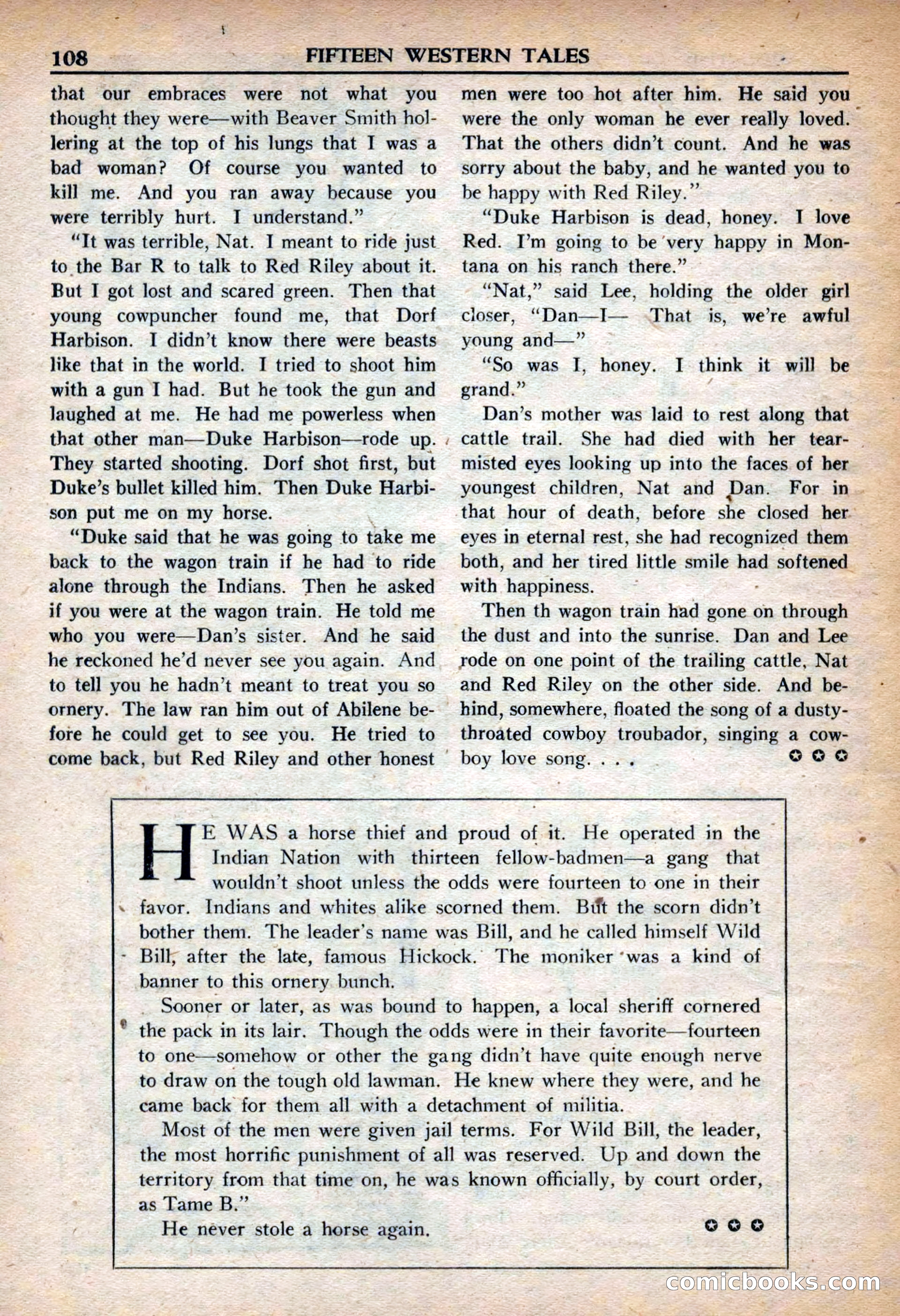
A restored page from Pulp Fiction, 1954. Page through the whole issue in the reader above.
📄 Transcribed text from this page (OCR, searchable)
Machine-transcribed from the original scan — historical spelling and the odd misread are preserved.
108 [FIFTEEN WESTERN TALES that our embraces were not what you thought they were—with Beaver Smith hol- lering at the top of his lungs that I was a bad woman? Of course you wanted to kill me. And you ran away because you were terribly hurt. I understand.” “Tt was terrible, Nat. I meant to ride just to the Bar R to talk to Red Riley about it. But I got lost and scared green. Then that - young cowpuncher found me, that Dorf Harbison. I didn’t know there were beasts like that in the world. I tried to shoot him with a gun I had. But he took the gun and laughed at me. He had me powerless when that other man—Duke Harbison—rode up. They started shooting. Dorf shot first, but Duke’s bullet killed him. Then Duke Harbi- son put me on my horse. “Duke said that he was going to take me back to the wagon train if he had to ride alone through the Indians. Then he asked if you were at the wagon train. He told me who you were—Dan’s sister. And he said he reckoned he’d never see you again. And to tell you he hadn’t meant to treat you so ornery. The law ran him out of Abilene be- fore he could get to see you. He tried to come back, but Red Riley and other honest — men were too hot after him. He said you were the only woman he ever really loved. That the others didn’t count. And he was sorry about the baby, and he wanted you to be happy with Red Riley.” “Duke Harbison is dead, honey. I love Red. I’m going to be’very happy in Mon- tana on his ranch there.” “Nat,” said Lee, holding the older girl closer, “Dan—I— That is, we’re awful young and—” “So was I, honey. I think it will be grand.” Dan’s mother was laid to rest along that cattle trail. misted eyes looking up into the faces of her youngest children, Nat and Dan. both, and her tired little smile had softened with happiness. Then th wagon train had gone on through the dust and into the sunrise. Dan and Lee rode on one point of the trailing cattle, Nat and Red Riley on the other side. And be- _ hind, somewhere, floated the song of a dusty- throated cowboy troubador, singing a cow- boy love song. . He operated in the E WAS a horse thief and proud of it. : i Indian Nation with thirteen fellow-badmen—a gang that wouldn't shoot unless the odds were fourteen to one in their « favor. Indians and whites alike scorned them. The leader’s name was Bill, and he called himself Wild bother them. Bit the scorn didn’t - Bill after the late, famous Hickock. The moniker “was a kind of banner to this ornery. bunch. Sooner or later, as was bound to happen, a local sheriff cornered She had died with her tear- — For in. that hour of death, before she closed her eyes in eternal rest, she had recognized them ooo the pack in its lair. Though the odds were in their favorite—fourteen to one—somehow or other the gang didn’t have quite enough nerve to draw on the tough old lawman. He knew where they were, and he came back for them all with a detachment of militia. Most of the men were given jail terms. For Wild Bill, the leader, the most horrific punishment of all was reserved. Up and down the territory from that time on, he was known officially, by court order, as Tame B.” He never stole a horse again, ~ as “2 mad | > yt ao rete Bd CPAs RAS ae OF As) yo ae Gomichbook co