
Pulp Fiction, 1944 · page 29 of 84
10-Story Detective Magazine Cover — page 29: what you’re looking at
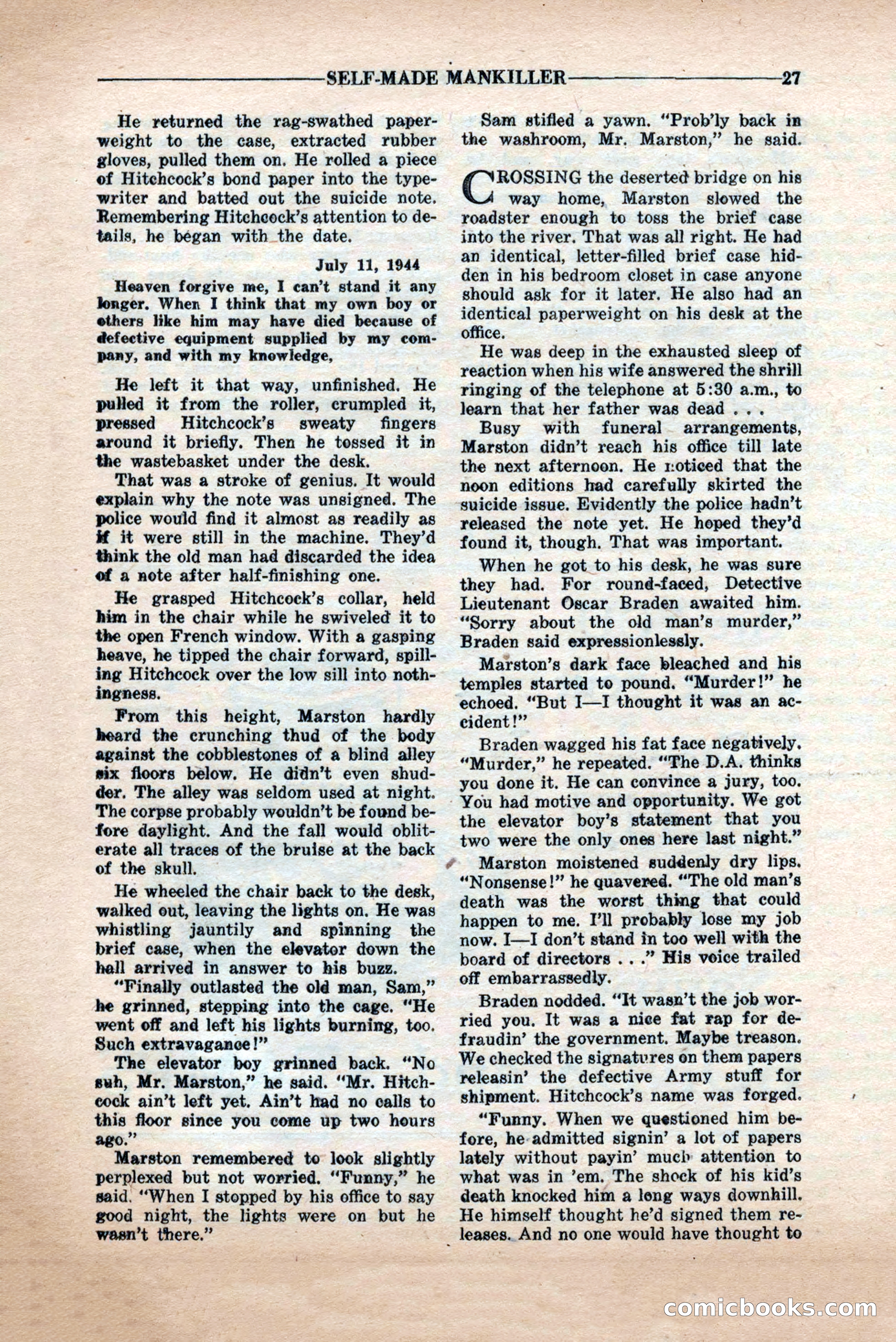
A restored page from Pulp Fiction, 1944. Page through the whole issue in the reader above.
📄 Transcribed text from this page (OCR, searchable)
Machine-transcribed from the original scan — historical spelling and the odd misread are preserved.
SELF-MADE MANKILLER————————_27 He returned the rag-swathed paper- weight to the case, extracted rubber gloves, pulled them on. He rolled a piece of Hitchcock’s bond paper into the type- writer and batted out the suicide note. Remembering Hitcheock’s attention to de- tails, he bégan with the date. July 11, 1944 Heaven forgive me, I can’t stand it any Jonger. When I think that my own boy or ethers like him may have died because of defective equipment supplied by my com- pany, and with my knowledge, He left it that way, unfinished. He pulled it from the roller, crumpled it, pressed Hitchcock’s sweaty fingers around it briefly. Then he tossed it in the wastebasket under the desk. That was a stroke of genius. It would explain why the note was unsigned. The police would find it almost as readily as if it were still in the machine. They’d think the old man had discarded the idea of a note after half-fmishing one. He grasped Hitchcock’s collar, held him in the chair while he swiveled it to the open French window. With a gasping heave, he tipped the chair forward, spill- ing Hitchcock over the low sill into noth- ingness. From this height, Marston hardly heard the crunching thud of the body against the cobblestones of a blind alley mix floors below. He didn’t even shud- der. The alley was seldom used at night. The corpse probably wouldn’t be found be- fore daylight. And the fall would oblit- erate all traces of the bruise at the back of the skull. He wheeled the chair back to the desk, walked out, leaving the lights on. He was whistling jauntily and spinning the brief case, when the elevator down the hell arrived in answer to his buzz. “Finally outlasted the old man, Sam,” he grinned, stepping into the cage. “He went off and left his lights burning, too. Such extravagance!” The elevator boy grinned back. “No suh, Mr. Marston,” he said. ‘Mr. Hitch- eock ain’t left yet. Ain’t had no calls to this floor since you come up two hours Marston remembered to look slightly perplexed but not worried. “Funny,” he said. ‘‘When I stopped by his office to say good night, the lights were on but he wasn’t there.” ’ Sam stifled a yawn. “Prob’ly back in the washroom, Mr. Marston,” he said. ROSSING the deserted bridge on his way home, Marston slewed the roadster enough to toss the brief case into the river. That was all right. He had an identical, letter-filled brief case hid- den in his bedroom closet in case anyone should ask for it later. He also had an identical paperweight on his desk at the office. He was deep in the exhausted sleep of reaction when his wife answered the shrill ringing of the telephone at 5:30 a.m., to learn that her father was dead... Busy with funeral arrangements, Marston didn’t reach his office till late the next afternoon. He noticed that the noon editions had carefully skirted the suicide issue. Evidently the police hadn’t released the note yet. He hoped they’d found it, though. That was important. When he got to his desk, he was sure they had. For round-faced, Detective Lieutenant Oscar Braden awaited him. “Sorry about the old man’s murder,” Braden said expressionlessly. Marston’s dark face bleached and his temples started to pound. “Murder!” he echoed. “But I—I thought it was an ac- eident!” Braden wagged his fat face negatively. “Murder,” he repeated. “The D.A. thinks you done it. He can convince a jury, too. - You had motive and opportunity. We got the elevator boy’s statement that you two were the only ones here last night.” Marston moistened suddenly dry lips. “Nonsense!” he quavered. “The old man’s death was the worst thing that could happen to me. I’ll probably lose my job now. I—I don’t stand in too well with the board of directors .. .” His voice trailed off embarrassedly. Braden nodded. “It wasn’t the job wor- ried you. It was a nice fat rap for de- fraudin’ the government. Maybe treason. We checked the signatures on them papers releasin’ the defective Army stuff for shipment. Hitchcock’s name was forged. “Funny. When we questioned him be- fore, he-admitted signin’ a lot of papers lately without payin’ mucil attention to what was in ’em. The shock of his kid’s death knocked him a leng ways downhill. He himself thought he’d signed them re- _ leases. And no one would have thought to Comicbooks (EC) im