
Penny Dreadfuls, 1900 · page 92 of 392
The Mysteries of the Court of London — page 92: what you’re looking at
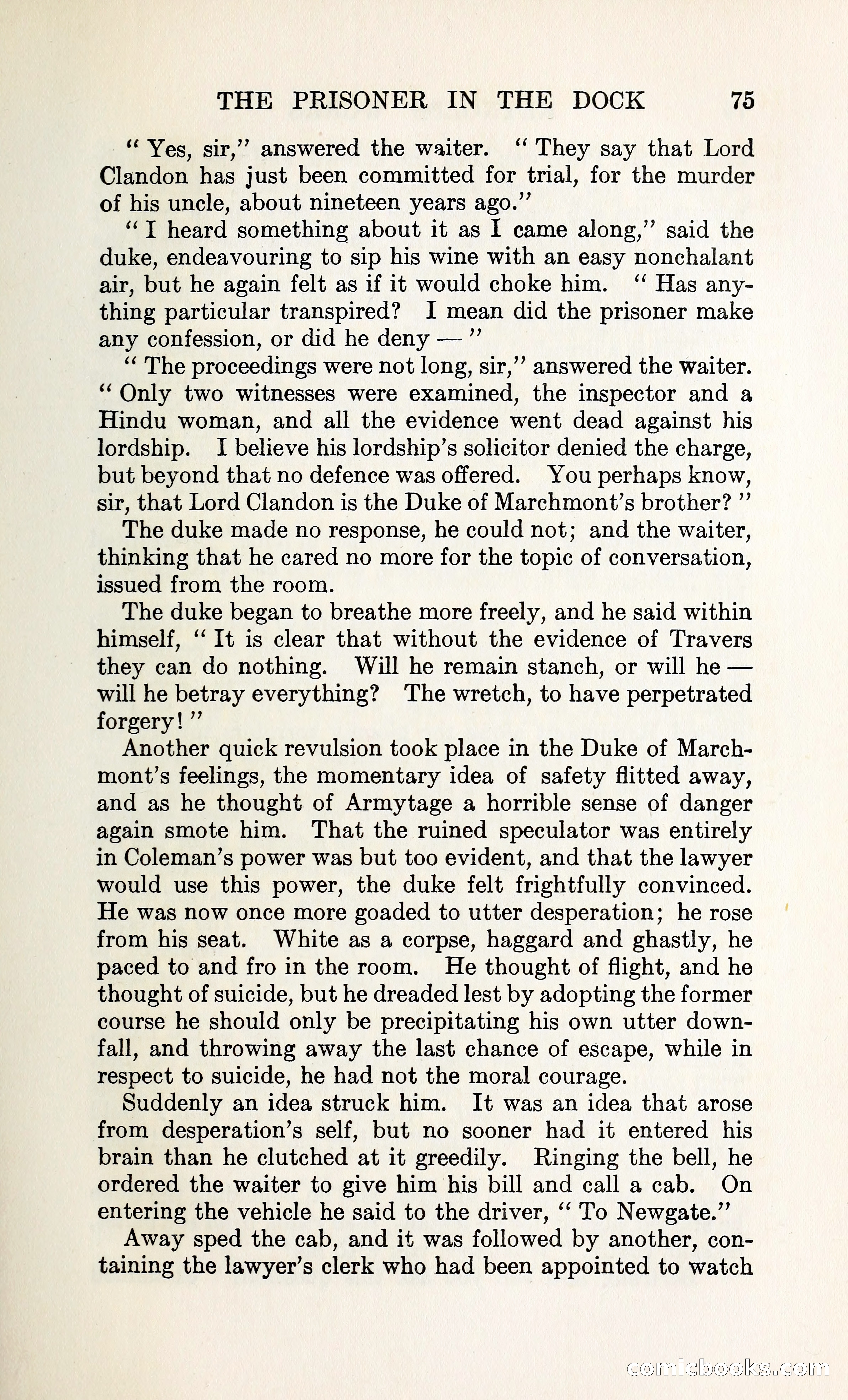
A restored page from Penny Dreadfuls, 1900. Page through the whole issue in the reader above.
📄 Transcribed text from this page (OCR, searchable)
Machine-transcribed from the original scan — historical spelling and the odd misread are preserved.
THE PRISONER IN THE DOCK 79 ‘““ Yes, sir,” answered the waiter. ‘“‘ They say that Lord Clandon has just been committed for trial, for the murder of his uncle, about nineteen years ago.” ‘‘T heard something about it as I came along,” said the duke, endeavouring to sip his wine with an easy nonchalant air, but he again felt as if it would choke him. ‘‘ Has any- thing particular transpired? I mean did the prisoner make any confession, or did he deny — ”’ ‘“‘ The proceedings were not long, sir,’’ answered the waiter. ‘“‘Only two witnesses were examined, the inspector and a Hindu woman, and all the evidence went dead against his lordship. I believe his lordship’s solicitor denied the charge, but beyond that no defence was offered. You perhaps know, sir, that Lord Clandon is the Duke of Marchmont’s brother? ”’ The duke made no response, he could not; and the waiter, thinking that he cared no more for the topic of conversation, issued from the room. The duke began to breathe more freely, and he said within himself, ‘“‘ It is clear that without the evidence of Travers they can do nothing. Will he remain stanch, or will he — will he betray everything? The wretch, to have perpetrated forgery! ”’ Another quick revulsion took place in the Duke of March- mont’s feelings, the momentary idea of safety flitted away, and as he thought of Armytage a horrible sense of danger again smote him. That the ruined speculator was entirely in Coleman’s power was but too evident, and that the lawyer would use this power, the duke felt frightfully convinced. He was now once more goaded to utter desperation; he rose from his seat. White as a corpse, haggard and ghastly, he paced to and froin the room. He thought of flight, and he thought of suicide, but he dreaded lest by adopting the former course he should only be precipitating his own utter down- fall, and throwing away the last chance of escape, while in respect to suicide, he had not the moral courage. Suddenly an idea struck him. It was an idea that arose from desperation’s self, but no sooner had it entered his brain than he clutched at it greedily. Ringing the bell, he ordered the waiter to give him his bill and call a cab. On entering the vehicle he said to the driver, ‘“‘ To Newgate.”’ Away sped the cab, and it was followed by another, con- taining the lawyer’s clerk who had been appointed to watch GomillGaooks (©)