
Penny Dreadfuls, 1900 · page 254 of 392
The Mysteries of the Court of London — page 254: what you’re looking at
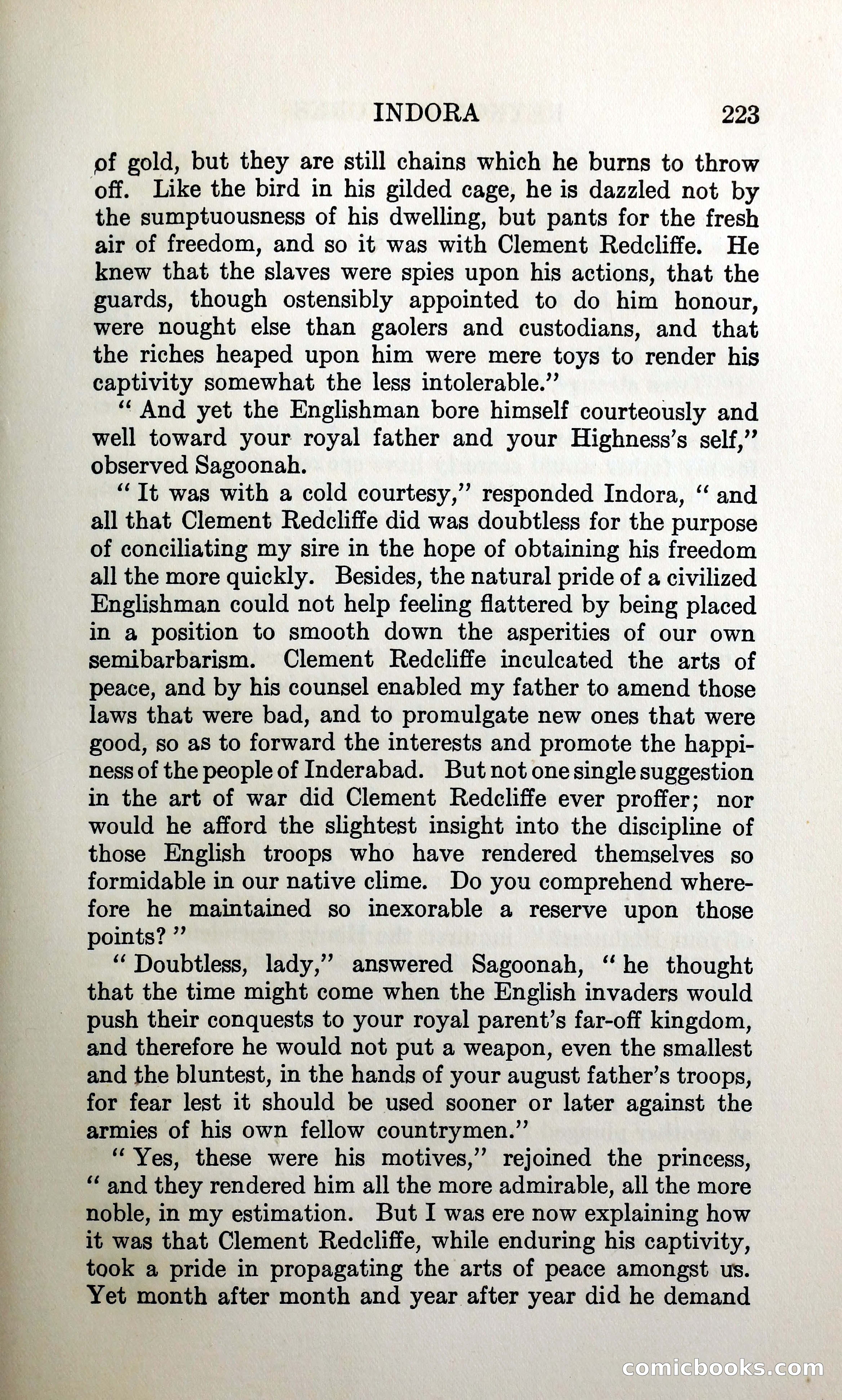
A restored page from Penny Dreadfuls, 1900. Page through the whole issue in the reader above.
📄 Transcribed text from this page (OCR, searchable)
Machine-transcribed from the original scan — historical spelling and the odd misread are preserved.
INDORA 223 of gold, but they are still chains which he burns to throw off. Like the bird in his gilded cage, he is dazzled not by the sumptuousness of his dwelling, but pants for the fresh air of freedom, and so it was with Clement Redcliffe. He knew that the slaves were spies upon his actions, that the guards, though ostensibly appointed to do him honour, were nought else than gaolers and custodians, and that the riches heaped upon him were mere toys to render his captivity somewhat the less intolerable.”’ ‘And yet the Englishman bore himself courteously and well toward your royal father and your Highness’s self,’’ observed Sagoonah. “It was with a cold courtesy,”’ responded Indora, ‘‘ and all that Clement Redcliffe did was doubtless for the purpose of conciliating my sire in the hope of obtaining his freedom all the more quickly. Besides, the natural pride of a civilized Englishman could not help feeling flattered by being placed in a position to smooth down the asperities of our own semibarbarism. Clement Redcliffe inculcated the arts of peace, and by his counsel enabled my father to amend those laws that were bad, and to promulgate new ones that were good, so as to forward the interests and promote the happi- ness of the people of Inderabad. But not onesingle suggestion in the art of war did Clement Redcliffe ever proffer; nor would he afford the slightest insight into the discipline of those English troops who have rendered themselves so formidable in our native clime. Do you comprehend where- fore he maintained so inexorable a reserve upon those points? ” ‘Doubtless, lady,’ answered Sagoonah, “he thought that the time might come when the English invaders would push their conquests to your royal parent’s far-off kingdom, and therefore he would not put a weapon, even the smallest and the bluntest, in the hands of your august father’s troops, for fear lest it should be used sooner or later against the armies of his own fellow countrymen.” “Yes, these were his motives,” rejoined the princess, “‘ and they rendered him all the more admirable, all the more noble, in my estimation. But I was ere now explaining how it was that Clement Redcliffe, while enduring his captivity, took a pride in propagating the arts of peace amongst us. Yet month after month and year after year did he demand GEomichbooks (El @)