
Penny Dreadfuls, 1870 · page 396 of 391
The Works of George W. M. Reynolds — page 396: what you’re looking at
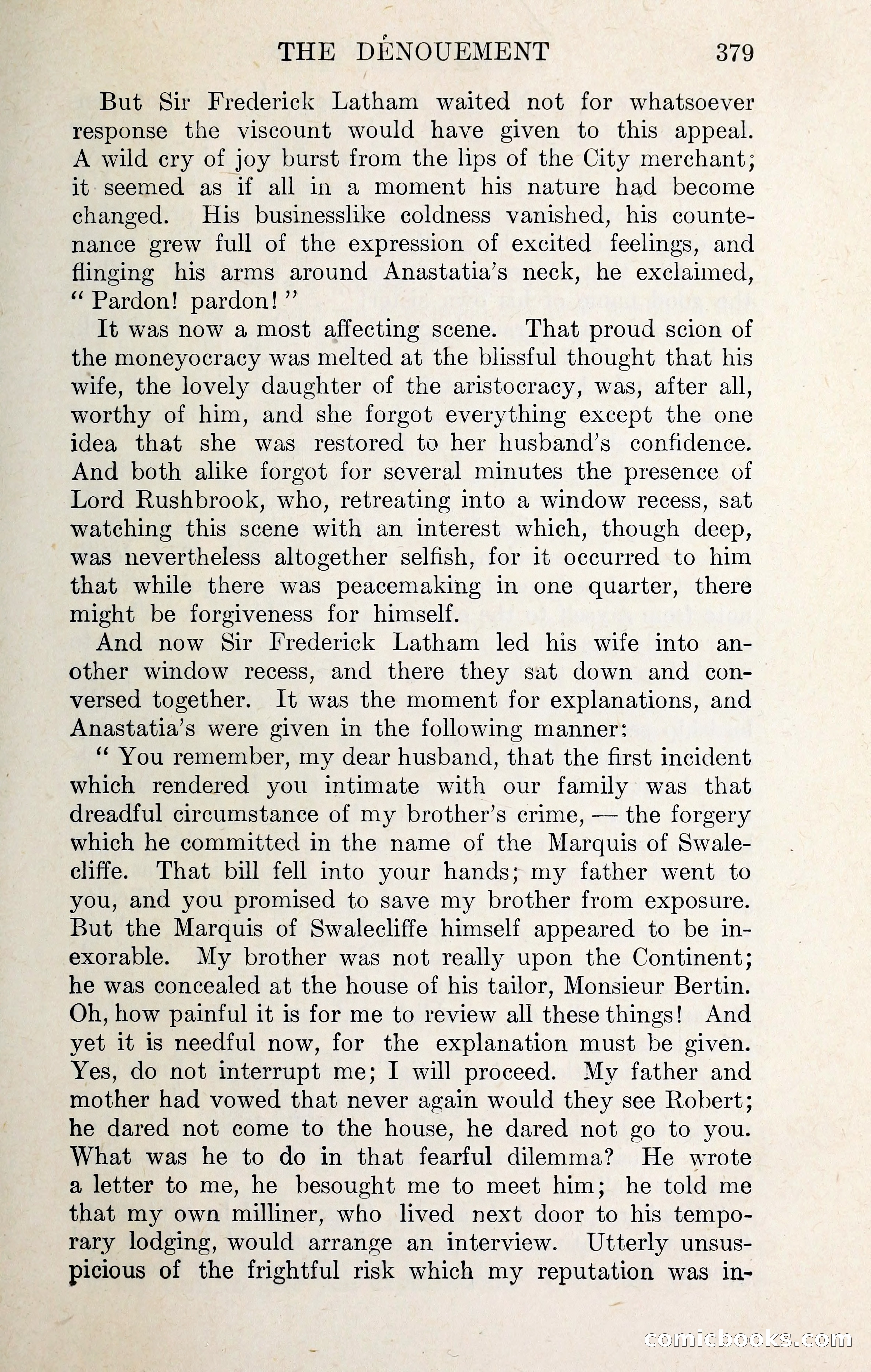
A restored page from Penny Dreadfuls, 1870. Page through the whole issue in the reader above.
📄 Transcribed text from this page (OCR, searchable)
Machine-transcribed from the original scan — historical spelling and the odd misread are preserved.
THE DENOUEMENT 379 But Siw Frederick Latham waited not for whatsoever response the viscount would have given to this appeal. A wild ery of joy burst from the lps of the City merchant; it seemed as if all in a moment his nature had become changed. His businesshke coldness vanished, his counte- nance grew full of the expression of excited feelings, and flinging his arms around Anastatia’s neck, he exclaimed, “Pardon! pardon! ”’ It was now a most affecting scene. That proud scion of the moneyocracy was melted at the blissful thought that his wife, the lovely daughter of the aristocracy, was, after all, worthy of him, and she forgot everything except the one idea that she was restored to her husband’s confidence. And both alike forgot for several minutes the presence of Lord Rushbrook, who, retreating into a window recess, sat watching this scene with an interest which, though deep, was nevertheless altogether selfish, for 1t occurred to him that while there was peacemaking in one quarter, there might be forgiveness for himself. And now Sir Frederick Latham led his wife into an- other window recess, and there they sat down and con- versed together. It was the moment for explanations, and Anastatia’s were given in the following manner: “You remember, my dear husband, that the first incident which rendered you intimate with our family was that dreadful circumstance of my brother’s crime, — the forgery which he committed in the name of the Marquis of Swale- cliffe. That bill fell into your hands; my father went to you, and you promised to save my brother from exposure. But the Marquis of Swalecliffe himself appeared to be in- exorable. My brother was not really upon the Continent; he was concealed at the house of his tailor, Monsieur Bertin. Oh, how paintul it is for me to review all these things! And yet it is needful now, for the explanation must be given. Yes, do not interrupt me; I will proceed. My father and mother had vowed that never again would they see Robert; he dared not come to the house, he dared not go to you. What was he to do in that fearful dilemma? He wrote a letter to me, he besought me to meet him; he told me that my own milliner, who lived next door to his tempo- rary lodging, would arrange an interview. Utterly unsus- picious of the frightful risk which my reputation was in- CORNICLOOO SS (E(@)