
Penny Dreadfuls, 1900 · page 162 of 394
The Mysteries of the Court of London — page 162: what you’re looking at
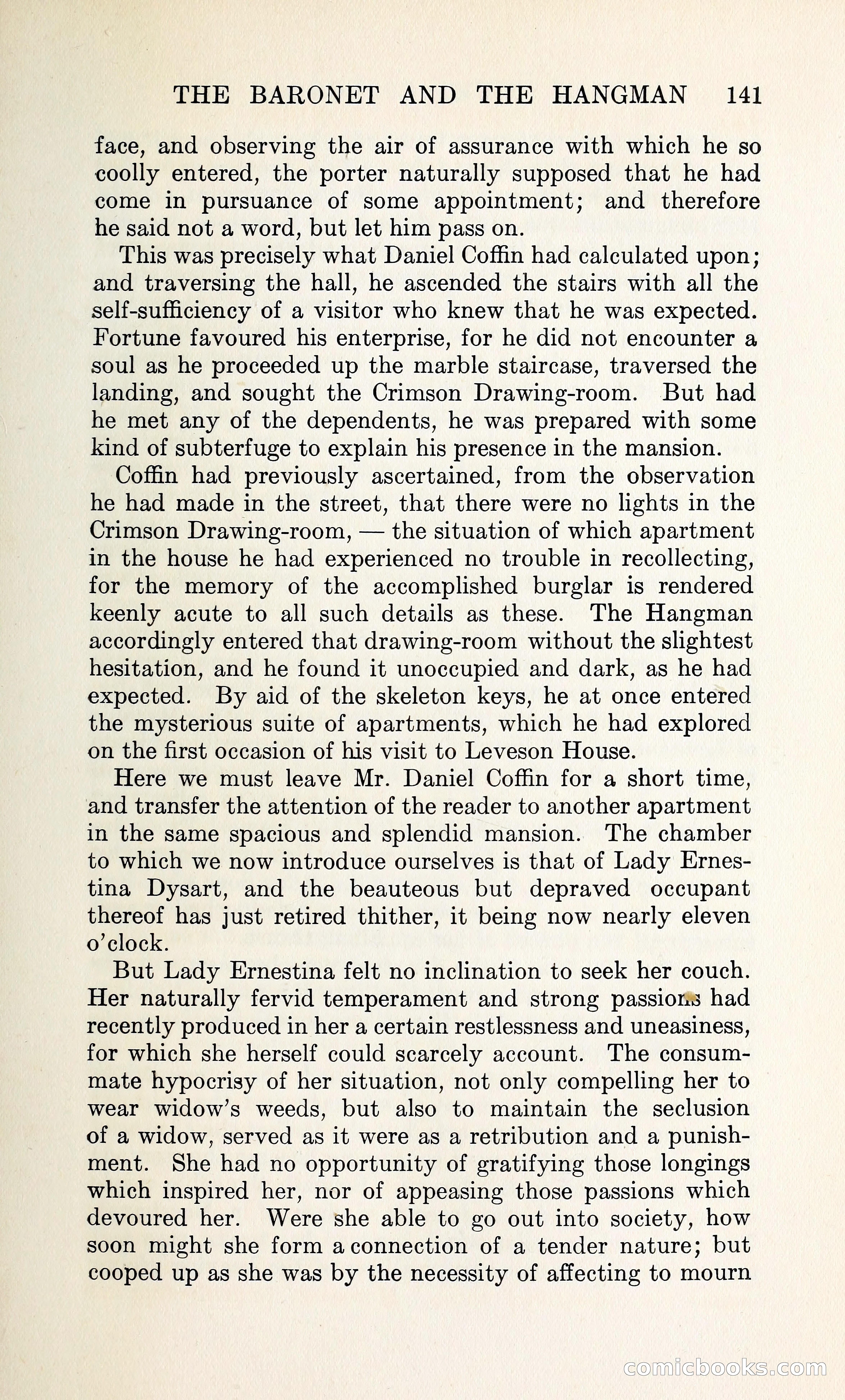
A restored page from Penny Dreadfuls, 1900. Page through the whole issue in the reader above.
📄 Transcribed text from this page (OCR, searchable)
Machine-transcribed from the original scan — historical spelling and the odd misread are preserved.
THE BARONET AND THE HANGMAN 141 face, and observing the air of assurance with which he so coolly entered, the porter naturally supposed that he had come in pursuance of some appointment; and therefore he said not a word, but let him pass on. This was precisely what Daniel Coffin had calculated upon; and traversing the hall, he ascended the stairs with all the self-sufficiency of a visitor who knew that he was expected. Fortune favoured his enterprise, for he did not encounter a soul as he proceeded up the marble staircase, traversed the landing, and sought the Crimson Drawing-room. But had he met any of the dependents, he was prepared with some kind of subterfuge to explain his presence in the mansion. Coffin had previously ascertained, from the observation he had made in the street, that there were no lights in the Crimson Drawing-room, — the situation of which apartment in the house he had experienced no trouble in recollecting, for the memory of the accomplished burglar is rendered keenly acute to all such details as these. The Hangman accordingly entered that drawing-room without the slightest hesitation, and he found it unoccupied and dark, as he had expected. By aid of the skeleton keys, he at once entered the mysterious suite of apartments, which he had explored on the first occasion of his visit to Leveson House. Here we must leave Mr. Daniel Coffin for a short time, and transfer the attention of the reader to another apartment in the same spacious and splendid mansion. The chamber to which we now introduce ourselves is that of Lady Ernes- tina Dysart, and the beauteous but depraved occupant thereof has just retired thither, it being now nearly eleven o'clock. But Lady Ernestina felt no inclination to seek her couch. Her naturally fervid temperament and strong passions had recently produced in her a certain restlessness and uneasiness, for which she herself could scarcely account. The consum- mate hypocrisy of her situation, not only compelling her to wear widow’s weeds, but also to maintain the seclusion of a widow, served as it were as a retribution and a punish- ment. She had no opportunity of gratifying those longings which inspired her, nor of appeasing those passions which devoured her. Were she able to go out into society, how soon might she form aconnection of a tender nature; but cooped up as she was by the necessity of affecting to mourn Cconnicloooks (C(O)