
Penny Dreadfuls, 1870 · page 66 of 392
The Works of George W. M. Reynolds — page 66: what you’re looking at
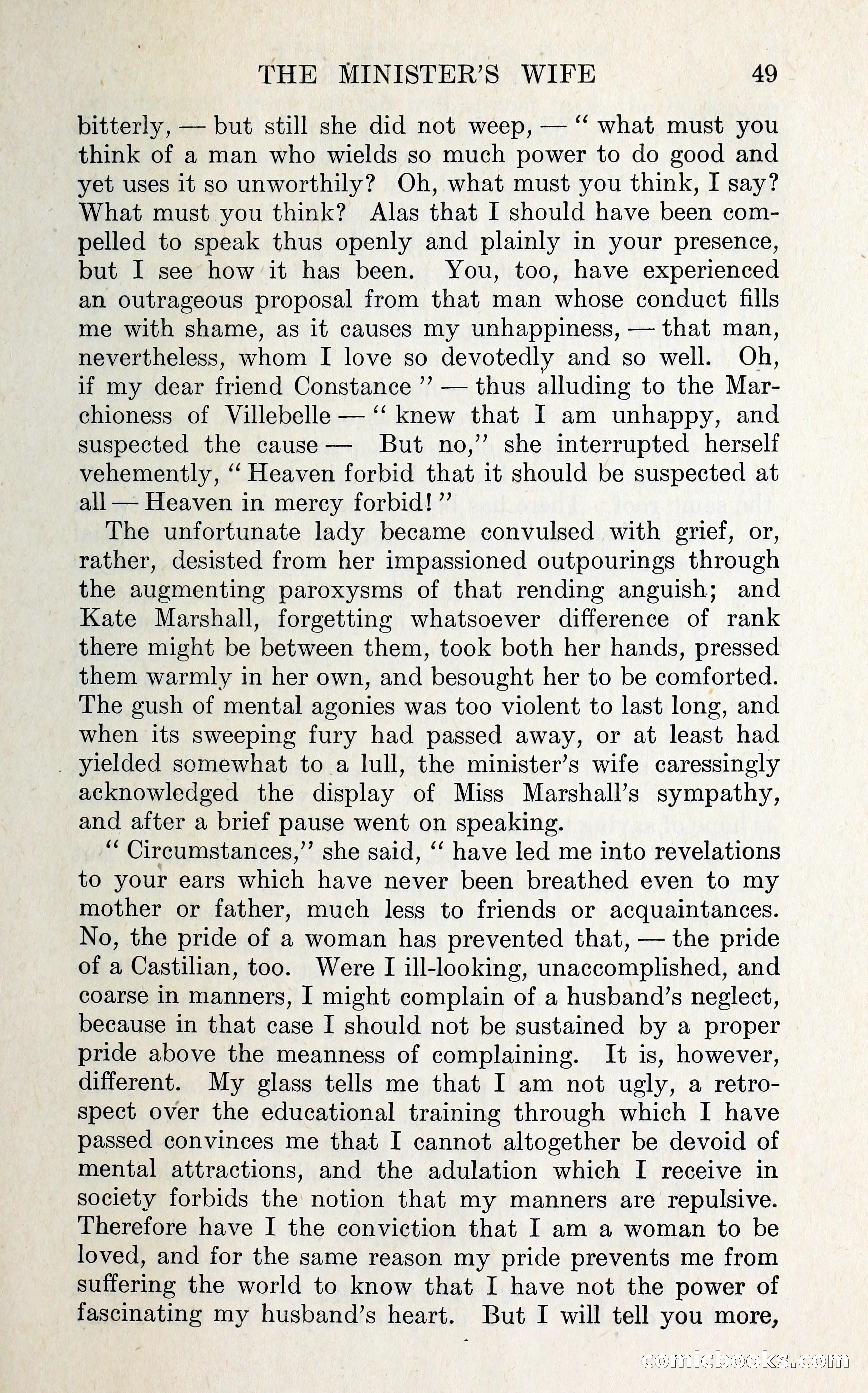
A restored page from Penny Dreadfuls, 1870. Page through the whole issue in the reader above.
📄 Transcribed text from this page (OCR, searchable)
Machine-transcribed from the original scan — historical spelling and the odd misread are preserved.
THE MINISTER’S WIFE 49 bitterly, — but still she did not weep, — “ what must you think of a man who wields so much power to do good and yet uses it so unworthily? Oh, what must you think, I say? What must you think? Alas that I should have been com- pelled to speak thus openly and plainly in your presence, but I see how it has been. You, too, have experienced an outrageous proposal from that man whose conduct fills me with shame, as it causes my unhappiness, — that man, nevertheless, whom I love so devotedly and so well. Oh, if my dear friend Constance ’’ — thus alluding to the Mar- chioness of Villebelle — ‘‘ knew that I am unhappy, and suspected the cause— But no,”’ she interrupted herself vehemently, “‘ Heaven forbid that it should be suspected at all— Heaven in mercy forbid! ”’ The unfortunate lady became convulsed with grief, or, rather, desisted from her impassioned outpourings through the augmenting paroxysms of that rending anguish; and Kate Marshall, forgetting whatsoever difference of rank there might be between them, took both her hands, pressed them warmly in her own, and besought her to be comforted. The gush of mental agonies was too violent to last long, and when its sweeping fury had passed away, or at least had _ yielded somewhat to a lull, the minister’s wife caressingly acknowledged the display of Miss Marshall’s sympathy, and after a brief pause went on speaking. “ Circumstances,”’ she said, ‘‘ have led me into revelations to your ears which have never been breathed even to my mother or father, much less to friends or acquaintances. No, the pride of a woman has prevented that, — the pride of a Castilian, too. Were I ill-looking, unaccomplished, and coarse in manners, I might complain of a husband’s neglect, because in that case I should not be sustained by a proper pride above the meanness of complaining. It is, however, different. My glass tells me that I am not ugly, a retro- spect over the educational training through which I have passed convinces me that I cannot altogether be devoid of mental attractions, and the adulation which I receive in society forbids the notion that my manners are repulsive. Therefore have I the conviction that I am a woman to be loved, and for the same reason my pride prevents me from suffering the world to know that I have not the power of fascinating my husband’s heart. But I will tell you more, CORNICE DOOKS (FO)