
Penny Dreadfuls, 1870 · page 41 of 392
The Works of George W. M. Reynolds — page 41: what you’re looking at
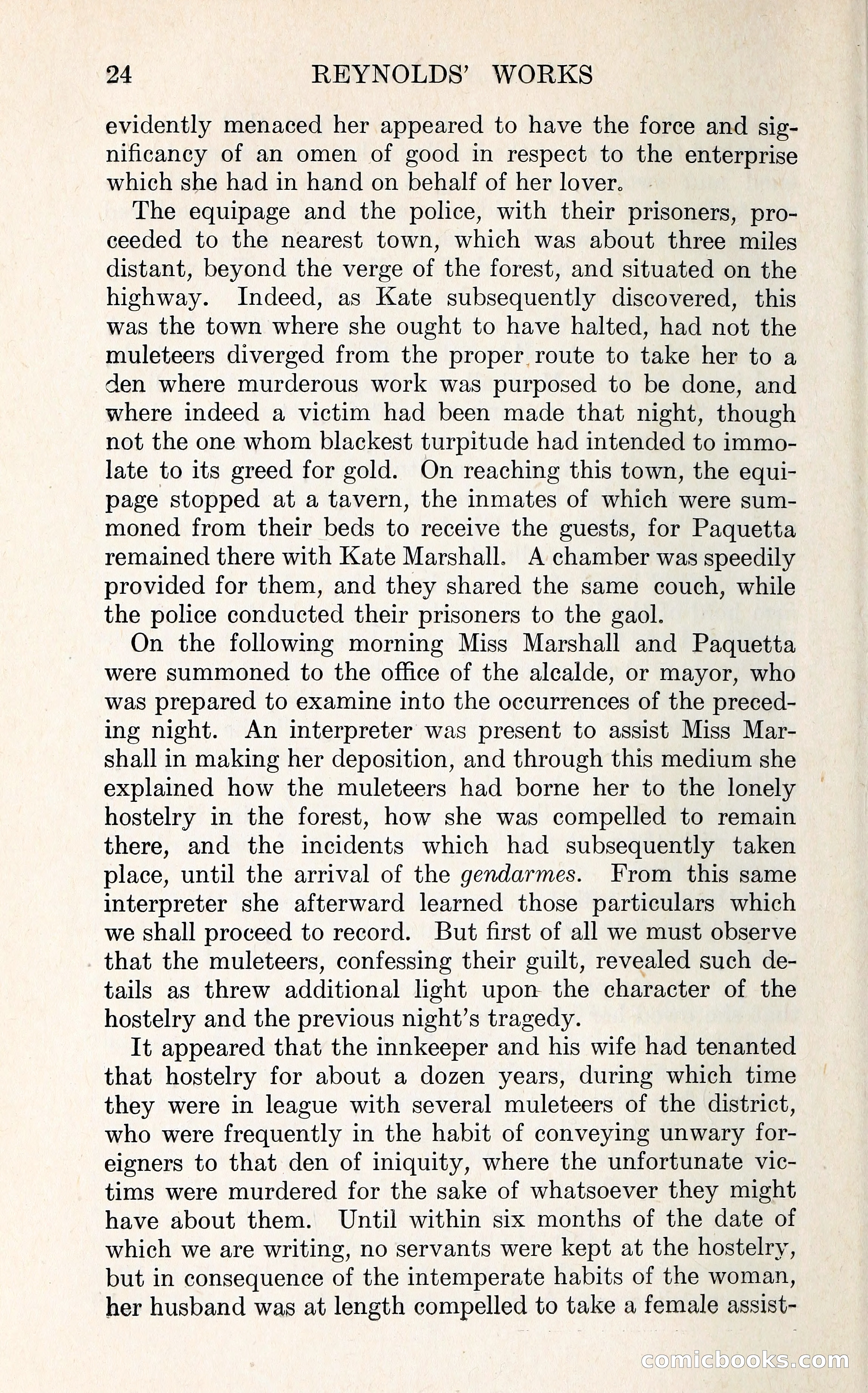
A restored page from Penny Dreadfuls, 1870. Page through the whole issue in the reader above.
📄 Transcribed text from this page (OCR, searchable)
Machine-transcribed from the original scan — historical spelling and the odd misread are preserved.
24 REYNOLDS’ WORKS evidently menaced her appeared to have the force and sig- nificancy of an omen of good in respect to the enterprise which she had in hand on behalf of her lover. The equipage and the police, with their prisoners, pro- ceeded to the nearest town, which was about three miles distant, beyond the verge of the forest, and situated on the highway. Indeed, as Kate subsequently discovered, this was the town where she ought to have halted, had not the muleteers diverged from the proper route to take her to a den where murderous work was purposed to be done, and where indeed a victim had been made that night, though not the one whom blackest turpitude had intended to immo- late to its greed for gold. On reaching this town, the equi- page stopped at a tavern, the inmates of which were sum- moned from their beds to receive the guests, for Paquetta remained there with Kate Marshall. A chamber was speedily provided for them, and they shared the same couch, while the police conducted their prisoners to the gaol. On the following morning Miss Marshall and Paquetta were summoned to the office of the alcalde, or mayor, who was prepared to examine into the occurrences of the preced- ing night. An interpreter was present to assist Miss Mar- shall in making her deposition, and through this medium she explained how the muleteers had borne her to the lonely hostelry in the forest, how she was compelled to remain there, and the incidents which had subsequently taken place, until the arrival of the gendarmes. From this same interpreter she afterward learned those particulars which we shall proceed to record. But first of all we must observe that the muleteers, confessing their guilt, revealed such de- tails as threw additional light upon the character of the hostelry and the previous night’s tragedy. It appeared that the innkeeper and his wife had tenanted that hostelry for about a dozen years, during which time they were in league with several muleteers of the district, who were frequently in the habit of conveying unwary for- eigners to that den of iniquity, where the unfortunate vic- tims were murdered for the sake of whatsoever they might have about them. Until within six months of the date of which we are writing, no servants were kept at the hostelry, but in consequence of the intemperate habits of the woman, her husband was at length compelled to take a female assist- CONNIE IOOKS (E(0)