
Penny Dreadfuls, 1870 · page 240 of 392
The Works of George W. M. Reynolds — page 240: what you’re looking at
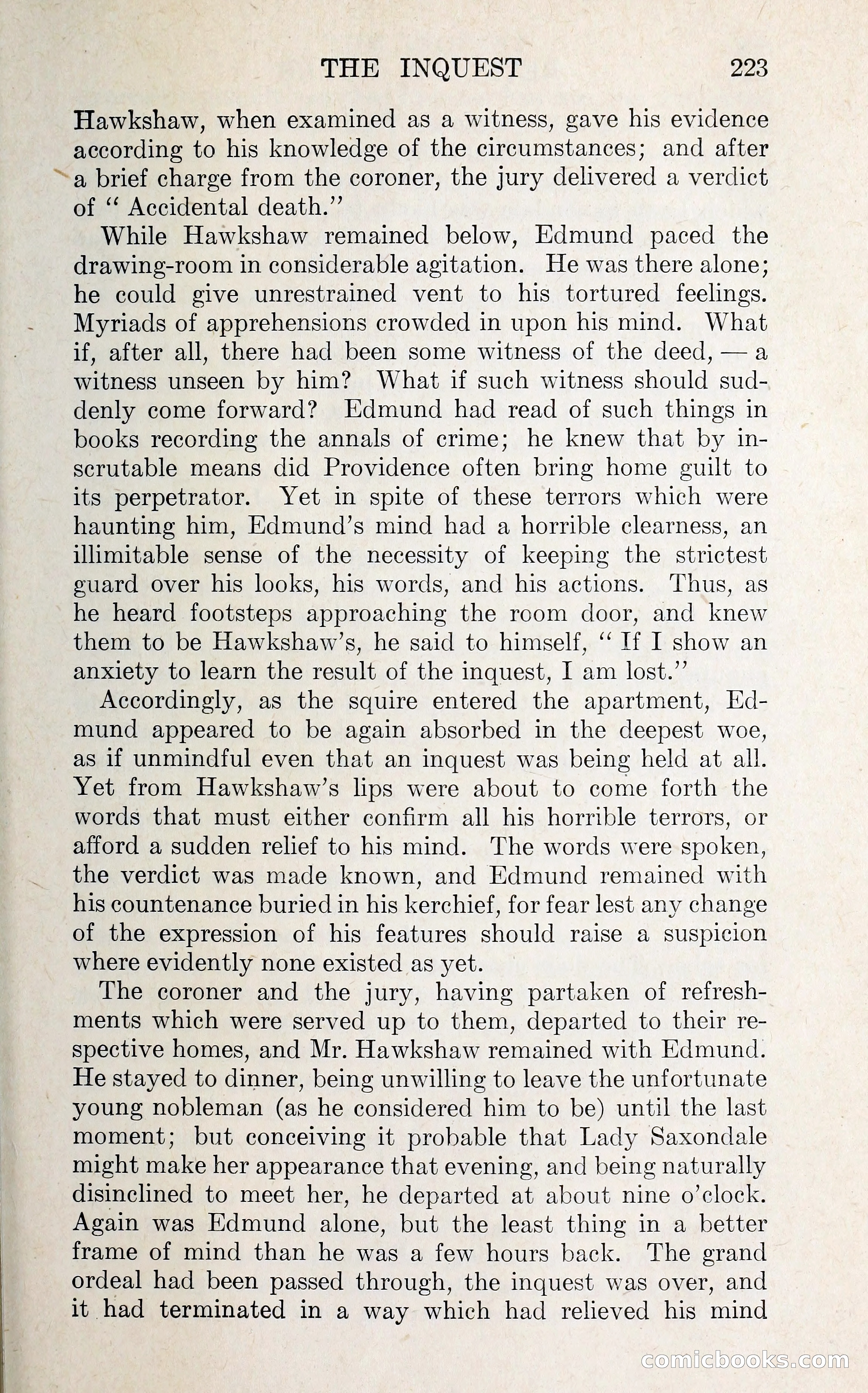
A restored page from Penny Dreadfuls, 1870. Page through the whole issue in the reader above.
📄 Transcribed text from this page (OCR, searchable)
Machine-transcribed from the original scan — historical spelling and the odd misread are preserved.
THE INQUEST 223 Hawkshaw, when examined as a witness, gave his evidence according to his knowledge of the circumstances; and after ~a brief charge from the coroner, the Jury delivered a verdict of ‘‘ Accidental death.”’ While Hawkshaw remained below, Edmund paced the drawing-room in considerable agitation. He was there alone; he could give unrestrained vent to his tortured feelings. Myriads of apprehensions crowded in upon his mind. What if, after all, there had been some witness of the deed, — a witness unseen by him? What if such witness should sud- denly come forward? Edmund had read of such things in books recording the annals of crime; he knew that by in- scrutable means did Providence often bring home guilt to its perpetrator. Yet in spite of these terrors which were haunting him, Edmund’s mind had a horrible clearness, an illimitable sense of the necessity of keeping the strictest suard over his looks, his words, and his actions. Thus, as he heard footsteps approaching the room door, and knew them to be Hawkshaw’s, he said to himself, “ If I show an anxiety to learn the result of the inquest, I am lost.” Accordingly, as the squire entered the apartment, Ed- mund appeared to be again absorbed in the deepest woe, as if unmindful even that an inquest was being held at all. Yet from Hawkshaw’s lips were about to come forth the words that must either confirm all his horrible terrors, or afford a sudden relief to his mind. The words were spoken, the verdict was made known, and Edmund remained with his countenance buried in his kerchief, for fear lest any change of the expression of his features should raise a suspicion where evidently none existed as yet. The coroner and the jury, having partaken of refresh- ments which were served up to them, departed to their re- spective homes, and Mr. Hawkshaw remained with Edmund. He stayed to dinner, being unwilling to leave the unfortunate young nobleman (as he considered him to be) until the last moment; but conceiving it probable that Lady Saxondale might make her appearance that evening, and being naturally disinclined to meet her, he departed at about nine o’clock. Again was Edmund alone, but the least thing in a better frame of mind than he was a few hours back. The grand ordeal had been passed through, the inquest was over, and it had terminated in a way which had relieved his mind CORVICLOOC cS (FO)