
Penny Dreadfuls, 1870 · page 232 of 392
The Works of George W. M. Reynolds — page 232: what you’re looking at
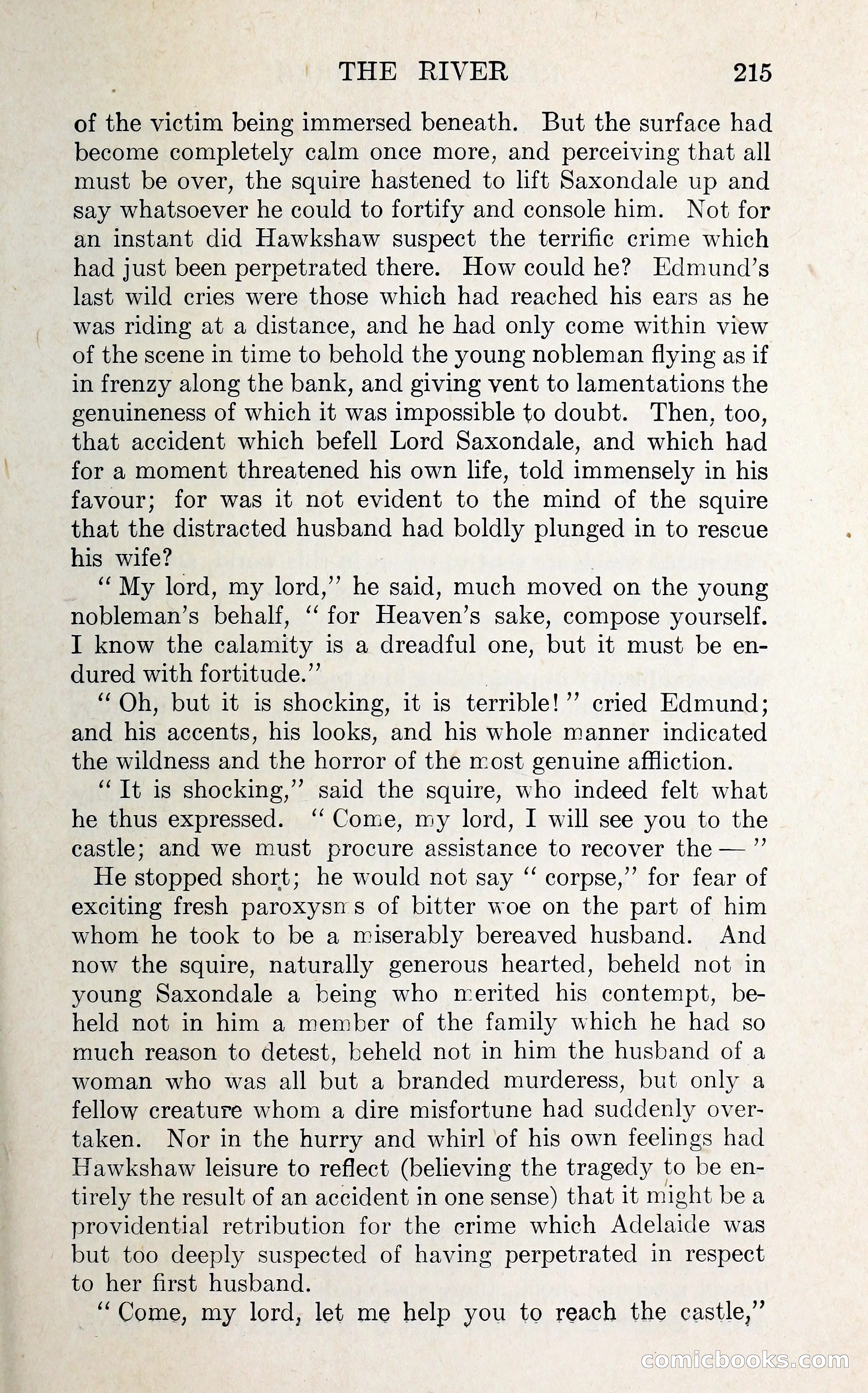
A restored page from Penny Dreadfuls, 1870. Page through the whole issue in the reader above.
📄 Transcribed text from this page (OCR, searchable)
Machine-transcribed from the original scan — historical spelling and the odd misread are preserved.
THE RIVER 215 of the victim being immersed beneath. But the surface had become completely calm once more, and perceiving that all must be over, the squire hastened to lift Saxondale up and say whatsoever he could to fortify and console him. Not for an instant did Hawkshaw suspect the terrific crime which had just been perpetrated there. How could he? Edmund’s last wild cries were those which had reached his ears as he was riding at a distance, and he had only come within view of the scene in time to behold the young nobleman flying as if in frenzy along the bank, and giving vent to lamentations the genuineness of which it was impossible to doubt. Then, too, that accident which befell Lord Saxondale, and which had for a moment threatened his own life, told immensely in his favour; for was it not evident to the mind of the squire that the distracted husband had boldly plunged in to rescue his wife? “My lord, my lord,” he said, much moved on the young nobleman’s behalf, “‘ for Heaven’s sake, compose yourself. I know the calamity is a dreadful one, but it must be en- dured with fortitude.”’ | “Oh, but it is shocking, it is terrible!’’ cried Edmund; and his accents, his looks, and his whole manner indicated the wildness and the horror of the most genuine affliction. “Tt is shocking,’ said the squire, who indeed felt what he thus expressed. ‘“‘ Come, my lord, I will see you to the castle; and we must procure assistance to recover the — ”’ He stopped short; he would not say “ corpse,” for fear of exciting fresh paroxysms of bitter woe on the part of him whom he took to be a miserably bereaved husband. And now the squire, naturally generous hearted, beheld not in young Saxondale a being who merited his contempt, be- held not in him a member of the family which he had so much reason to detest, beheld not in him the husband of a woman who was all but a branded murderess, but only a fellow creature whom a dire misfortune had suddenly over- taken. Nor in the hurry and whirl of his own feelings had Hawkshaw leisure to reflect (believing the tragedy to be en- tirely the result of an accident in one sense) that it might be a providential retribution for the crime which Adore was but too deeply suspected of having perpetrated in respect to her first husband. “Come, my lord, let me help you to reach the castle,” GoOmicdoo ‘S (C(O)