
Penny Dreadfuls, 1870 · page 222 of 392
The Works of George W. M. Reynolds — page 222: what you’re looking at
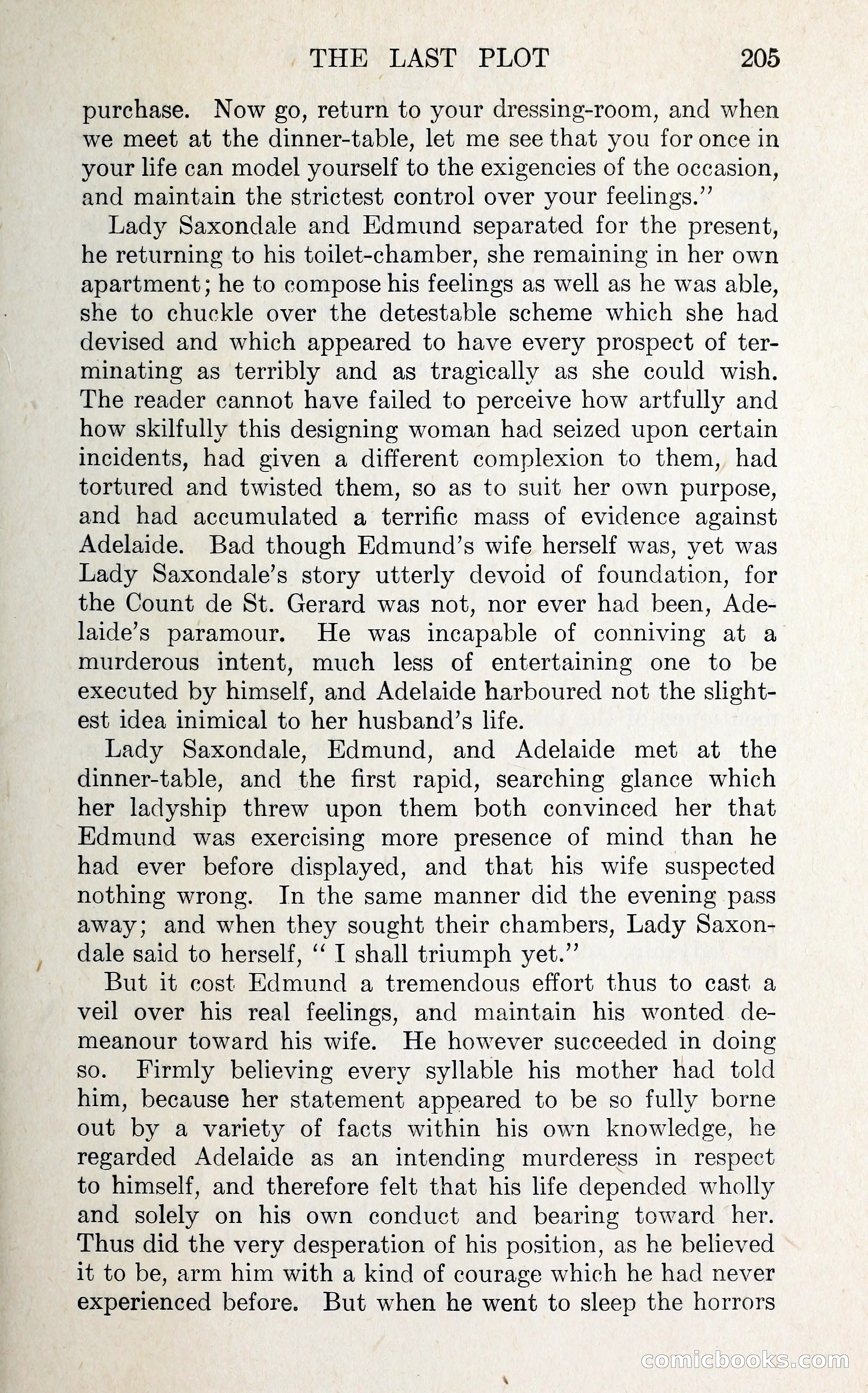
A restored page from Penny Dreadfuls, 1870. Page through the whole issue in the reader above.
📄 Transcribed text from this page (OCR, searchable)
Machine-transcribed from the original scan — historical spelling and the odd misread are preserved.
THE LAST PLOT 205 purchase. Now go, return to your dressing-room, and when we meet at the dinner-table, let me see that you for once in your life can model yourself to the exigencies of the occasion, and maintain the strictest control over your feelings.”’ Lady Saxondale and Edmund separated for the present, he returning to his toilet-chamber, she remaining in her own apartment; he to compose his feelings as well as he was able, she to chuckle over the detestable scheme which she had devised and which appeared to have every prospect of ter- minating as terribly and as tragically as she could wish. The reader cannot have failed to perceive how artfully and how skilfully this designing woman had seized upon certain incidents, had given a different complexion to them, had tortured and twisted them, so as to suit her own purpose, and had accumulated a terrific mass of evidence against Adelaide. Bad though Edmund’s wife herself was, yet was Lady Saxondale’s story utterly devoid of foundation, for the Count de St. Gerard was not, nor ever had been, Ade- laide’s paramour. He was incapable of conniving at a murderous intent, much less of entertaining one to be executed by himself, and Adelaide harboured not the slight- est idea inimical to her husband’s life. Lady Saxondale, Edmund, and Adelaide met at the dinner-table, and the first rapid, searching glance which her ladyship threw upon them both convinced her that Edmund was exercising more presence of mind than he had ever before displayed, and that his wife suspected nothing wrong. In the same manner did the evening pass away; and when they sought their chambers, Lady Saxon- dale said to herself, ‘‘ I shall triumph yet.” But it cost Edmund a tremendous effort thus to cast a veil over his real feelings, and maintain his wonted de- meanour toward his wife. He however succeeded in doing so. Firmly believing every syllable his mother had told him, because her statement appeared to be so fully borne out by a variety of facts within his own knowledge, he regarded Adelaide as an intending murderess in respect to himself, and therefore felt that his life depended wholly and solely on his own conduct and bearing toward her. Thus did the very desperation of his position, as he believed it to be, arm him with a kind of courage which he had never experienced before. But when he went to sleep the horrors CONNIE LOOKS (C(O)