
Penny Dreadfuls, 1870 · page 90 of 392
The Works of George W. M. Reynolds — page 90: what you’re looking at
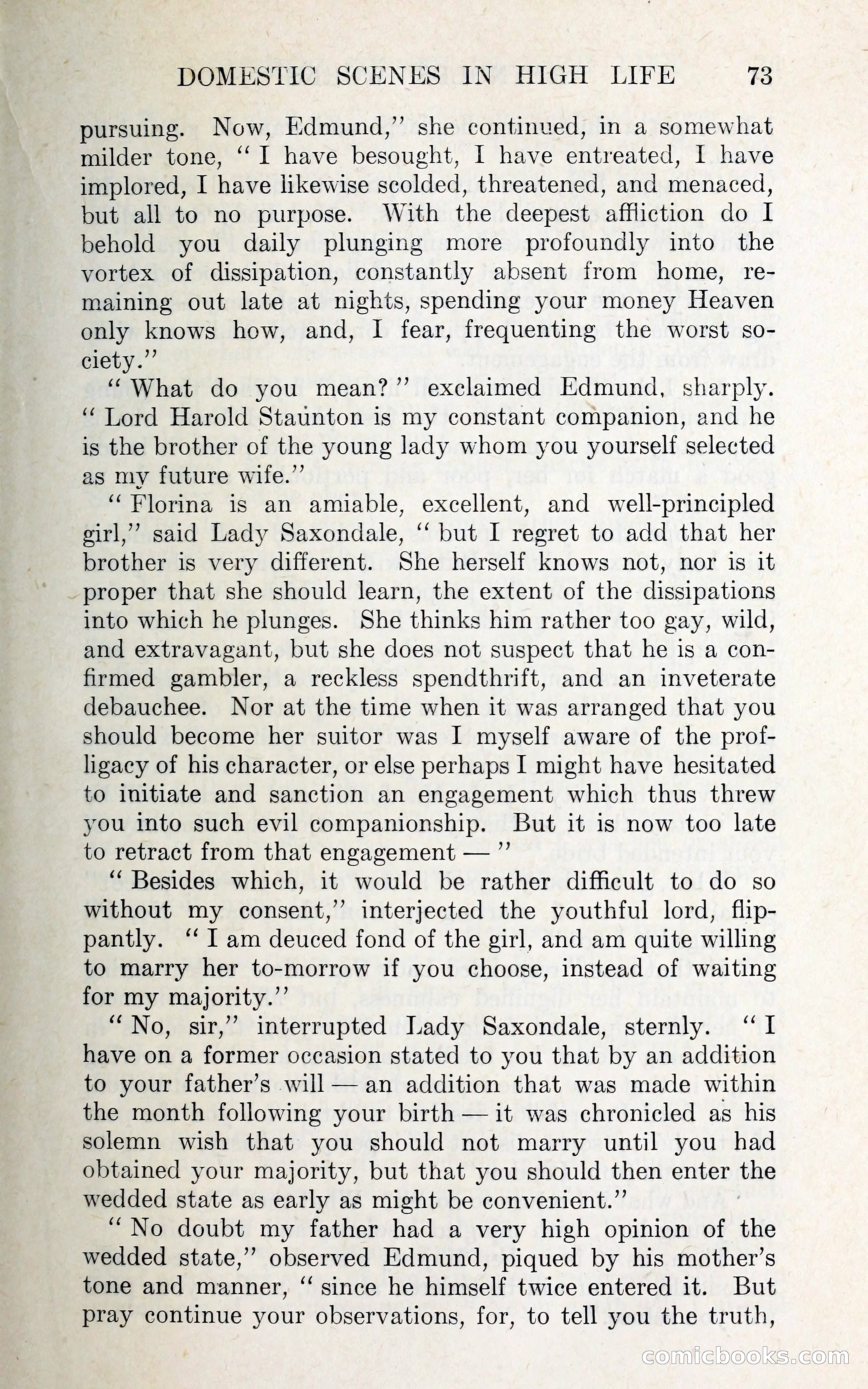
A restored page from Penny Dreadfuls, 1870. Page through the whole issue in the reader above.
📄 Transcribed text from this page (OCR, searchable)
Machine-transcribed from the original scan — historical spelling and the odd misread are preserved.
DOMESTIC SCENES IN HIGH LIFE res pursuing. Now, Edmund,” she continued, in a somewhat milder tone, ‘‘ I have besought, I have entreated, I have implored, I have likewise scolded, threatened, and menaced, but all to no purpose. With the deepest affliction do | behold you daily plunging more profoundly into the vortex of dissipation, constantly absent from home, re- maining out late at nights, spending your money Heaven only knows how, and, I fear, frequenting the worst so- ciety.” “What do you mean?” exclaimed Edmund, sharply. “Lord Harold Staunton is my constant companion, and he is the brother of the young lady whom you yourself selected as my future wile.” “Florina is an amiable, excellent, and well-principled eirl,”’ said Lady Saxondale, “ but I regret to add that her brother is very different. She herself knows not, nor is it proper that she should learn, the extent of the dissipations into which he plunges. She thinks him rather too gay, wild, and extravagant, but she does not suspect that he is a con- firmed gambler, a reckless spendthrift, and an inveterate debauchee. Nor at the time when it was arranged that you should become her suitor was I myself aware of the prof- ligacy of his character, or else perhaps I might have hesitated to initiate and sanction an engagement which thus threw you into such evil companionship. But it is now too late to retract from that engagement — ”’ ‘Besides which, it would be rather difficult to do so without my consent,’ interjected the youthful lord, flip- pantly. “ I am deuced fond of the girl, and am quite willing to marry her to-morrow if you choose, instead of waiting for my mayjority.’’ “No, sir,’ interrupted Lady Saxondale, sternly. “TI have on a former occasion stated to you that by an addition to your father’s will — an addition that was made within the month following your birth — it was chronicled as his solemn wish that you should not marry until you had obtained your majority, but that you should then enter the wedded state as early as might be convenient.”’ “No doubt my father had a very high opinion of the wedded state,’’ observed Edmund, piqued by his mother’s tone and manner, “‘ since he preasels twice entered it. But pray continue your observations, for, to tell you the truth, GOmilGadooks (C(O)