
Penny Dreadfuls, 1870 · page 42 of 392
The Works of George W. M. Reynolds — page 42: what you’re looking at
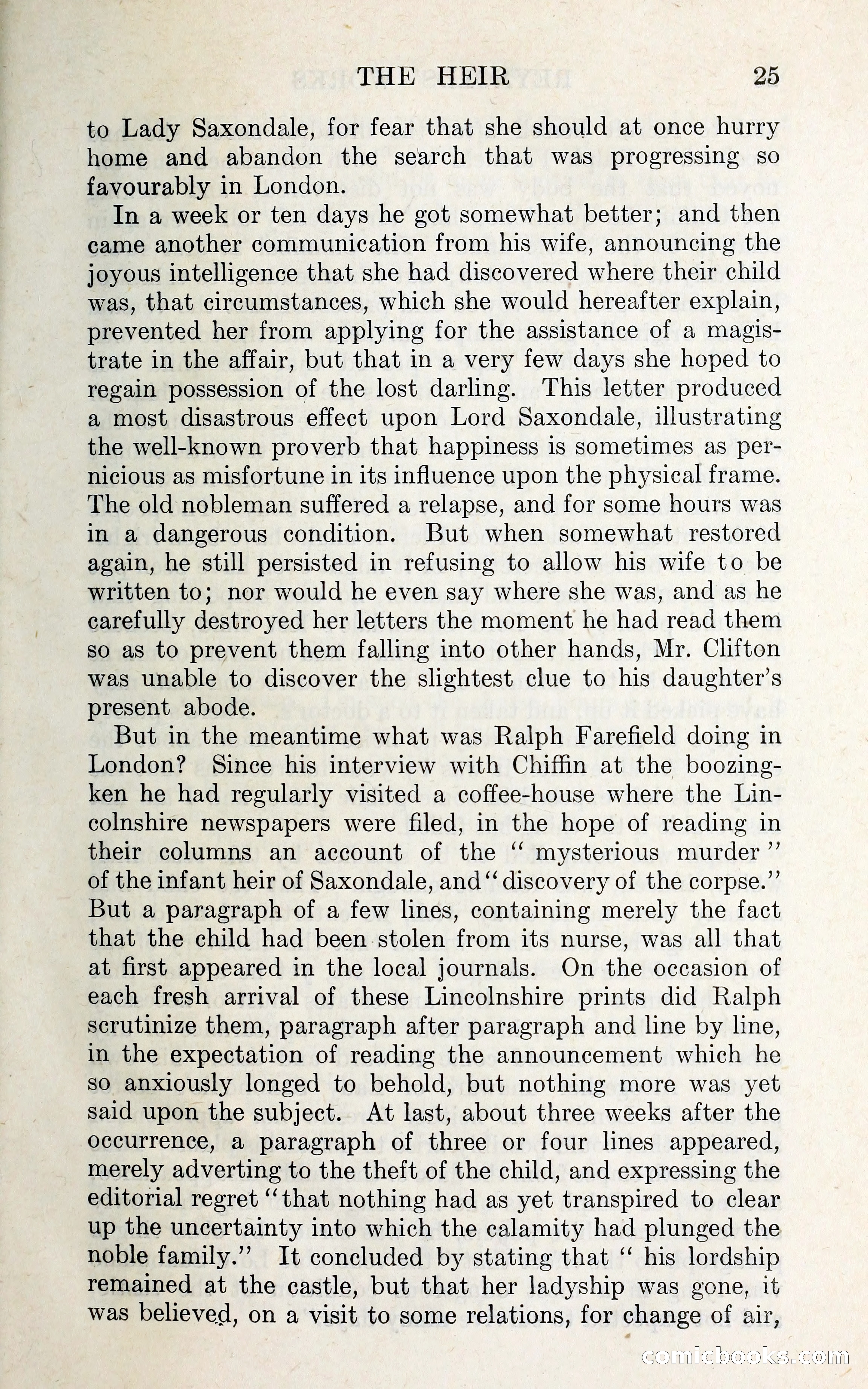
A restored page from Penny Dreadfuls, 1870. Page through the whole issue in the reader above.
📄 Transcribed text from this page (OCR, searchable)
Machine-transcribed from the original scan — historical spelling and the odd misread are preserved.
THE HEIR 25 to Lady Saxondale, for fear that she should at once hurry home and abandon the search that was progressing so favourably in London. In a week or ten days he got somewhat better; and then came another communication from his wife, announcing the joyous intelligence that she had discovered where their child was, that circumstances, which she would hereafter explain, prevented her from applying for the assistance of a magis- trate in the affair, but that in a very few days she hoped to regain possession of the lost darling. This letter produced a most disastrous effect upon Lord Saxondale, ulustrating the well-known proverb that happiness is sometimes as per- nicious as misfortune in its influence upon the physical frame. The old nobleman suffered a relapse, and for some hours was in a dangerous condition. But when somewhat restored again, he still persisted in refusing to allow his wife to be written to; nor would he even say where she was, and as he carefully destroyed her letters the moment he had read them so as to prevent them falling into other hands, Mr. Clifton was unable to discover the slightest clue to his daughter’s present abode. But in the meantime what was Ralph Farefield doing in London? Since his interview with Chiffin at the boozing- ken he had regularly visited a coffee-house where the Lin- colnshire newspapers were filed, in the hope of reading in their columns an account of the ‘‘ mysterious murder ”’ of the infant heir of Saxondale, and “‘ discovery of the corpse.”’ But a paragraph of a few lines, containing merely the fact that the child had been stolen from its nurse, was all that at first appeared in the local journals. On the occasion of each fresh arrival of these Lincolnshire prints did Ralph scrutinize them, paragraph after paragraph and line by line, in the expectation of reading the announcement which he so anxiously longed to behold, but nothing more was yet said upon the subject. At last, about three weeks after the occurrence, a paragraph of three or four lines appeared, merely adverting to the theft of the child, and expressing the editorial regret ‘‘that nothing had as yet transpired to clear up the uncertainty into which the calamity had plunged the noble family.”’ It concluded by stating that “ his lordship remained at the castle, but that her ladyship was gone, it was believed, on a visit to some relations, for change of air, CONNIEOOOKS (C(O)