
Penny Dreadfuls, 1870 · page 265 of 392
The Works of George W. M. Reynolds — page 265: what you’re looking at
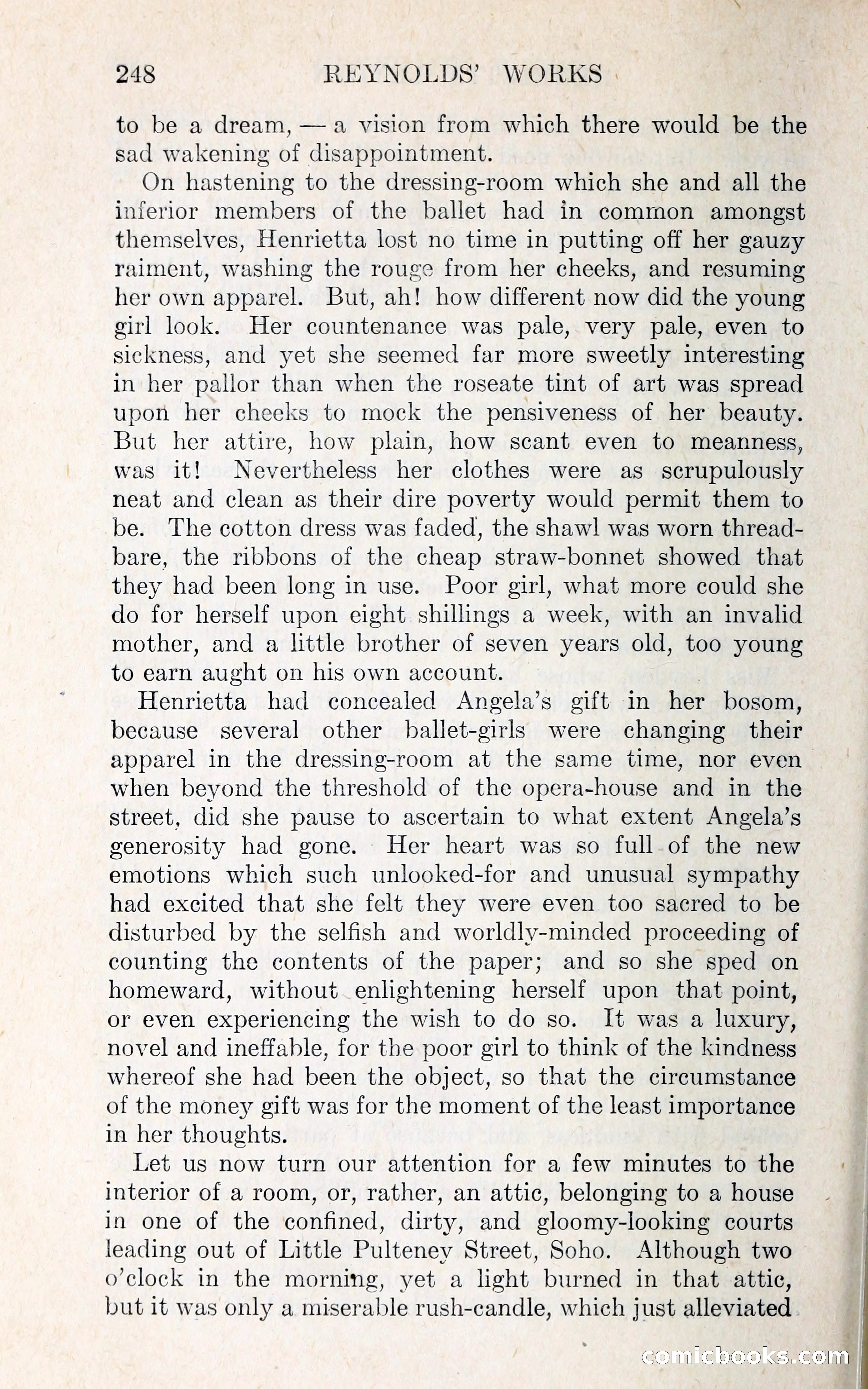
A restored page from Penny Dreadfuls, 1870. Page through the whole issue in the reader above.
📄 Transcribed text from this page (OCR, searchable)
Machine-transcribed from the original scan — historical spelling and the odd misread are preserved.
248 REYNOLDS’ WORKS | to be a dream, — a vision from which there would be the sad wakening of disappointment. On hastening to the dressing-room which she and all the inferior members of the ballet had in common amongst themselves, Henrietta lost no time in putting off her gauzy raiment, washing the rouge from her cheeks, and resuming her own apparel. But, ah! how different now did the young oirl look. Her countenance was pale, very pale, even to sickness, and yet she seemed far more sweetly interesting in her pallor than when the roseate tint of art was spread upon her cheeks to mock the pensiveness of her beauty. But her attire, how plain, how scant even to meanness, was it! Nevertheless her clothes were as scrupulously neat and clean as their dire poverty would permit them to be. The cotton dress was faded, the shawl was worn thread- bare, the ribbons of the cheap straw-bonnet showed that they had been long in use. Poor girl, what more could she do for herself upon eight. shillings a week, with an invalid mother, and a little brother of seven years old, too young to earn aught on his own account. | Henrietta had concealed Angela’s gift in her bosom, because several other ballet-girls were changing their apparel in the dressing-room at the same time, nor even when beyond the threshold of the opera-house and in the street, did she pause to ascertain to what extent Angela’s generosity had gone. Her heart was so full of the new emotions which such unlooked-for and unusual sympathy had excited that she felt they were even too sacred to be disturbed by the selfish and worldly-minded proceeding of counting the contents of the paper; and so she sped on homeward, without enlightening herself upon that point, or even experiencing the wish to do so. It was a luxury, novel and ineffable, for the poor girl to think of the kindness whereof she had been the object, so that the circumstance of the money gift was for the moment of the least importance in her thoughts. Let us now turn our attention for a few minutes to the interior of a room, or, rather, an attic, belonging to a house in one of the confined, dirty, and gloomy-looking courts leading out of Little Pulteney Street, Soho. Although two o’clock in the morning, yet a light burned in that attie, but it was only a miserable rush-candle, which just alleviated Gomichbooks (E(@)