
Penny Dreadfuls, 1870 · page 219 of 392
The Works of George W. M. Reynolds — page 219: what you’re looking at
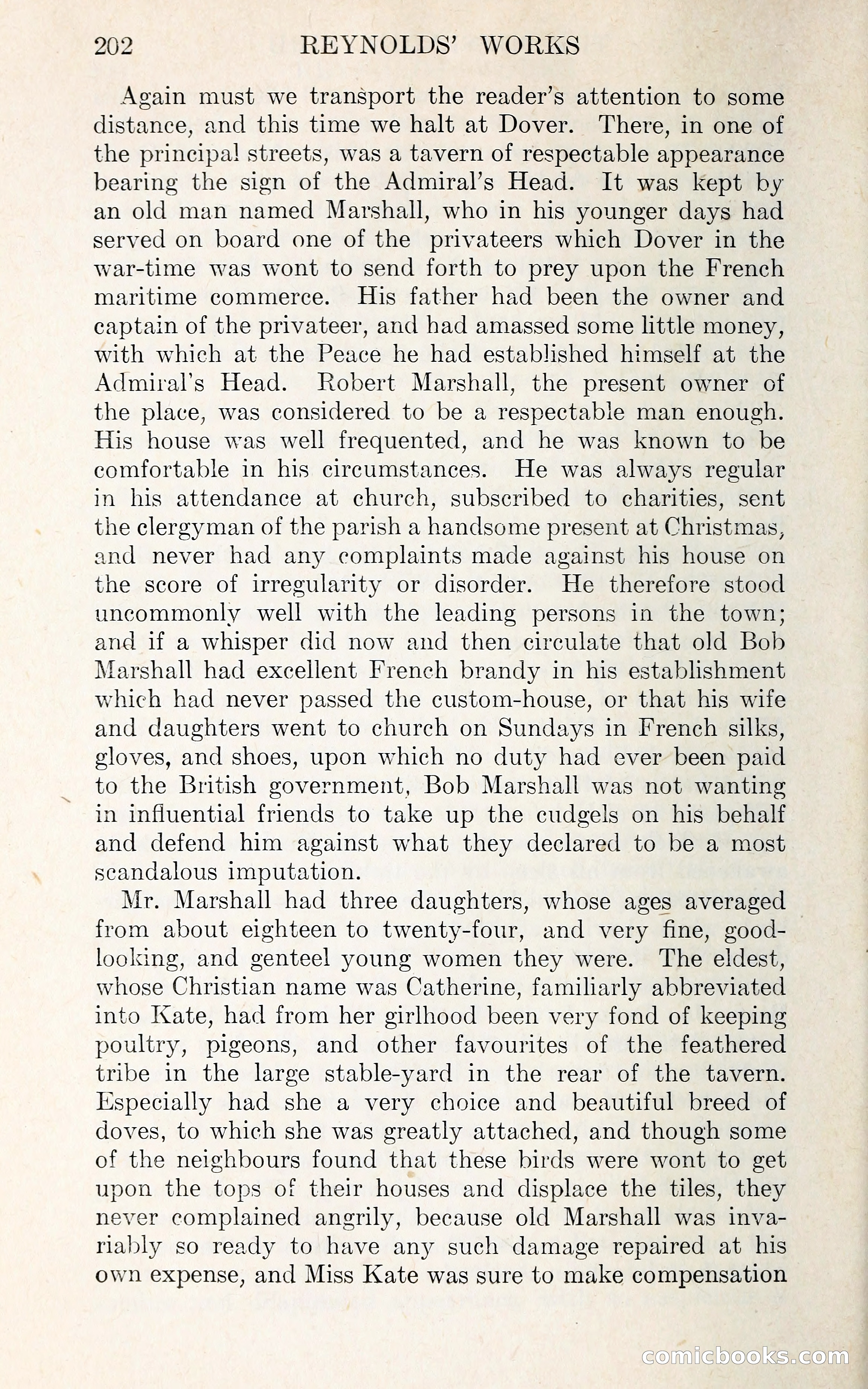
A restored page from Penny Dreadfuls, 1870. Page through the whole issue in the reader above.
📄 Transcribed text from this page (OCR, searchable)
Machine-transcribed from the original scan — historical spelling and the odd misread are preserved.
202 REYNOLDS’ WORKS Again must we transport the reader’s attention to some distance, and this time we halt at Dover. There, in one of the principal! streets, was a tavern of respectable appearance bearing the sign of the Admiral’s Head. It was kept by an old man named Marshall, who in his younger days had served on board one of the privateers which Dover in the war-time was wont to send forth to prey upon the French maritime commerce. His father had been the owner and captain of the privateer, and had amassed some little money, with which at the Peace he had established himself at the Admiral’s Head. Robert Marshall, the present owner of the place, was considered to be a respectable man enough. His house was well frequented, and he was known to be comfortable in his circumstances. He was always regular in his attendance at church, subscribed to charities, sent the clergyman of the parish a handsome present at Christmas, and never had any complaints made against his house on the score of irregularity or disorder. He therefore stood uncommonly well with the leading persons in the town; and if a whisper did now and then circulate that old Bob Marshall had excellent French brandy in his establishment which had never passed the custom-house, or that his wife and daughters went to church on Sundays in French silks, gloves, and shoes, upon which no duty had ever been paid to the British government, Bob Marshall was not wanting in influential friends to take up the cudgels on his behalf and defend him against what they declared to be a most scandalous imputation. Mr. Marshall had three daughters, whose ages averaged from about eighteen to twenty-four, and very fine, good- looking, and genteel young women they were. The eldest, whose Christian name was Catherine, familiarly abbreviated into Kate, had irom her girlhood been very fond of keeping poultry, pigeons, and other favourites of the feathered tribe in the large stable-yard in the rear of the tavern. Especially had she a very choice and beautiful breed of doves, to which she was greatly attached, and though some of the neighbours found that these birds were wont to get upon the tops of their houses and displace the tiles, they never complained angrily, because old Marshall was inva- riably so ready to have any such damage repaired at his own expense, and Miss Kate was sure to make compensation CONNIE NO KS (E(0)