
Penny Dreadfuls, 1900 · page 354 of 399
The Mysteries of the Court of London — page 354: what you’re looking at
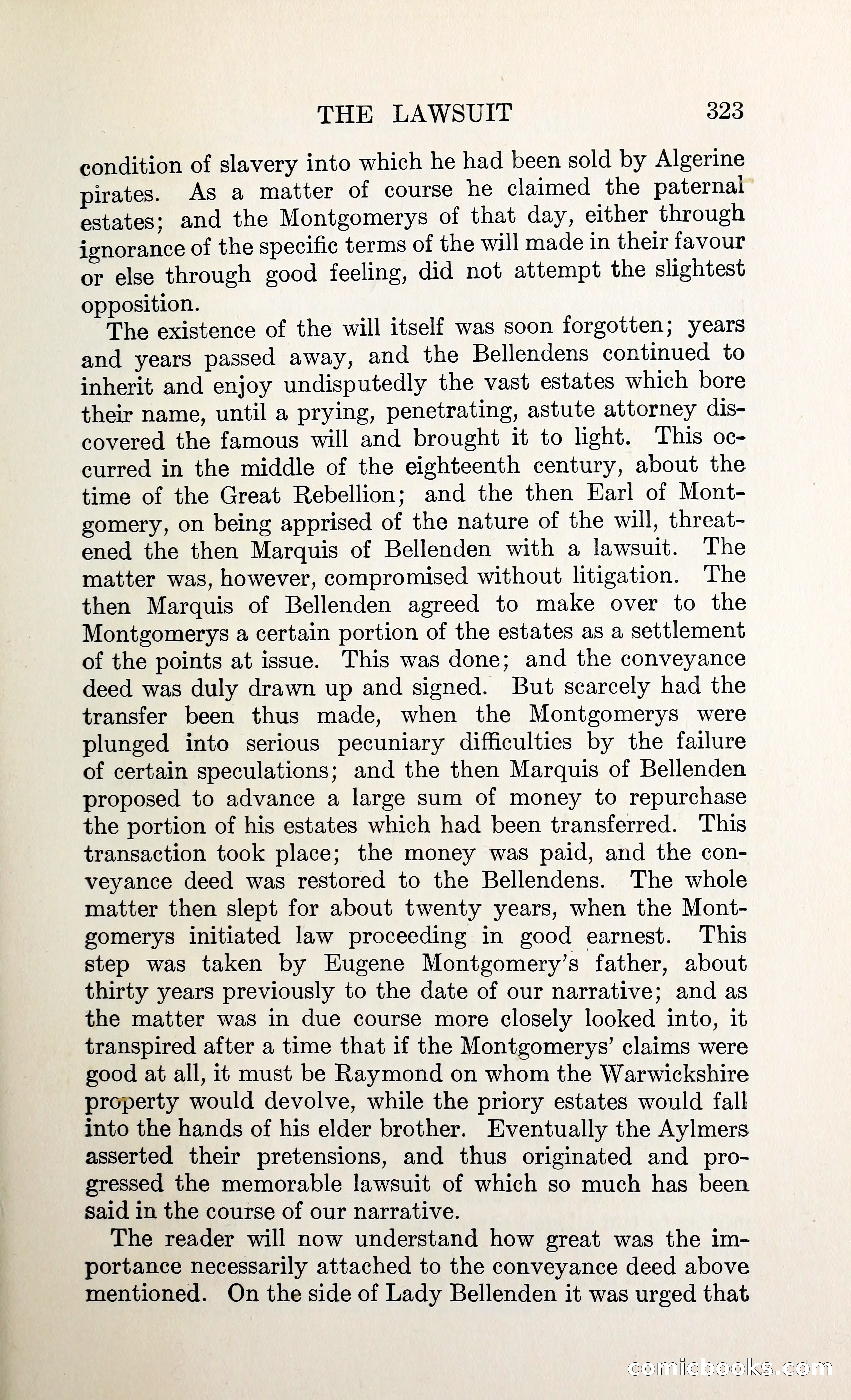
A restored page from Penny Dreadfuls, 1900. Page through the whole issue in the reader above.
📄 Transcribed text from this page (OCR, searchable)
Machine-transcribed from the original scan — historical spelling and the odd misread are preserved.
THE LAWSUIT 32d condition of slavery into which he had been sold by Algerine pirates. As a matter of course he claimed the paternal estates; and the Montgomerys of that day, either through ignorance of the specific terms of the will made in their favour or else through good feeling, did not attempt the slightest opposition. The existence of the will itself was soon forgotten; years and years passed away, and the Bellendens continued to inherit and enjoy undisputedly the vast estates which bore their name, until a prying, penetrating, astute attorney dis- covered the famous will and brought it to light. This oc- curred in the middle of the eighteenth century, about the time of the Great Rebellion; and the then Earl of Mont- gomery, on being apprised of the nature of the will, threat- ened the then Marquis of Bellenden with a lawsuit. The matter was, however, compromised without litigation. The then Marquis of Bellenden agreed to make over to the Montgomerys a certain portion of the estates as a settlement of the points at issue. This was done; and the conveyance deed was duly drawn up and signed. But scarcely had the transfer been thus made, when the Montgomerys were plunged into serious pecuniary difficulties by the failure of certain speculations; and the then Marquis of Bellenden proposed to advance a large sum of money to repurchase the portion of his estates which had been transferred. This transaction took place; the money was paid, and the con- veyance deed was restored to the Bellendens. The whole matter then slept for about twenty years, when the Mont- gomerys initiated law proceeding in good earnest. This step was taken by Eugene Montgomery’s father, about thirty years previously to the date of our narrative; and as the matter was in due course more closely looked into, it transpired after a time that 1f the Montgomerys’ claims were sood at all, it must be Raymond on whom the Warwickshire property would devolve, while the priory estates would fall into the hands of his elder brother. Eventually the Aylmers asserted their pretensions, and thus originated and pro- sressed the memorable lawsuit of which so much has been said in the course of our narrative. The reader will now understand how great was the 1m- portance necessarily attached to the conveyance deed above mentioned. On the side of Lady Bellenden it was urged that Gomiuichboc 6S (E(©)