
Penny Dreadfuls, 1870 · page 51 of 393
The Works of George W. M. Reynolds — page 51: what you’re looking at
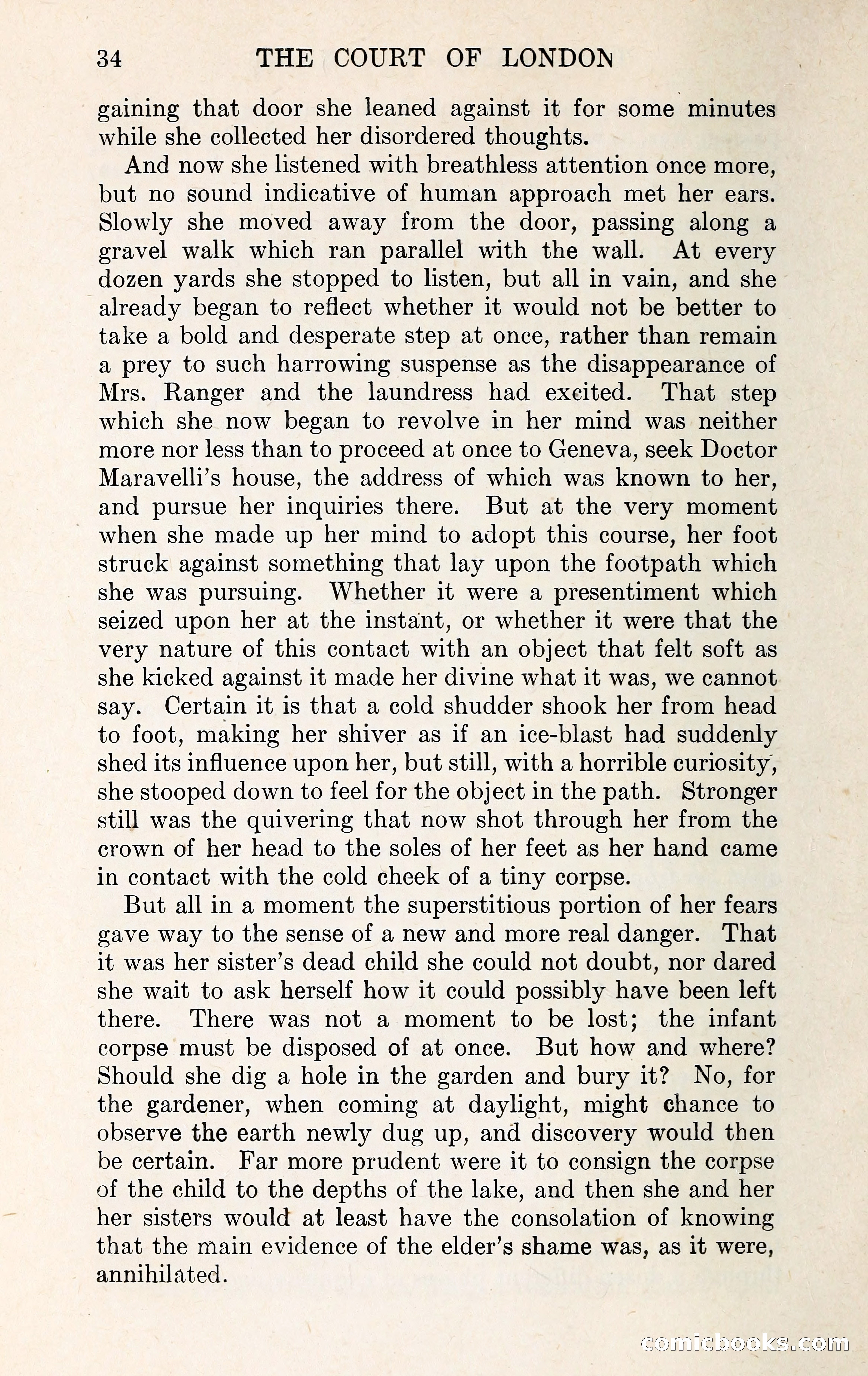
A restored page from Penny Dreadfuls, 1870. Page through the whole issue in the reader above.
📄 Transcribed text from this page (OCR, searchable)
Machine-transcribed from the original scan — historical spelling and the odd misread are preserved.
34 THE COURT OF LONDON gaining that door she leaned against it for some minutes while she collected her disordered thoughts. And now she listened with breathless attention once more, but no sound indicative of human approach met her ears. Slowly she moved away from the door, passing along a gravel walk which ran parallel with the wall. At every dozen yards she stopped to listen, but all in vain, and she already began to reflect whether it would not be better to — take a bold and desperate step at once, rather than remain a prey to such harrowing suspense as the disappearance of Mrs. Ranger and the laundress had exeited. That step which she now began to revolve in her mind was neither more nor less than to proceed at once to Geneva, seek Doctor Maravelli’s house, the address of which was known to her, and pursue her inquiries there. But at the very moment when she made up her mind to adopt this course, her foot struck against something that lay upon the footpath which she was pursuing. Whether it were a presentiment which seized upon her at the instant, or whether it were that the very nature of this contact with an object that felt soft as she kicked against 1t made her divine what it was, we cannot say. Certain it is that a cold shudder shook her from head to foot, making her shiver as if an ice-blast had suddenly shed its influence upon her, but still, with a horrible curiosity, she stooped down to feel for the object in the path. Stronger still was the quivering that now shot through her from the crown of her head to the soles of her feet as her hand came in contact with the cold cheek of a tiny corpse. But all in a moment the superstitious portion of her fears gave way to the sense of a new and more real danger. That it was her sister’s dead child she could not doubt, nor dared she wait to ask herself how it could possibly have been left there. There was not a moment to be lost; the infant corpse must be disposed of at once. But how and where? Should she dig a hole in the garden and bury it? No, for the gardener, when coming at daylight, might chance to observe the earth newly dug up, and discovery would then be certain. Far more prudent were it to consign the corpse of the child to the depths of the lake, and then she and her her sisters would at least have the consolation of knowing that the main evidence of the elder’s shame was, as it were, annihilated. CONNIE OCOLKS (E(0) im