
Penny Dreadfuls, 1870 · page 388 of 393
The Works of George W. M. Reynolds — page 388: what you’re looking at
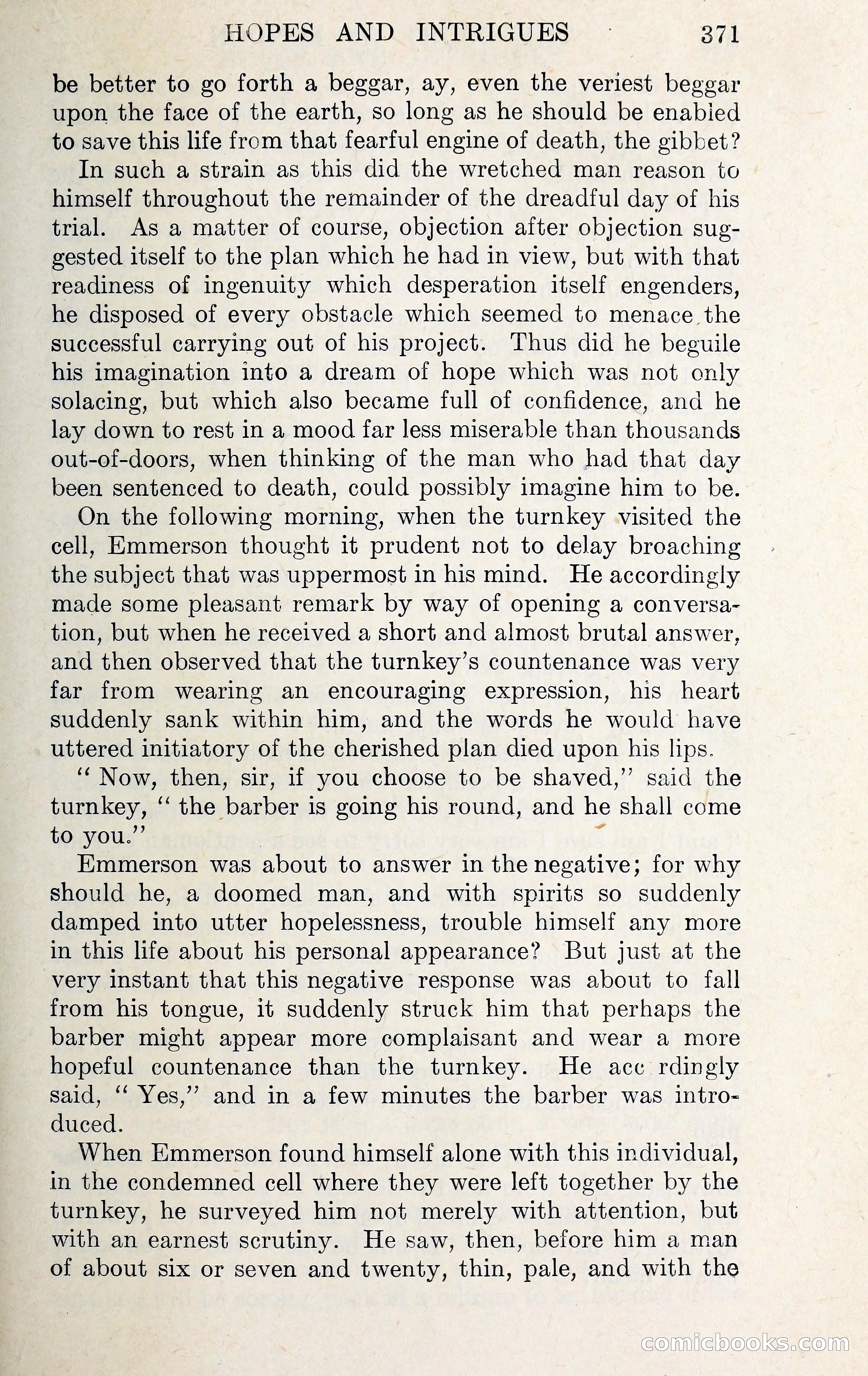
A restored page from Penny Dreadfuls, 1870. Page through the whole issue in the reader above.
📄 Transcribed text from this page (OCR, searchable)
Machine-transcribed from the original scan — historical spelling and the odd misread are preserved.
HOPES AND INTRIGUES | oil be better to go forth a beggar, ay, even the veriest beggar upon the face of the earth, so long as he should be enabied to save this life from that fearful engine of death, the gibbet? In such a strain as this did the wretched man reason to himself throughout the remainder of the dreadful day of his trial. As a matter of course, objection after objection sug- gested itself to the plan which he had in view, but with that readiness of ingenuity which desperation itself engenders, he disposed of every obstacle which seemed to menace the successful carrying out of his project. Thus did he beguile his imagination into a dream of hope which was not only solacing, but which also became full of confidence, and he lay down to rest in a mood far less miserable than thousands out-of-doors, when thinking of the man who had that day been sentenced to death, could possibly imagine him to be. On the following morning, when the turnkey visited the cell, Emmerson thought it prudent not to delay broaching the subject that was uppermost in his mind. He accordingly made some pleasant remark by way of opening a conversa- tion, but when he received a short and almost brutal answer, and then observed that the turnkey’s countenance was very far from wearing an encouraging expression, his heart suddenly sank within him, and the words he would have uttered initiatory of the cherished plan died upon his lips. ‘“ Now, then, sir, 1f you choose to be shaved,” said the turnkey, ‘‘ the barber is going his round, and he shall come to you.” | i Emmerson was about to answer in the negative; for why should he, a doomed man, and with spirits so suddenly damped into utter hopelessness, trouble himself any more in this life about his personal appearance? But just at the very instant that this negative response was about to fall from his tongue, it suddenly struck him that perhaps the barber might appear more complaisant and wear a more hopeful countenance than the turnkey. He acc rdingly said, ‘“* Yes,’’ and in a few minutes the barber was intro- duced. When Emmerson found himself alone with this individual, in the condemned cell where they were left together by the turnkey, he surveyed him not merely with attention, but with an earnest scrutiny. He saw, then, before him a man of about six or seven and twenty, thin, pale, and with the CORNICLOOL <S) (C(O) im