
Penny Dreadfuls, 1870 · page 379 of 393
The Works of George W. M. Reynolds — page 379: what you’re looking at
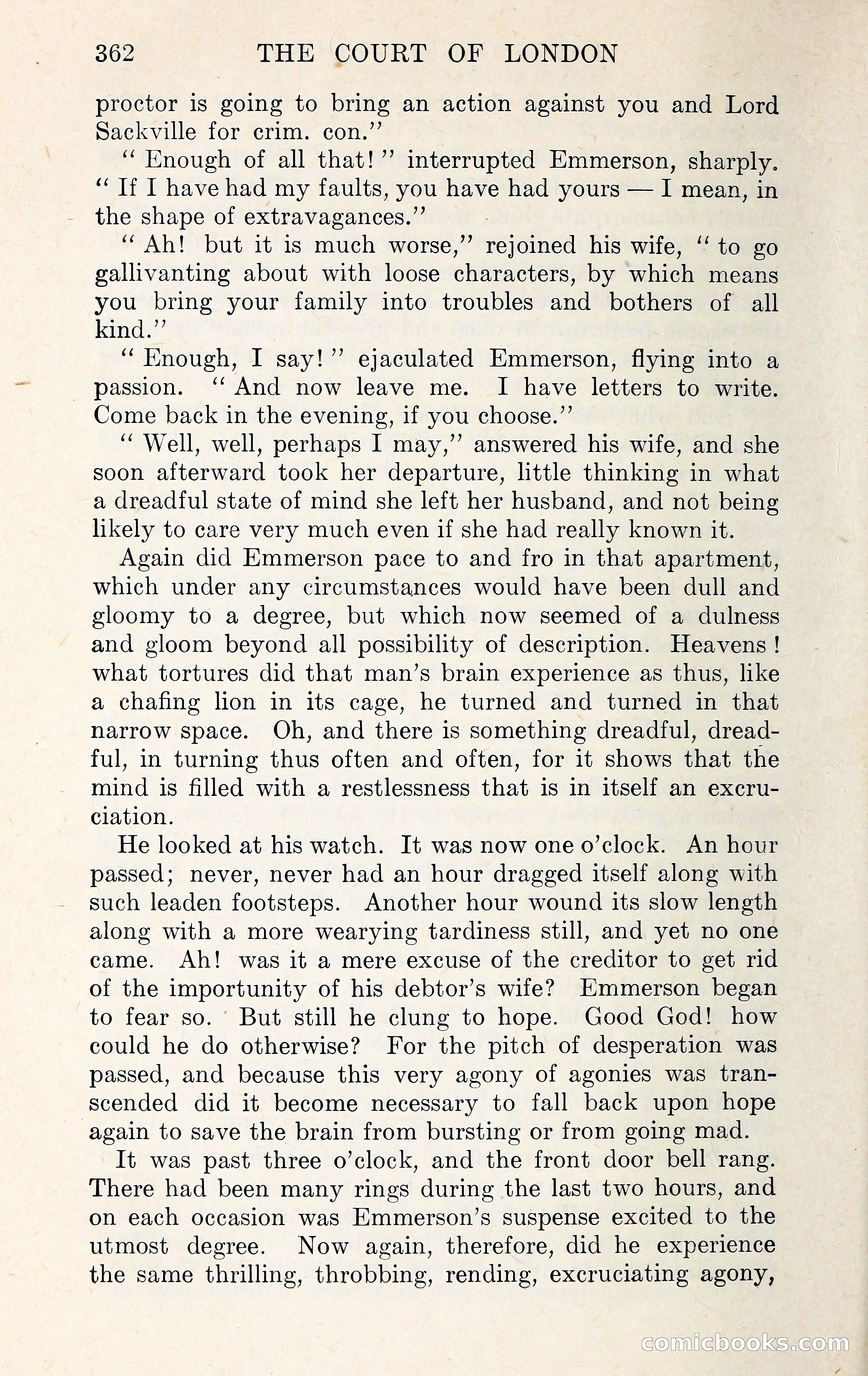
A restored page from Penny Dreadfuls, 1870. Page through the whole issue in the reader above.
📄 Transcribed text from this page (OCR, searchable)
Machine-transcribed from the original scan — historical spelling and the odd misread are preserved.
362 THE COURT OF LONDON proctor is going to bring an action against you and Lord Sackville for crim. con.”’ ‘“Knough of all that! ’’ interrupted Emmerson, sharply. ‘If I have had my faults, you have had yours — I mean, in the shape of extravagances.’’ “Ah! but it is much worse,” rejoined his wife, ‘‘ to go gallivanting about with loose characters, by which means you bring your family into troubles and bothers of all kind.”’ “Enough, I say!’’ ejaculated Emmerson, flying into a passion. ‘‘ And now leave me. I have letters to write. Come back in the evening, if you choose.”’ ‘Well, well, perhaps I may,’’ answered his wife, and she soon afterward took her departure, little thinking in what a dreadiul state of mind she left her husband, and not being likely to care very much even if she had really known it. Again did Emmerson pace to and fro in that apartment, which under any circumstances would have been dull and gloomy to a degree, but which now seemed of a dulness and gloom beyond all possibility of description. Heavens! what tortures did that man’s brain experience as thus, like a chafing lion in its cage, he turned and turned in that narrow space. Oh, and there is something dreadiul, dread- ful, in turning thus often and often, for it shows that the mind is filled with a restlessness that is in itself an excru- clation. He looked at his watch. It was now one o’clock. An hour passed; never, never had an hour dragged itself along with such leaden footsteps. Another hour wound its slow length along with a more wearying tardiness stil, and yet no one came. Ah! was it a mere excuse of the creditor to get rid of the importunity of his debtor’s wife? Emmerson began to fear so.’ But still he clung to hope. Good God! how could he do otherwise? For the pitch of desperation was passed, and because this very agony of agonies was tran- scended did it become necessary to fall back upon hope again to save the brain from bursting or from going mad. It was past three o’clock, and the front door bell rang. There had been many rings during the last two hours, and on each occasion was Emmerson’s suspense excited to the utmost degree. Now again, therefore, did he experience the same thrilling, throbbing, rending, excruciating agony, ) CONNIE NCO KS (E(0) im