
Penny Dreadfuls, 1870 · page 297 of 393
The Works of George W. M. Reynolds — page 297: what you’re looking at
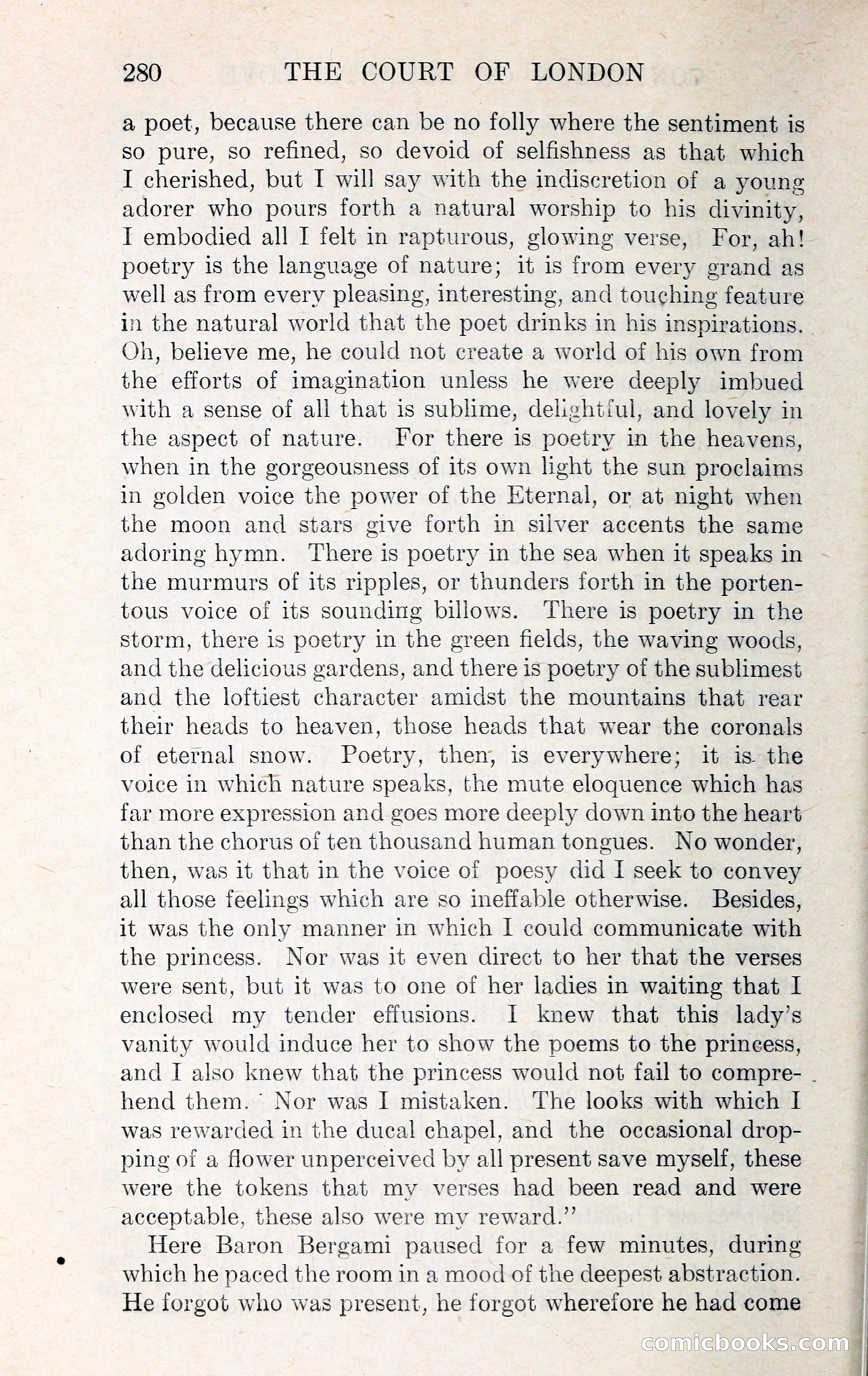
A restored page from Penny Dreadfuls, 1870. Page through the whole issue in the reader above.
📄 Transcribed text from this page (OCR, searchable)
Machine-transcribed from the original scan — historical spelling and the odd misread are preserved.
280 THE COURT OF LONDON a poet, because there can be no folly where the sentiment is so pure, so refined, so devoid of selfishness as that which I cherished, but I will say with the indiscretion of a young adorer who pours forth a natural worship to his divinity, I embodied all I felt in rapturous, glowing verse, For, ah! poetry is the language of nature; it is from every grand as well as from every pleasing, interesting, and touching feature in the natural world that the poet drinks in his inspirations. - Oh, believe me, he could not create a world of his own from the efforts of imagination unless he were deeply imbued with a sense of all that is sublime, delightful, and lovely in the aspect of nature. For there is poetry in the heavens, when in the gorgeousness of its own light the sun proclaims in golden voice the power of the Eternal, or at night when the moon and stars give forth in silver accents the same adoring hymn. There is poetry in the sea when it speaks in the murmurs of its ripples, or thunders forth in the porten- tous voice of its sounding billows. ‘There is poetry in the storm, there is poetry in the green fields, the waving woods, and the delicious gardens, and there is poetry of the sublimest and the loftiest character amidst the mountains that rear their heads to heaven, those heads that wear the coronals of eternal snow. Poetry, then, is everywhere; it is the voice in which nature speaks, the mute eloquence which has far more expression and goes more deeply down into the heart than the chorus of ten thousand human tongues. No wonder, then, was it that in the voice of poesy did I seek to convey all those feelings which are so ineffable otherwise. Besides, it was the only manner in which I could communicate with the princess. Nor was it even direct to her that the verses were sent, but it was to one of her ladies in waiting that I enclosed my tender effusions. I knew that this lady’s vanity would induce her to show the poems to the prineess, and I also knew that the princess would not fail to compre- . hend them. Nor was I mistaken. The looks with which I was rewarded in the ducal chapel, and the occasional drop- ping of a flower unperceived by all present save myself, these were the tokens that my verses had been read and were acceptable, these also were my reward.’’ Here Baron Bergami paused for a few minutes, during which he paced the room in a mood of the deepest abstraction. He forgot who was present, he forgot wherefore he had come GomichbooksGo